
Write something

Jun 16 •
Important Reminder About Our Neighbors!!!
Here is a quote from Zoltan Kodaly re-posted a few hours ago by folkMAGazin, a reminder about how getting to know our neighbors’ music being an important step in knowing our own. This applies to dancing as well, and all cultural treasures of the Carpathian Basin and beyond. It’s something that I didn’t find that important when I was 18 years old but now at the age of 52 realize how crucial it truly is! Translation: “What is Hungarian in music cannot even be determined without a thorough knowledge of the music of the surrounding peoples; otherwise we may fall into the gravest errors… Therefore, first and foremost, we need to become acquainted with our neighbors so that we may see the boundaries of our Hungarianness as clearly as possible. But it is also worthwhile to know them for their own sake. Every people has created its own distinctive forms of beauty; in each we find something that does not exist in others. Thus we can only be enriched by it. Finally, nothing characterizes a people as much as its language and its music. No one can say that we have come to know our neighbors sufficiently so far. Only good can come from striving to see and understand them better through their music as well.” (Zoltán Kodály: “Neighboring Peoples” [after 1942]) – István Pávai: Zoltán Kodály, the Ethnomusicologist (folkMAGazin 2008/3)

Apr 8 •
New grants for Hungarian Culture DEADLINE APRIL 16
https://nka.hu/kiemelt-kategoriak/palyaztatas/kollegiumok-felhivasai/a-hagyomany-es-ismeretatadas-kollegiuma-nepmuveszet-szakterulet-nyilt-palyazati-felhivasa/

Jun 27 •
Pilgrimage Folk-Fit... and a Reflection
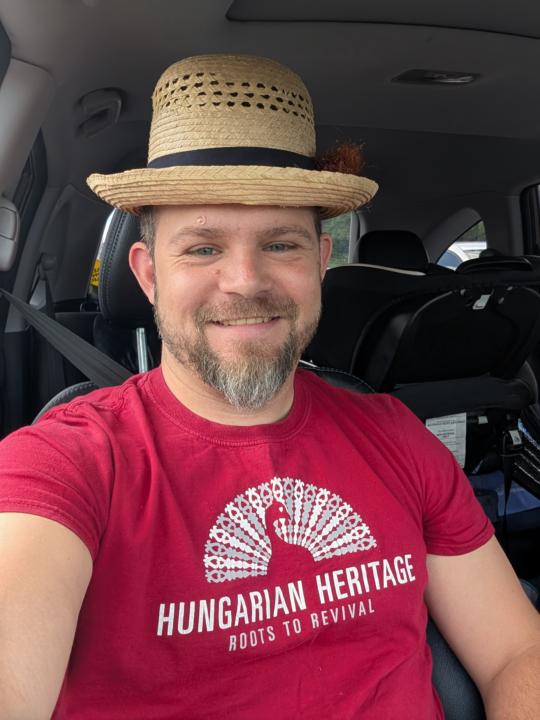
🇭🇺 Magyar fordítás lent. / Hungarian translation below. Wearing my Hungarian Folk Life Festival shirt on the way to Midland for a pilgrimage to Martyrs' Shrine, celebrating the church's 100th anniversary. We were asked to wear red, white, or green so our group of Hungarian pilgrims would be easy to spot. I briefly wondered whether I should have worn a folk vest to make the outfit a little more "folk," but it would have covered the logo and today's going to be hot. More importantly, this pilgrimage has prompted me to reflect on how I'm reconnecting my Hungarian roots with my spiritual ones. Lately I've been wondering whether we've "Disney-fied" folk culture, at least in the North American táncház movement. We preserve the costumes, dances, songs, and festivals, but often separate them from the Christian faith and village life that gave them meaning. Historically, these weren't simply performances or hobbies—they were woven into the liturgical year, family life, and the rhythm of village life. What if, by separating folk traditions from the Christian worldview and village life that shaped them, we've lost something essential? If so, what have we already lost? What still remains? Perhaps the future of Hungarian folk culture isn't only about preserving dances, music, or embroidery. Perhaps it's also about recovering the way of life that made those traditions meaningful in the first place. Not as a reenactment of the past, but as a living tradition for today. Just something I've been reflecting on during today's pilgrimage. ──────────────────── 🇭🇺 A Hungarian Folk Life Festival pólómban úton vagyok Midlandbe, a Martyrs' Shrine zarándoklatára, ahol a templom 100. évfordulóját ünnepeljük. Arra kértek bennünket, hogy pirosat, fehéret vagy zöldet viseljünk, hogy a magyar zarándokcsoport könnyen felismerhető legyen. Eszembe jutott, hogy talán fel kellett volna vennem egy népi mellényt, hogy még népiesebb legyen az öltözetem, de az eltakarta volna a póló logóját, és ma elég meleg lesz.
1
0
Jun 20 •
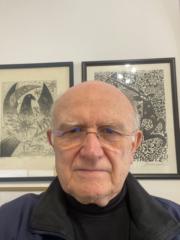
Sandor Timar passed away yesterday. He was 94. Timar was one of the most important person in the development and collection as eell as teaching and presentation of Hungarian folk dance.
Sandor Timar passed away yesterday at 94 years of age. He was one of the most impotant person in the development of the tanchaz movement and the collection, teaching and presentation of Hungarian folkdance.
0
0

1-18 of 18
Suggested communities
Powered by