
Write something

6h •
🦅Mind Maps and the Digital Revolution
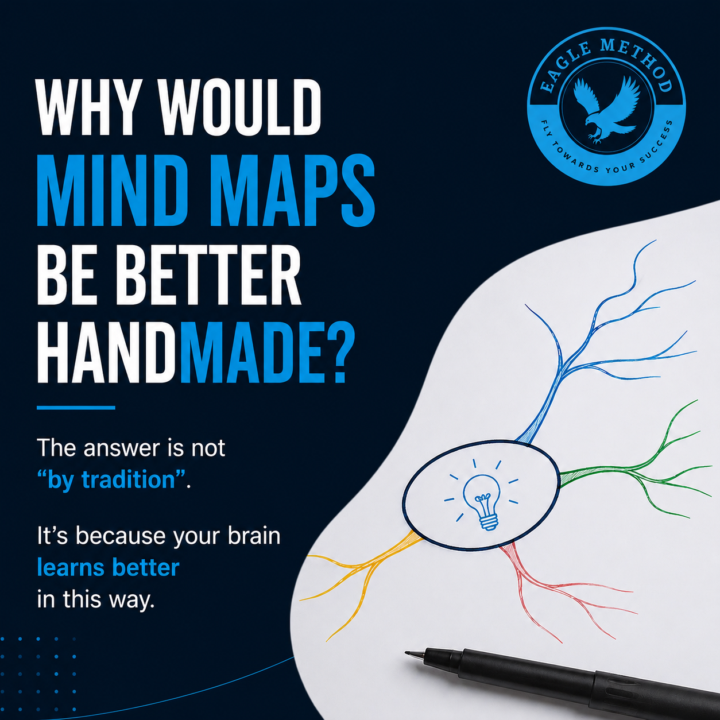
With the rise of artificial intelligence and increasingly advanced tools, creating a mind map now takes only a few seconds. But there’s one question worth asking: Does an automatically generated mind map really help you understand? 🚫 The answer is NO. The real value of a mind map is not in the finished diagram, but in the process of creating it. When you build a mind map yourself, your brain doesn’t simply record information—it is forced to make decisions. - Select the essential concepts - Create meaningful connections - Establish priorities - Organize information according to your own logic And it is precisely this cognitive work that makes learning more effective. One of the most common mistakes I see is relying entirely on software to do this process for you. Automatically generated mind maps are often neat, symmetrical, and visually appealing, but they follow the algorithm’s logic, not your mind’s. ⭐ Today, technology can be an extraordinary ally, but the difference lies in how YOU choose to use it. If you prefer working digitally, choose tools that allow you to build your map freely, just as you would on a blank sheet of paper. That way you can: ✔️ Decide which concepts deserve more space ✔️ Create connections that are meaningful to you ✔️ Organize branches according to your own reasoning ✔️ Use colors and images only when they improve understanding Because a great mind map doesn’t have to be perfect. It has to be effective. ⭐ Three ideas you can apply today - The next time you’re studying or attending a course, try building the mind map yourself instead of generating it automatically. - If you use an app, avoid rigid templates. Customize the structure to match the way you think, and use a drawing-based app rather than an automatic mind map generator. - When you’ve finished your map, try explaining the topic without looking at your notes. If you can say even more than what you’ve written, your mind map is doing its job. How do you build your mind maps?
0
0
16d •
The Power of Mind Maps
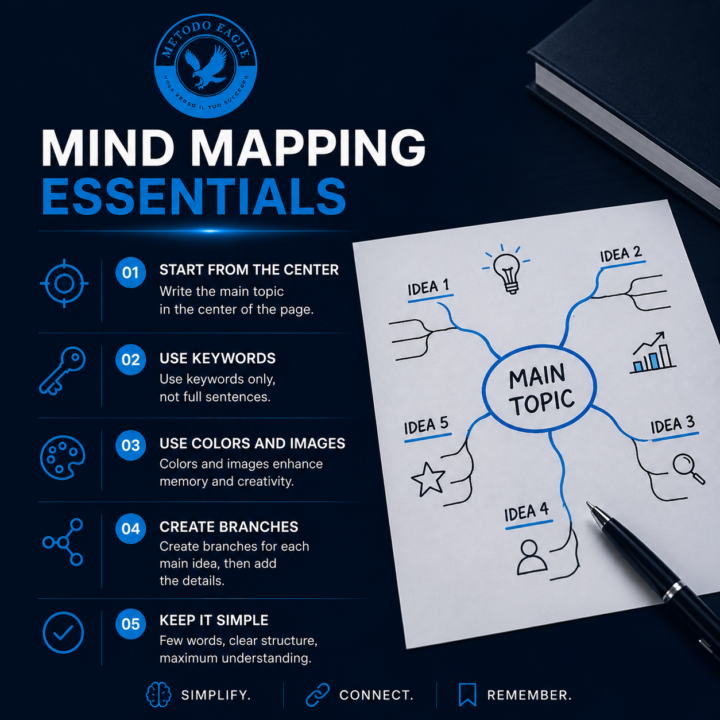
🧠 Why do some people remember better and connect ideas faster? Most of the time, it’s not about memory. It’s about structure. When we learn something new, we tend to pile information on top of information: notes, highlights, videos, books, courses. The main issue is that the brain doesn’t work like a storage archive, it works through connections. And this is exactly where mind maps become powerful. ⭐️ A mind map forces you to do one essential thing: transform scattered information into a clear structure. When you start with a central concept and build logical connections, you: • understand faster • remember longer • quickly identify what truly matters • reduce mental overload Most people use mind maps as simple summaries. In reality, their greatest value is something else: They train your brain to think through connections rather than accumulation. 📌 Small practical challenge: - Take a topic you’re currently studying. - Instead of writing a full page of notes, try to summarize it in a single mind map using only keywords. You’ll immediately notice that the parts you can’t connect are often the parts you haven’t fully understood yet. This is one of the core principles we explore inside the Metodo Eagle programs: Don’t learn more...Learn with more structure. ➡️ Share in the comments which topic you’re going to turn into a mind map. 👇 ➡️ Go to the Classroom section and explore the dedicated courses 🦅
1
0
May 22 •
Understanding truly changes everything.
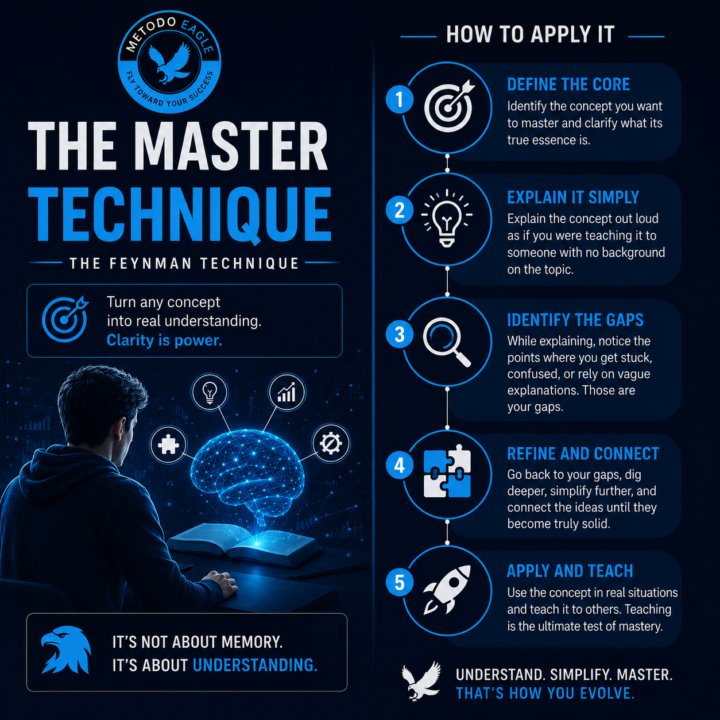
There’s a huge difference between reading a concept and actually being able to use it. Many people think they’ve understood something just because they’ve heard it, read it, or seen it once. Then comes the moment when they need to explain it, apply it, or connect it to something else… and that’s when confusion appears. ⭐️ The Master Technique is designed exactly for this. It helps you transform scattered information into something clearer, more stable, and genuinely yours. The goal isn’t to appear prepared. The goal is to reach that level where a concept becomes so clear that you can communicate it simply, naturally, and effortlessly. It’s also one of the best ways to discover where you still have gaps without continuing to accumulate content unnecessarily. That’s why, instead of asking yourself:“How much am I studying?”start asking yourself:“How much am I truly understanding?” 🦅 Now I’m curious about something:Have you ever thought you understood something… only to realize the opposite the moment you tried to explain it? Write it in the comments. ➡️ And if you want to dive deeper into strategic learning, advanced memory techniques, and mental performance, you can start for free with the Eagle System online video course.
1
0
Apr 13 •
Evolve! Now and Always.📈
Real growth doesn’t come from accumulating information, but from understanding where to intervene to perform better. This community doesn’t exist to fill your head with content. 🤯 It exists to create mental clarity, time control, and performance. And to do this effectively, I need to understand where you’re truly feeling friction right now. Tell me: where do you want to work the most right now? • Making learning faster and more stable over time 📈 • Improving memory, focus, and mental clarity 🧠 • Managing time and energy more strategically ♟️ • Increasing focus and performance under pressure ⭐️ • Structuring what you know so you can use it with more confidence 💪 • Or is there another challenge you’re facing that you want to address here? 🦅 Write it in the comments. I want the next content to be built on your real needs, not on an abstract plan.☺️
1
0
Apr 7 •
Study Managment
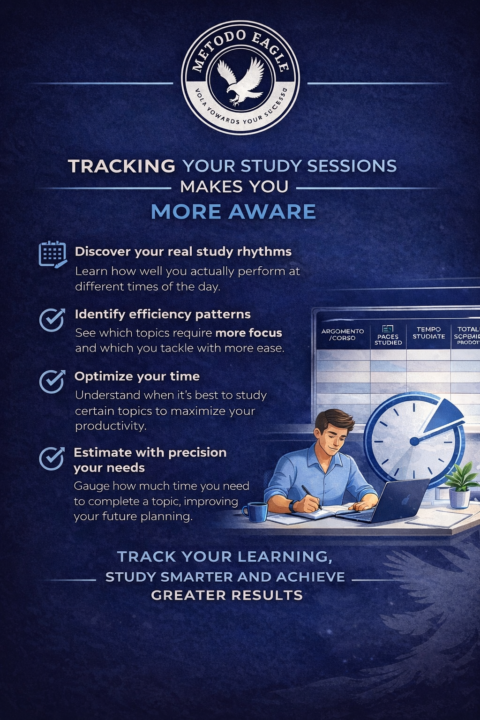
If you work or run a business, the point isn’t finding more time to study, but understanding how you’re using the time you already have. And this is where a simple yet highly strategic tool comes in: the learning time tracking table. 📈 In practice, it means tracking how much you study and how much you produce. How many pages you go through, how long it takes, and at what times of the day you perform best. You don’t need complex tools—just a basic table. But the value is huge, because you move from vague feelings to real data. ❌ You stop telling yourself “I’m slow” and start understanding when and why you are. You discover your peak performance moments, identify attention drops, and begin to manage yourself more intelligently. In other words, you become the manager of your own learning. ⭐️ Then there’s another key step: how you structure your time. It’s not about how many hours you study, but how you organize them. The most effective sessions alternate three elements: learning, breaks, and review. That’s what turns studying into something that truly sticks. ⏰ The real breakthrough comes with spaced review. Revisiting information over time allows you to consolidate it effectively, avoiding the need to start from scratch every time. 🦅 Now let me leave you with a question: if you truly started managing your learning with the same precision you use to manage your business… how much would your growth change in the next few months? 📈
1
0
1-7 of 7
powered by

skool.com/lunapanatogmailcom-5711
Sei un'imprenditore o un professionista e vuoi migliorare le tue performance di studio e di lavoro? scopri come posso aiutarti!!
Suggested communities
Powered by