
Write something

3d •
🏠 Ready to Stop Renting and Start Owning?
I know some of you haven't gotten to the home-buying module yet, but if you're looking to purchase a home this year, you need to know exactly what mortgage companies are looking for. Credit is your ultimate leverage, but when it comes to a mortgage, the banks aren't just looking at a number..they are looking at your financial "fitness". If you want to use a home as a wealth bridge rather than a credit trap, you need to meet these general credentials to qualify: 📋 The Mortgage Checklist • Credit Score: Generally, you’ll need a minimum score of 620 for conventional loans, though FHA loans can go lower. • No Red Flags: There can be no unpaid collections, charge-offs, or repossessions on your credit report. • Debt-to-Income (DTI) Ratio: Most lenders want to see a DTI of 43% or less. This means your total monthly debt payments divided by your gross monthly income. • Income & Employment: You must show two years of consistent income and provide two years of tax returns, which the lender will verify directly with the IRS. • Job Stability: Lenders look for no employment gaps. If you have switched companies, the move needs to be within the same career space to prove stability. • Down Payment: While 20% is the gold standard to avoid private mortgage insurance (PMI), many programs allow as little as 3% to 3.5% down. • Bank Reserves: Lenders need to see reserves (extra cash) in a bank account to ensure you can handle unexpected costs. • Large Transfers: Any large transfers within the last 90 days are a major red flag unless you can provide documented evidence of a gift or a verified source of funds. • Clean Payment History: A single 30-day late payment can tank your score by 100 points. Lenders want to see a "clean" history for at least the last 12–24 months. 🧠 The Strategy That’s why fixing your credit is SO important BEFORE hitting submit on that mortgage application. DON'T DELAY YOUR OWN HOME BUYING JOURNEY. If you're looking for help, remember our Skool members get a discounted rate on our done-for-you service!
8d •
Real talk… is your BK actually reporting right? 🤔
I was looking through some files today and it reminded me of something that honestly drives me crazy. A lot of people think that once you discharge a bankruptcy, you just have to sit in "credit jail" for years and wait it out. But here is the truth: The credit bureaus are notorious for being lazy with post-bankruptcy reporting. If you’ve gone through a BK, go look at your report right now and check for these two things: • Zombie Balances: Are accounts that were included in your bankruptcy still showing a balance? If it was discharged, that balance must be $0. • Status Errors: Is it reporting as "Charged off" or "Late" instead of "Included in Bankruptcy"? Here’s why this matters ⬇️ If you get denied for a credit card, a personal loan, or a car loan because of these specific reporting errors, you aren’t just "unlucky." You actually have a massive amount of leverage. In fact, if they refuse to fix these errors after a dispute, you can actually sue the bureaus. ⚖️ Most people don't realize they're sitting on a potential payday (or at least a massive credit score jump) just because the bureaus can't keep their paperwork straight. I want to see if I can help some of you catch this. If you have a bankruptcy on your profile and you think something isn't reporting accurately or if you've been denied recently even though you’ve discharged everything, send me a private message. Let's look at it together and see if we can get that fixed (or get you paid). 📥
2
0
Dec '25 •
SAVE MONEY ON INTEREST IN 2026!
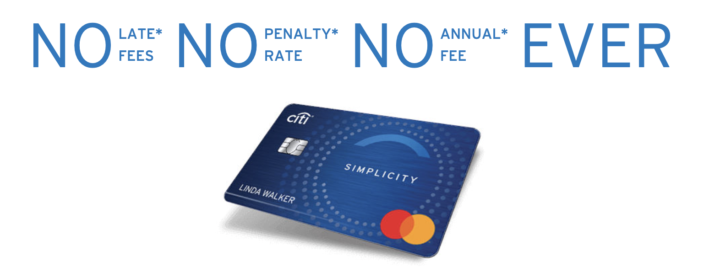
Good morning Fam! With 2026 being right around the corner, it’s important that we are doing everything we can to save money. I know a lot of us are working on fixing our credit, but once you're in a place where you're finally getting approved, 2026 is a great year to take advantage of balance transfer promotions. Here’s your credit tip for today. What is a balance transfer and how much could it save you? A balance transfer is when you move your existing credit card debt from a high interest card to a new card that offers a 0 percent introductory APR on balance transfers for a promotional period. If you transfer a balance, for example 5,000 dollars from a card charging 15% interest to a card offering 0% interest for a set period, and you pay it off during that time, you avoid all of the interest you would have paid. That alone can save you HUNDREDS to THOUSANDS of dollars depending on your balance and how long you would have kept that debt on the original card. This strategy frees up money, helps you pay debt faster, and gives you breathing room as you enter 2026 with a stronger financial plan. • Card Name: Citi Simplicity Balance Transfer Promo: 0% APR for 21 months Recommended Credit Score: 670+ • Card Name: Wells Fargo Reflect Balance Transfer Promo: 0% APR for 21 months Recommended Credit Score: 670+ • Card Name: Discover it Cash Back Balance Transfer Promo: 0% APR for 18 months Recommended Credit Score: 680+ • Card Name: Citi Double Cash Balance Transfer Promo: 0% APR for 18 months Recommended Credit Score: 670+ • Card Name: U.S. Bank Shield or Visa Platinum Balance Transfer Promo: 0% APR for 18 months Recommended Credit Score: 680+ • Card Name: Chase Freedom Unlimited Balance Transfer Promo: 0% APR for 15 months Recommended Credit Score: 670+ • Card Name: Bank of America Unlimited Cash Rewards Balance Transfer Promo: 0% APR for 15 months Recommended Credit Score: 670+ • Card Name: Capital One SavorOne Balance Transfer Promo: 0% APR for 12 months
Dec '25 •
What To Do When an Account Comes Back “Verified”
When a credit bureau says an account was “verified,” most people stop. But under the FCRA, “verified” does NOT mean they proved anything. It usually means the furnisher responded electronically with “yes, this is correct.” Here’s exactly what to do next if you want to push for a deletion: 1. Immediately request the Method of Verification (MOV) Under FCRA §611(a)(6) and §611(a)(7), you have the right to know: - How they verified the account - What procedure was used - Who they contacted - Whether actual documentation was reviewed Send a letter requesting a full description of their verification method. This forces accountability and exposes weak investigations. 2. Pull all 3 updated reports and compare every detail After receiving your investigation results, check your new reports for: - Date of first delinquency - Date opened - Date last active - Balance reporting - Payment history accuracy - Status (open, closed, charged off, etc.) - Differences between Experian, Equifax, and TransUnion Any mismatch or inaccurate detail becomes a new dispute angle. 3. Send a new dispute focusing on ONE specific inaccuracy Under FCRA §607(b), the bureaus must ensure maximum possible accuracy.If even ONE detail cannot be verified, the entire account may need to be deleted. Examples of detailed angles to dispute: - Wrong payment history for a specific month - Incorrect date of first delinquency - Balance not matching original creditor’s records - Creditor name or account number reported inconsistently - Status not updating correctly Targeting one flaw makes it harder for them to verify. 4. If it’s a collection, demand validation directly from the collector. Under the FDCPA (15 U.S.C. §1692g), you can request: - Proof they own the debt - Proof of the amount - A copy of the original agreement - Evidence that you are the correct consumer If they cannot validate, they should not be reporting it. This strengthens your case for deletion with the bureaus.
Dec '25 •
Read This Before You Dispute a Collection Account
If you are disputing collection accounts without requesting specific documentation, you are leaving leverage on the table. The Fair Credit Reporting Act does not require consumers to “prove” inaccuracies. It requires credit bureaus and furnishers to substantiate what they report. When disputes are vague, investigations remain superficial. When disputes are precise, compliance standards change. After requesting validation of a collection account or when proceeding with a formal dispute strategy from the outset the following documentation should be explicitly requested. Each item below is grounded in statutory authority under the Fair Credit Reporting Act and supported by federal case law interpreting furnisher and bureau obligations. 1. Method of Verification (MoV) FCRA Subsections: 15 U.S.C. §1681i(a)(6)(B)(iii) 15 U.S.C. §1681i(a)(7) The consumer is entitled to a description of the procedure used to verify the disputed information. A conclusory statement that the account was “verified” is insufficient. Supporting Case Law: • Cushman v. Trans Union Corp., 115 F.3d 220 (3d Cir. 1997) The court held that credit reporting agencies must conduct a reasonable investigation, not merely rely on automated confirmations from furnishers. • Dennis v. BEH-1, LLC, 520 F.3d 1066 (9th Cir. 2008) Verification requires more than parroting information from the furnisher. The CRA must be able to explain how accuracy was determined. 2. Chain of Title / Proof of Ownership FCRA Subsections: 15 U.S.C. §1681s-2(b) 15 U.S.C. §1681e(b) A furnisher must have legal standing to report an account, including documentation evidencing assignment or transfer of the debt. Supporting Case Law: • Johnson v. MBNA America Bank, NA, 357 F.3d 426 (4th Cir. 2004) Furnishers must conduct a reasonable investigation and cannot simply assume the validity of information absent documentation. • Hinkle v. Midland Credit Mgmt., Inc., 827 F.3d 1295 (11th Cir. 2016) The court emphasized that debt buyers must have access to underlying account-level documentation to verify accuracy.
1-6 of 6

skool.com/levelupyourlife
Stop paying thousands for credit repair. Learn the secret to doing it yourself.
Leaderboard (30-day)
1

+5
2

+2
3

+2
4

+2
5

+2
Powered by