
Pinned

22d •
Start here. How Land Dev Lab works and how to get your parcel reviewed.
Most people lose money in land development before the engineer is ever hired. They buy in Zone A without pricing the CLOMR. They skip the $4K topo and eat $40K in import fill. They close without a will serve letter and find out the city can't serve them. I've watched it happen on real projects across the Valley, and I built this group so it doesn't happen to you. Here's what you get as a member. Every Thursday at 7:30 PM I run a live Deal Review. You post a parcel, address or coordinates, and I screen it on camera the same way I do for paying clients: FEMA panel, zoning, utility access, lot yield, and a rough cost per lot. Ten minutes, real answer, buy or walk. The Vault holds real documents from real projects. Feasibility studies, EOPCCs, drainage report sections, city comment letters and the responses that cleared them, drainage district punchlists, utility company packets. Names removed, numbers left in. Templates you can use tomorrow: the EOPCC spreadsheet, deal proforma, feasibility checklist, will serve request letter, and the contract structure I use to control land before I buy it. The RGV Jurisdiction Matrix: who to call at each city, water district, and drainage district in Hidalgo and Cameron, what they charge, and how long they take. Access to Dirt to Deal for parcel screening, member pricing on FEREST feasibility studies, and first look at off market land I come across. Start by posting your role and the parcel or problem that brought you here. Then work through the Classroom in order. If you have a parcel right now, post it and I'll take it Thursday at 7:30. Bring one real parcel. If after 30 days you don't know whether to buy it or walk, I refund the month. Fernando
0
0
Pinned
Jun 22 •
Community Rules - Read Before Posting
A few ground rules to keep this community sharp and useful: Stay on mission. Civil engineering, land development, construction, and the business around it. Real questions get real answers. Share context: location/city, project type, what you have tried so people can actually help you. Educational only. Nothing here replaces a licensed engineer of record. Stamp your own work. No spam or pitch-slapping. Don't join just to sell. Contribute first. Respect. Disagree on methods, not on people. Everyone started at zero. Protect confidential info. Don't post client data, sealed plans, or anything you don't have the right to share. Break the rules and you're out. Simple. Glad to have you here.
0
0
Pinned
Jun 22 •
Welcome to Land Dev Lab
Glad you're here. Land Dev Lab is for people who want to understand land development the way it actually works, from raw dirt to recorded plat, and build a career or business around it. Three things to do right now: First, reply below and tell us your role (engineer, surveyor, contractor, developer, student) and what project or problem brought you here. Second, open the Classroom and start with Land Development 101. Third, ask a real question. Stuck on drainage, a city comment, a scope, or a price? Post it. That's what this place is for. No question is too basic and no project too messy. Let's build. Fernando
0
0
22d •
Land Dev Lab goes paid October 26. 25 founding spots at $49.
This group has been free while I built the Classroom. On October 26 it becomes a paid community at $99 a month. Before that, 25 founding members get in at $49 a month, locked for as long as they stay. Founding members get everything: the live Deal Review every Thursday at 7:30 PM, The Vault, the templates, the RGV Jurisdiction Matrix, Dirt to Deal access, and member pricing on FEREST feasibility work. They also get something later members won't: a say in what I build next, because the first 25 are who I'm building it for. If you have a parcel or plan to buy one in the next 12 months, the math is simple. One avoided mistake pays for years of this. Price goes to $99 when the 25 spots are gone or on October 26, whichever comes first. Comment "founding" below or message me to lock your spot. Fernando
0
0

Jun 28 •
Hey Fernando Estevan, Land Development Lab 🚀
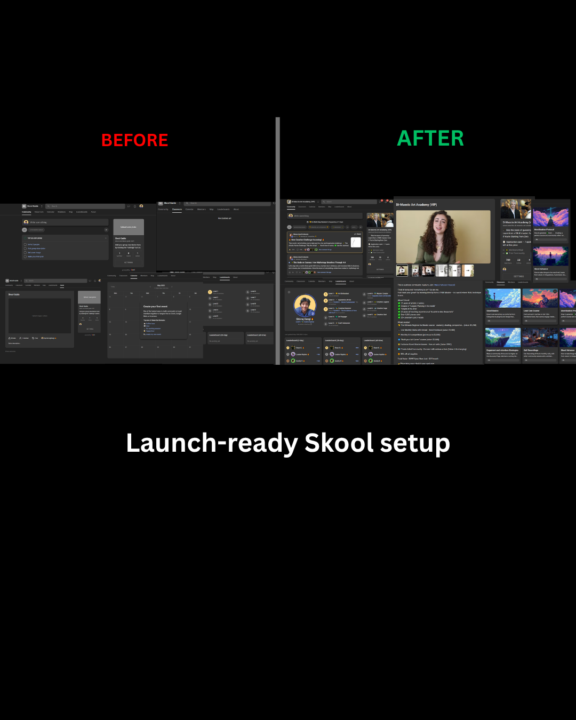
Hey Fernando Estevan 👋 Just checked out Land Development Lab. You're still early enough to structure the community properly before growth starts kicking in — which honestly is the best possible timing. We're currently helping new Skool owners turn empty/basic communities into launch-ready ecosystems completely free. Examples + full breakdown here: 👉 Community Launch Before vs after examples below 👇
1-15 of 15
powered by
skool.com/land-dev-lab-1446
Learn land development from a licensed PE, then get the feasibility, plans, and team to build it. Free lessons, real numbers. ferest.dev
Suggested communities
Powered by