
2h •
Performance Over Presentation: The Psychology of the "Broken-In" Athlete
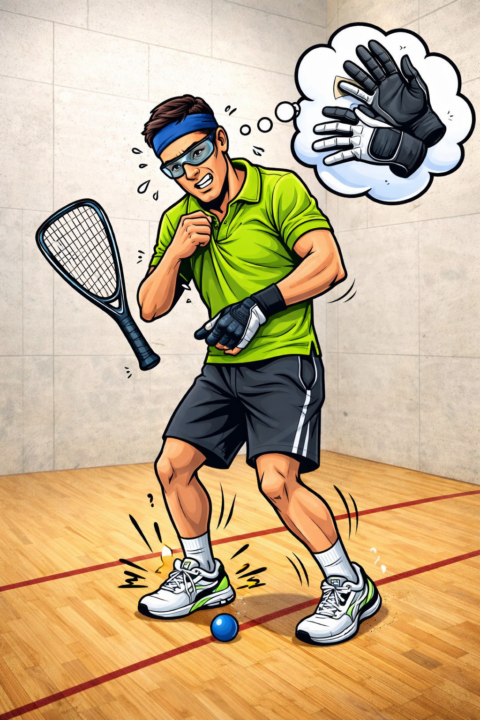
In the world of competitive racquetball, there is a common trap that players fall into: the trap of the "Fresh Fit." We’ve all seen it—the player who steps onto the court looking like they just stepped out of a catalog. They have the latest high-tech moisture-wicking shirt, brand-new color-coordinated shoes, and a glove so white it’s blinding. But as soon as the rally starts, the "presentation" begins to fall apart. The Cost of Distraction I’ll never forget watching a match where a player was draped in brand-new gear from head to toe. On paper, they looked like a pro. In practice, they were their own worst enemy. Between every single point, they were tugging at their sleeves, adjusting their waistband, and messing with their shoes. The hard truth I whispered to myself that day remains a golden rule for the sport: If you spent as much time focusing on the ball as you do on your wardrobe, you’d be winning. When your gear isn't broken in, your brain is "multitasking." Instead of reading the off-the-back-wall setup, a fraction of your focus is on the pinch of a new waistband or the stiff collar of a fresh t-shirt. In a game as fast as racquetball, you cannot afford to lose that 1% of focus. The "New Glove" Lesson Comfort isn't just about feeling good; it’s about mechanical consistency. I learned this the hard way during a tournament. I bought new gloves—similar to my usual brand, but "fresh." During the match, my game fell apart. I couldn't grip the racquet properly; my serves were flying off at weird angles, and my touch shots were non-existent. The leather hadn't molded to my palm yet. It was only when I swapped back to a "beat-up," salt-stained, old glove that my game returned. That old glove was an extension of my hand; the new one was just a barrier between me and the racquet. The "Tournament Ready" Checklist To play your best, you need to achieve a state of "unconscious equipment." You shouldn't feel your gear at all. Before your next big match or tournament, ensure your kit meets the "Three C’s": Comfort, Consistency, and Compliance.
1
0
4h •
The Invisible Edge: Why Grip Strength and Fit Define Your Game
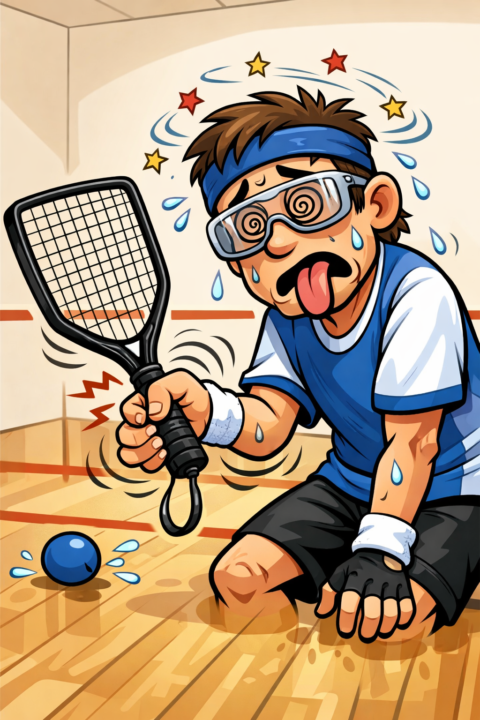
In the heat of a high-intensity rally, most players focus on their footwork or their swing path. But there is a silent hero—or villain—in every shot you take: your forearm and grip strength. Strength is About Control, Not Tension A common misconception is that you need to squeeze the racquet with all your might. In reality, a "death grip" actually slows your swing down and kills your touch. The goal of strength training for racquetball isn't to squeeze harder; it's to build a higher threshold for fatigue. When your hand and forearm are strong, a "relaxed" grip is still stable. This allows you to: • Make Micro-Adjustments: Snap the wrist at the last second to change the ball’s direction. • Handle Unorthodox Shots: When you’re diving or stretched thin and have to hit from an awkward angle, that extra "reserve" strength allows you to stabilize the racquet and still get a productive result. • Stay Sharp in the Third Game: Fatigue leads to "lazy" shots. If your forearm is tired, your accuracy is the first thing to go. The Goldilocks Zone: Why Grip Size Matters You can have the strongest hands in the world, but if your racquet grip doesn't fit, you are fighting an uphill battle. • The Grip is Too Big: If the handle is too thick for your hand, your fingers can’t wrap around it securely. You’ll find yourself over-squeezing just to keep the racquet from rotating on off-center hits. This leads to massive forearm fatigue and "tennis elbow." • The Grip is Too Small: If the handle is too thin, your fingers will overlap too much, and the racquet will feel unstable. You lose the "leverage" needed for power shots, forcing your wrist to do work it isn't designed for. The Rule of Thumb: When holding your racquet in a standard grip, there should be a small gap (about the width of your index finger) between your fingertips and the palm of your hand. "Couch Training": At-Home Grip & Wrist Exercises The best part about grip training is that you can do it while watching TV. No gym required! Here are five simple ways to build a "pro" forearm from your sofa:
0
0
22h •
From Rock Bottom to the Service Line:” Overcoming Parkinson’s” How Racquetball Saved My Life By Jk
My journey with racquetball began in Philadelphia, as a young boy following my father to the local courts. He taught me more than just a game; he taught me a language of movement and discipline. He used to say, "If you love what you do for work, it’s not work—it’s progress." It took me forty years and a harrowing journey through addiction and illness to truly understand what he meant. The Sanctuary in South Florida Years ago, I found myself in Delray Beach, Florida, living in a halfway house at Royal Recovery. I was clean, but I was fragile. Part of the program required me to be out of the house during the workday, but I wasn't yet permitted to hold a job. While many of my peers struggled with the void of empty time—and tragically, nearly two dozen lost their lives to relapses during that period—I found my sanctuary. I was living just a stone's throw from a racquetball court. While others scattered, I retreated to the glass walls. I became a student of the game all over again. In the quiet of those courts, I found the "good quiet." I practiced until my lungs burned and my mind cleared. One day, I noticed a man watching me from the cardio equipment. He was also in recovery, and I could see the spark of interest in his eyes. Eventually, he approached me and asked, "Do you have an extra racquet?" I did. Teaching him didn’t just help his game; it solidified my own recovery. I realized then that racquetball wasn't just a hobby—it was a lifeline. A New Challenge: The Parkinson’s Pivot Life eventually led me to Montreal, where I settled down with my wife’s family and worked as a property manager. But recently, life threw a new curveball: a diagnosis of Parkinson’s Disease. The stress of a 9-to-5 job made my tremors unbearable. In our high-speed world, I found I could barely type; my left hand would jump across the keyboard, a constant reminder of a body I could no longer fully control. I felt lost, until one afternoon when I happened to have my gear with me at work. During a particularly bad tremor episode, I picked up my racquet. The moment my hand closed around the grip, the shaking stopped. Whether it is the muscle memory, the focus, or a sign from a higher power, racquetball is the only place where the tremors subside. Even the act of squeezing the ball brings me a peace that medicine cannot replicate. It was a clear message: I was meant to be on the court.
2
0
1d •
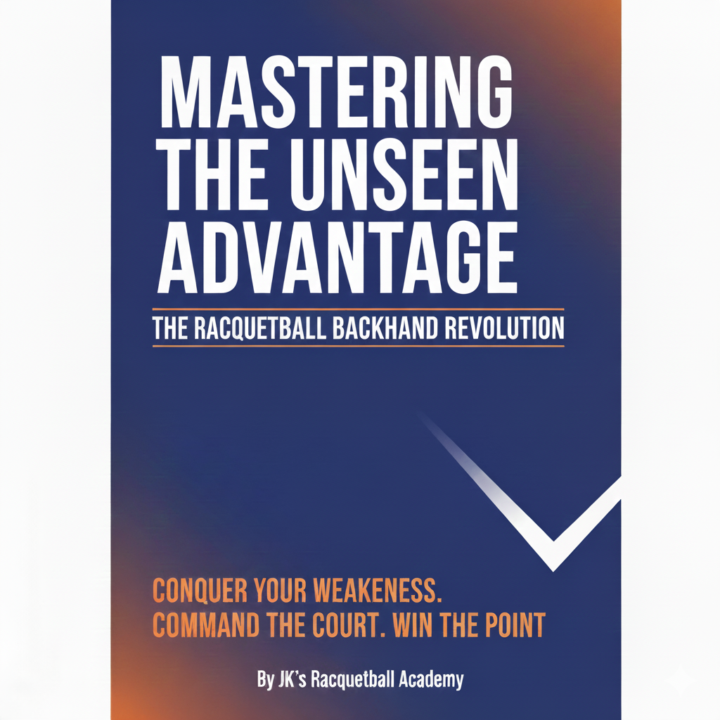
The Backhand Blueprint: Beyond the "Safety Forehand" By JK’s Racquetball Academy
1. The Trap of the "Run-Around" Forehand Most players fall in love with their forehand early. It’s powerful, it’s comfortable, and it feels safe. But relying on it for every shot is a strategic trap. When you "run around" your backhand to hit a forehand on the left side of the court, you commit a cardinal sin of positioning: You vacate the center. By pulling yourself out of position, you leave 90% of the court wide open. A smart opponent will let you hit that forehand once, then simply tap the ball into the massive space you just left behind. To level up, you must develop a backhand with equal strength and confidence. You shouldn't use your backhand because you have to; you should use it because it’s the right tool to keep you in control of the center. 2. The Physics of the Court: No Two Snowflakes are Alike In racquetball, no two shots are identical. Like a snowflake, every hit has a unique signature of velocity, spin, and direction. A master of the court doesn't just "chase" the ball; they predict it. Through years of observation, the ball's path becomes second nature. A high-level player can calculate where a ball will be within a few degrees the moment it leaves the opponent's strings. 3. Anticipation vs. Reaction Understanding the "Natural Corners" and the speed of the ball allows you to move before the ball arrives. • The Predictable Game: Most shots follow the laws of physics. If you study the angles, the game becomes a series of predictable outcomes. • The "Crack Out": Occasionally, the ball will hit the "crotch" (the junction of the wall and floor) and shoot off in an unpredictable direction. • The Solution: Good footwork and stamina aren't just about being fast; they are about getting into the set-up position early enough to handle even the weird bounces. 4. Moving from Defensive to Offensive If you are just running to the ball and "throwing it back" at the front wall, you are playing defensively. You are at the mercy of your opponent. By developing a reliable backhand and mastering court positioning, you stop reacting and start executing. You aren't just hitting the ball; you are placing it where your opponent isn't.
2d •
Up-to-date rules and regulations
https://www.usaracquetball.com/play/rules https://www.internationalracquetball.com/wp-content/uploads/2024/08/1-irf-rulebook_aug2024.pdf
1
0
1-24 of 24
powered by

skool.com/jks-racquetball-academy-7506
“40-year racquetball veteran helping beginners & intermediates improve skills, strategy, and love for the game at JK’s Racquetball Academy.”
Suggested communities
Powered by