
Write something

1d •
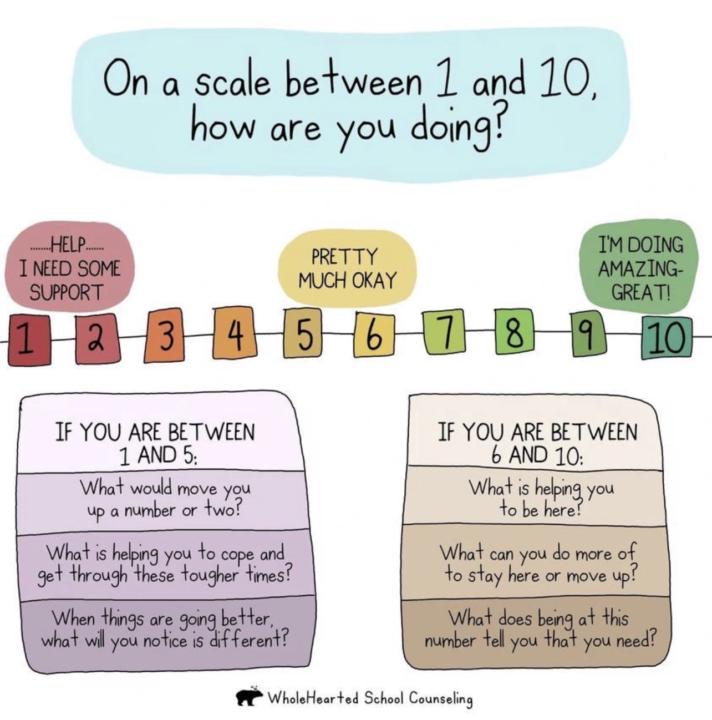
How are you doing?
Often times we get stuck because we don't quite know how to rationalize what we feel.
0
0
6d •
Teacher Appreciation
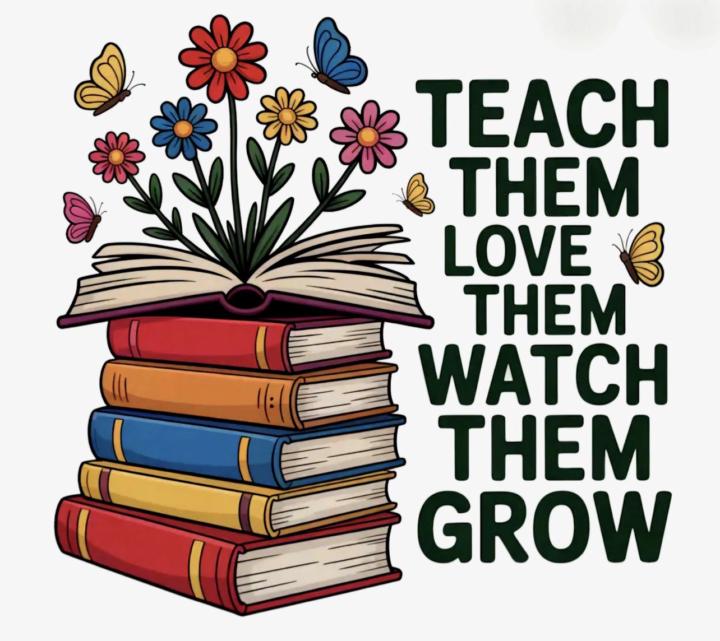
Thank A Teacher! People see the lessons, grading, bulletin boards, and maybe the summers. What they don’t always see are the thousand little moments in between. The teacher who somehow becomes part educator, counselor, referee, nurse, tech support, motivational speaker, and detective trying to find a way to reach that distant student or the child quietly struggling behind the smile, the silence, the behavior, or the “I’m fine.” I can tell you this… teaching is not just a job. It is a daily act of hope. Years later, students may forget the worksheet or the test, but they remember the teacher who noticed them, believed in them, gave them another chance, and made them feel safe, seen, capable, and important. Sometimes the child who was hardest to reach becomes the adult who never forgets the teacher who refused to give up on them. ❤️
0
0
8d •
We regulate first
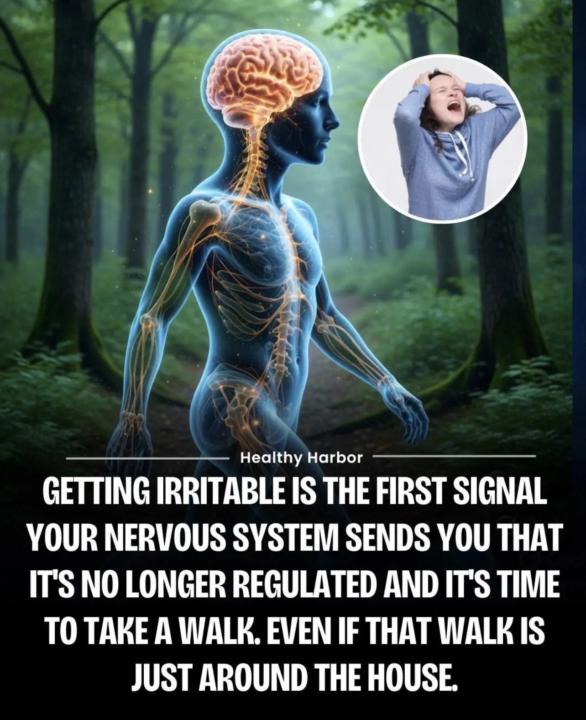
Irritability is often one of the earliest signs that your nervous system has shifted out of a calm, regulated state and into a stress-driven “fight-or-flight” mode. In this state of hyperarousal, even small inconveniences can feel overwhelming, your tolerance drops, and you may become more sensitive to noise, light, or touch as your brain scans for potential threats. This emotional shift is usually preceded by subtle physical cues like a tight jaw, shallow breathing, or tension in the shoulders. Simple actions like walking can help reset this response by introducing rhythmic, bilateral movement that signals safety to the brain, interrupts the stress loop, and supports healthier brain chemistry by lowering cortisol and boosting mood-enhancing neurotransmitters. Alongside irritability, you might also notice difficulty concentrating, restlessness, or racing thoughts—early indicators that your system needs a pause and gentle regulation.
0
0
9d •
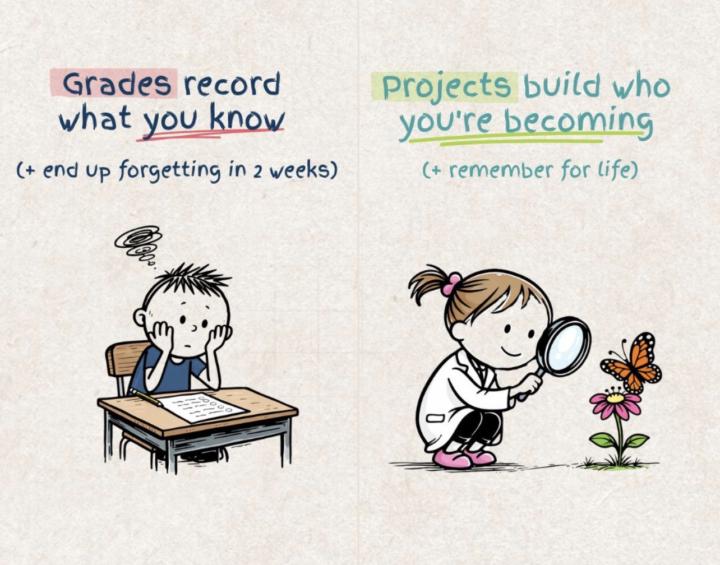
Kids remember what they DO at school.
Kids remember what they DO at school. Not what they're taught. Ask any adult what they remember from school. It's rarely a lesson. It's the science project that actually worked. The play they rehearsed for months. The market day stall they built from scratch. Not the textbooks. Not the tests. The projects. Yet, most schools spend 99% of their time on the things kids will forget in a few weeks. Here's what projects do that lessons can't: 1. They make the learning feel like it matters → A worksheet on fractions is too far from reality. Running a real budget isn't. ↳ When kids can see the point, they stop asking "why do we have to learn this?" 2. They give kids something to own → Ownership changes the stakes. You care more when it's yours. ↳ A project with your name on it hits differently to a test with a score on it. 3. They teach the skills no exam can measure → Collaboration. Iteration. Adapting when the plan falls apart. ↳ These are the skills adults use every single day. 4. They create real stakes → When a project is for a real audience, the quality of the work actually matters. ↳ Kids rise to that standard in a way they rarely do for an exam no one else will see. 5. They leave something behind → A test result disappears into a file. A project leaves a trace. ↳ The kid who built something, made something, solved something remembers it forever. I did well in school. I don't remember most of it. What I remember are the projects. The things I had to show someone. The things I had to figure out. The things I had to finish. We already know this. Our own childhoods are the best evidence of it.
0
0
9d •
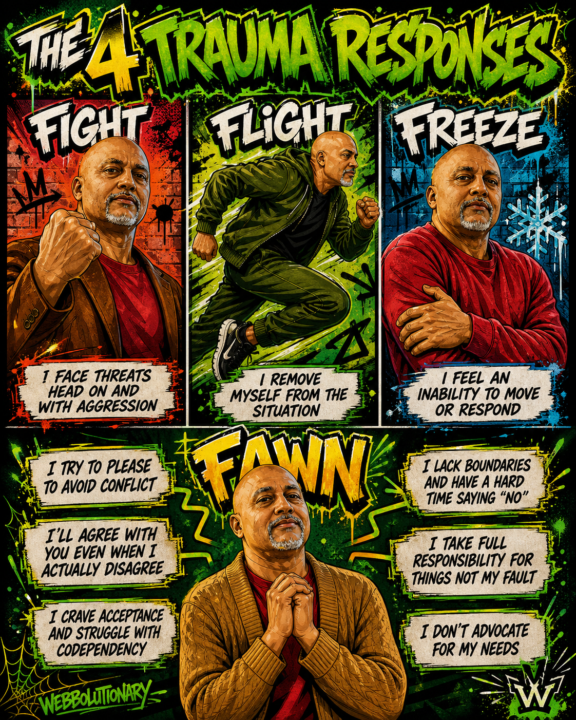
4 Trauma Responses
Trauma responses don’t look like trauma most of the time. They look like personality. In my clinical work, I often see people labeled as: “too aggressive” “avoidant” “shut down” “people pleasing” But when we slow it down, these aren’t character flaws. They’re patterned nervous system responses. Fight protects through control. Flight protects through distance. Freeze protects through shutdown. Fawn protects through connection. All of them make sense… in the context they were learned. The problem is, what once kept someone safe can start to cost them in relationships, work, and self-trust. So the work isn’t to get rid of these responses. It’s to recognize them in real time and build the capacity to choose something different. Because awareness creates options. And options are where change actually lives.
0
0
1-30 of 106
powered by
skool.com/inspiring-leadership-in-school-9907
This group is for parents, teachers, administrators of schools, universities, and juvenile services personnel that support our young people.
Suggested communities
Powered by