
Write something

18d •
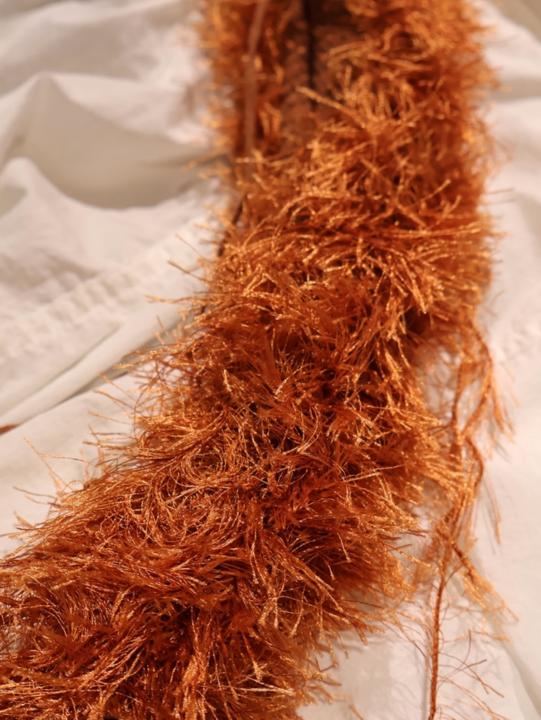
Research Note 03 : Aging Arrangement
This work extends my ongoing exploration of relational structures through the lens of aging and accumulation. While earlier works focused on interconnected units, this project considers how time gradually transforms those relationships. The knitted forms were exposed to oxidized materials, allowing rust traces to emerge through contact rather than direct application. Alongside these traces, I incorporated fibers and yarns whose colours evoke rust and oxidation, extending these qualities into the structure itself. What interests me is the idea that aging is not a process of deterioration but one of continuous formation. Rust records interactions between material, environment, and time, while the textile surface becomes a site where these relationships remain visible. Rather than reproducing the image of rust, this work explores how time settles into material and becomes embedded within form through accumulation, contact, and duration.
3
0
27d •
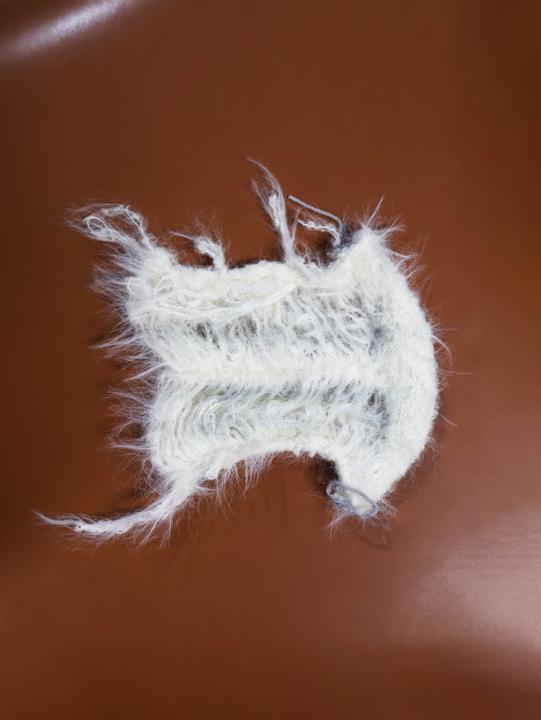
Research Note 02 : Accumulation on White
Following my initial research into rust as a material trace of time, I began a series of sampling experiments using 'white knitted structures' made from various yarns. Rather than exploring rust as a colouring technique, I was interested in how time could become visible through material transformation. The knitted samples were intentionally left white, allowing changes to emerge gradually through contact with oxidized materials. As rust accumulated over time, each fiber responded differently—some absorbed traces deeply, while others revealed only subtle marks. These variations exposed the unique characteristics of each material. What interested me most was the slowness of the process. Rust appeared through waiting, moisture, contact, and duration rather than through direct intervention. The resulting stains and discolorations felt less like applied marks and more like records of time. Through this experiment, I began to see the white knitted surface as a site where time, material, and environment interact. The rust traces became evidence of these relationships, suggesting that aging is not simply a process of decline, but one of accumulation. Rather than reproducing the image of rust, this research attempts to observe how time settles onto material and becomes visible through change.
5
0
May 28 •
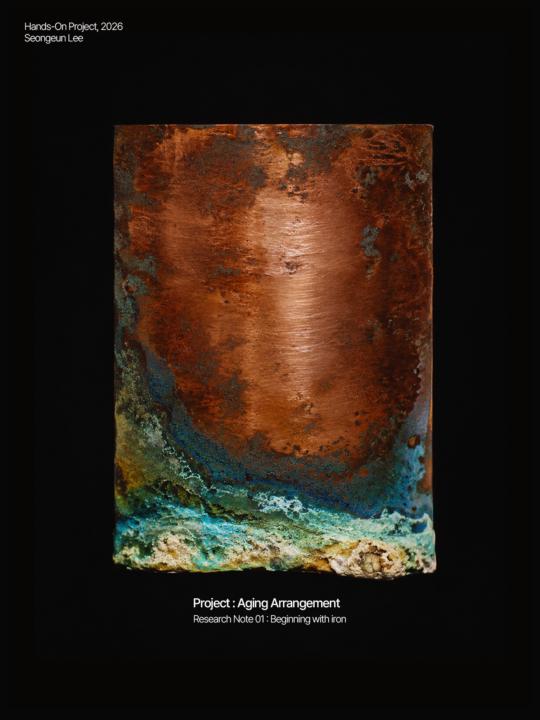
Research Note 01 : Beginning with Iron
Hands-On Project Research Note 01 : Beginning with Iron Through my knitted sculptural structures, I have been exploring the relationships and systems that shape human existence. In the Arrangement series, repeated units accumulate and organize into larger forms, approaching existence not as a fixed entity but as a condition continuously shaped through relationships. Recently, this interest has expanded toward the traces left by time and environment upon material surfaces. I have recently begun researching rust and oxidation as material traces of time. In this study, rust is understood not simply as corrosion or damage, but as evidence of time embedded within matter. Iron slowly transforms through continuous contact with air, moisture, and duration, gradually altering its original condition. These changes are less about destruction than about the process through which relationships with external environments become recorded on surfaces. This research particularly focuses on iron as a material that also exists within the human body. As a key component of hemoglobin, iron carries oxygen and sustains life through circulation. Interestingly, the same material that supports vitality is also highly vulnerable to oxidation. The iron that exists within the body and the iron that rusts in external environments are fundamentally the same material, yet they exist in entirely different states. This perspective naturally leads to an interest in aging. Aging is often understood as decline or loss, yet it can also be seen as the accumulation of time through visible traces. Wrinkled skin, worn surfaces, and discolored materials all reveal the passage of time. Rust similarly becomes a visible condition through which duration appears on material surfaces, functioning as a language of time inscribed onto matter. Currently, I am experimenting with transferring oxidized traces from chains, steel bars, and iron plates directly onto textile surfaces. I am particularly interested in the rust marks formed upon white knitted structures, exploring how stain, smell, texture, and surface transformation can visualize the aging of material. Rather than reproducing the appearance of rust itself, this process attempts to record the traces left by time and environment within the medium of textile.
5
0

May 11 •
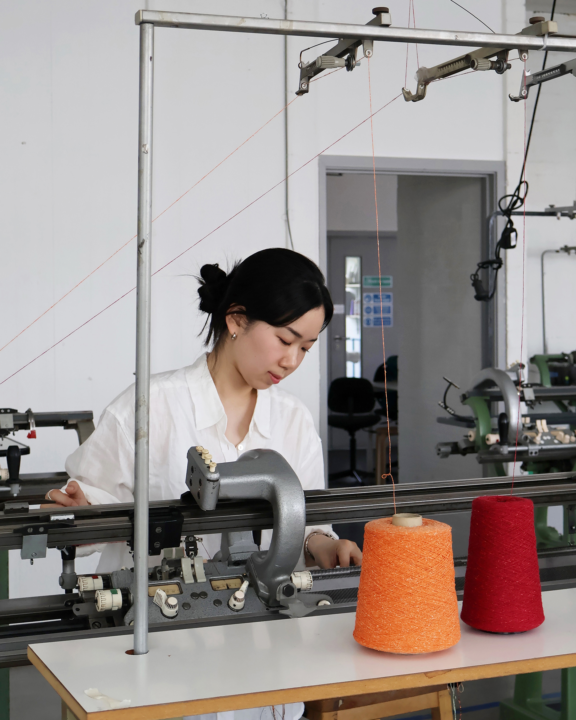
Introducing Seongeun Lee
Seongeun Lee is a textile artist and researcher based between London and Busan, South Korea. She holds a PhD from Pusan National University and an MA in Textiles from the Royal College of Art in London (2024), as well as both an MA and BA in Textiles and Metal Art from Pusan National University. Her research-driven practice explores the relationship between textile, sculpture, and architectural space through material experimentation and spatial investigation. Working primarily with soft sculpture, Lee approaches textile as an extended sculptural medium. Through modular knitted forms and accumulative structures, she explores how individual units assemble into adaptive spatial configurations shaped by gravity, tension, and movement. Her installations often unfold across ceilings, floors, and surrounding surfaces, inviting viewers to experience shifting perspectives and spatial relationships through the softness and flexibility of textile. Lee has presented solo exhibitions including Arrangement at PNU Arts Center in Busan (2025), Connection at Hansae Gallery (2022), and Eternal Web at PNU Arts Center (2020). Her work has been exhibited internationally at venues including the Royal College of Art and Saatchi Gallery in London, Carrousel du Louvre in Paris, Bunka Gakuen Costume Museum in Tokyo, and Three Shadows Photography Art Centre in Beijing. In 2025, she received the International Prize Artist of the Year from the Effetto Arte Foundation in Florence. Website: www.seongeunlee.co.kr Instagram: @lseunly
2
0
1-4 of 4
powered by
skool.com/hands-on-residency-3971
Hands-on Residency is a learning environment that nurtures critical reflection and situates artistic practices within wider cultural frameworks.
Suggested communities
Powered by