
Write something
6h •
🐴 GET GOOD HORSEMANSHIP TIP 29.
✨Getting good with horses comes at a cost. Not just a financial one, but also a personal one. Because real horsemanship asks more of you than just showing up, it asks you to grow. It costs you: - your ego - when things don’t go the way you expected - your comfort - when you realize you need to change, not the horse - your patience - when progress is slower than you’d like - your habits - when what you’ve always done no longer fits - your certainty - when you start questioning what you thought you knew - your time - because rushing no longer feels right And sometimes it costs you the version of yourself that just wanted it to be easy. But what you gain is so much more including greater clarity, connection, trust, and a horse that can truly understand you. So my tip is simply knowing all of the above and being okay with it. ❓Question: What are you willing to Get Good at letting go of to become better for your horse? Zoë🐴✨🫶
14d •
🐴 GET GOOD HORSEMANSHIP TIP 28.
✨Slow Is the Shortcut… Notice how everything changes when you slow down. It’s funny…because it can feel like you’re doing less, like you’re delaying things, like you should be getting good further along. But horses have this quiet way of showing us the truth. Rushing doesn’t actually move us forward, it just creates things we’ll have to come back and fix later. Whereas when you take the time to explain something properly, to wait for the try, to get it right in the moment - everything starts to feel clearer, softer, more connected and good enough. 👉 And most importantly…it lasts. Slow, done well, isn’t a delay, it’s the shortcut we didn’t realize we needed. ❓So tell me… Where could you slow down a little right now… and what do you think might change if you did? Zoë 🐴✨🫶
23d •
🐴 GET GOOD HORSEMANSHIP TIP 26.
✨ Have a plan - but keep it flexible. Go into each session with at least 3 exercises: 2 of which your horse already knows, and 1 new or less established. If things are going well, you can repeat that pattern with another 2–3 exercises. This keeps the horse thinking, engaged, and able to feel successful. Horses learn best when they can move between what they understand and what they’re still figuring out. Sometimes stepping away and returning to it later in the same session creates more understanding rather than pushing through. Sometimes it is not possible especially if it is a general skill that needs addressing in that moment - like pushing, biting, kicking, taking you skiing - but for the rest it is. Avoidance only becomes an issue when we never return to it. If you don’t yet have the knowledge, that’s your cue to study, prepare, and come back better next time. Also ask here in the community. Good sessions aren’t rigid, they’re responsive and progressive and boy oh boy is it fun. ❓Question: What do you think changes when you mix what your horse knows with something new? Drop it in the comments 👇
20d •
🐴 GET GOOD HORSEMANSHIP TIP 27.
✨ Use your hands to open, more than you close them. Our hands are one of the clearest ways we communicate with the horse. They can create softness, space, and understanding OR restriction, tension, and confusion. Way back in the past, I was often too quick to pull, too quick to shorten the rope, too quick to bring the horse into my space. What I thought was control was often just me getting in the way. Soft, wise, and thoughtful hands stay ready to release, allow, and guide - not just take and hold. Because when the horse feels they have space, they’re far more likely to choose to stay with you. So this week, pay a little more attention to your hands. 👉 In May when I am back, we’ll go deeper - with themed weeks to help you really focus and improve in areas like this. ❓Question: Where could you Get Good at allowing more, instead of taking more, with your hands? Drop it in the comments 👇
Mar 29 •
🐴 GET GOOD HORSEMANSHIP TIP 24.
✨ I chose understanding over tradition, and everything started to make more sense for both me and my horses... Something to think about is before you follow a method, a habit, or something you’ve always been told, pause and ask yourself: does this make sense to the horse? And ask: does my horse actually understand what I’m asking? Because tradition without understanding can easily become pressure without purpose or meaning. And that’s where confusion, tension, and resistance start. If instead you choose to understand how your horse thinks, learns, and responds, everything becomes clearer, softer, and more consistent. You will have the tools to build that beautiful bond and partnership. 👉 And here’s the bigger picture - the more of us who choose understanding over tradition, the more that becomes the new tradition. And that would be a pretty good direction for the horse world to go in. What say you? 🐴✨🫶
1-30 of 48
skool.com/get-good-with-horses-courses
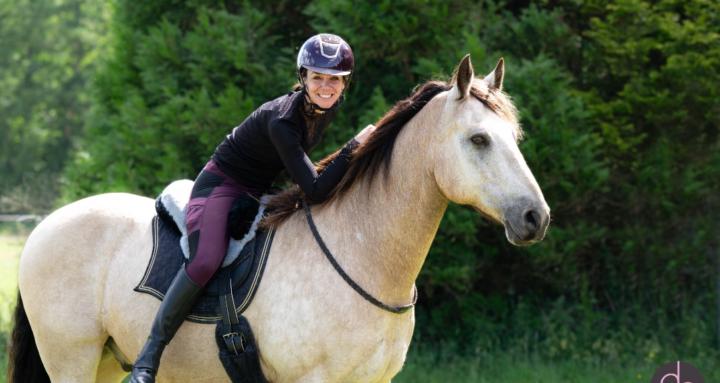
Get good with horses through understanding, feel, and honest practice — a hands-on horsemanship space for becoming your horse’s hero.
🐴✨🫶
Leaderboard (30-day)
1

+194
2
+185
3
+133
4
+108
5

+82
Powered by