
Write something

27d •
Behaviour Is Information
One of the most important shifts in horsemanship is learning to see behaviour as information rather than simply something to correct. Whether it comes from a horse or a rider, behaviour tells us something about what is happening beneath the surface. A horse that rushes home may be communicating anxiety, anticipation, habit, or uncertainty. A horse that refuses an obstacle may be communicating confusion, lack of confidence, physical discomfort, or a gap in preparation. A rider who becomes frustrated may be communicating uncertainty, pressure, fear, or a lack of understanding. This does not mean every behaviour is acceptable. Nor does it mean that every behaviour should be ignored while we search endlessly for answers. Good horsemanship often requires us to respond in the moment. However, once the moment has passed, we have an opportunity to ask a different question: What information was that behaviour giving me? The goal is not simply to stop unwanted behaviour. The goal is to understand what is driving it so we can make better decisions moving forward. The more accurately we understand the horse, the rider, and the situation, the better equipped we are to create a successful outcome. Behaviour is information. Understanding that information leads to better decisions. Examples 🐴 A horse that pulls back when tied may be communicating fear, previous experiences, confusion, or a lack of preparation. 🐴 A horse that drifts toward the gate may be communicating insecurity away from other horses, anticipation of being finished, or simply a habit that has been unintentionally reinforced. 🐴 A horse that becomes tense before a competition may be communicating uncertainty about the environment rather than disobedience. 👤 A rider who struggles with consistency may be communicating uncertainty about what they should do next. 👤 A rider who becomes frustrated may be communicating that they are overwhelmed, confused, or feeling pressure to achieve a particular outcome. Questions for Reflection
27d •
Foundations Philosophy
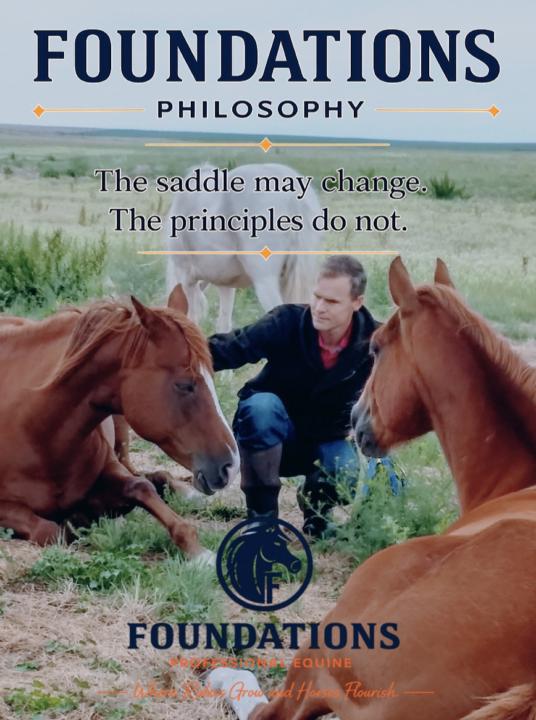
People come to horses for many different reasons. Some want to build a partnership. Some want to compete. Some want to trail ride, start a young horse, develop their riding skills, or simply enjoy spending time with their horse. While goals, disciplines, and methods may vary, we believe good horsemanship is built on principles that remain the same. These principles guide our training, coaching, clinics, and community. Good Horsemanship Is Good Horsemanship The saddle may change. The principles do not. Whether you ride Western, English, Ranch, Working Equitation, Cowboy Challenge, Trail, or something else entirely, good horsemanship is built on principles that transcend disciplines. Behaviour Is Information We believe all behaviour is communication. Whether it comes from a horse or a rider, behaviour provides information about understanding, confidence, preparation, emotion, physical comfort, or experience. Our job is not simply to react to behaviour, but to learn from it. Understanding Leads to Better Decisions The more accurately we understand the horse, the rider, and the situation, the better decisions we can make moving forward. Understanding does not replace action. It improves it. The Human Is Part of the Equation The horse brings what the horse brings. As riders, trainers, and leaders, it is our responsibility to evaluate the situation, adapt the plan, and help both horse and rider succeed. When challenges arise, it is important to ask not only what the horse can do differently, but how we can better support them in doing differently. Create Opportunities for Success We believe in setting horses and riders up to succeed. By breaking challenges into manageable pieces and helping horse and rider find the right answer, confidence, understanding, and willingness can grow. As we often say: Make the right thing easy. Consistency Creates Confidence Clear expectations help both horses and riders feel confident and secure. Consistency is not about rigidity. It is about creating clarity, fairness, and understanding.
1
0
1-2 of 2
powered by
skool.com/foundations-horsemanship-6483
Building better riders and developing better horses through practical horsemanship, meaningful partnerships, and lifelong learning.
Suggested communities
Powered by