
START HERE
Welcome Mad Scientist! Learn how our community works, and how to get access to Free and Paid programs.
0%

Support the Madness
Keep the power surging! How to provide direct support for our Fellowship of Mad Scientists.
0%
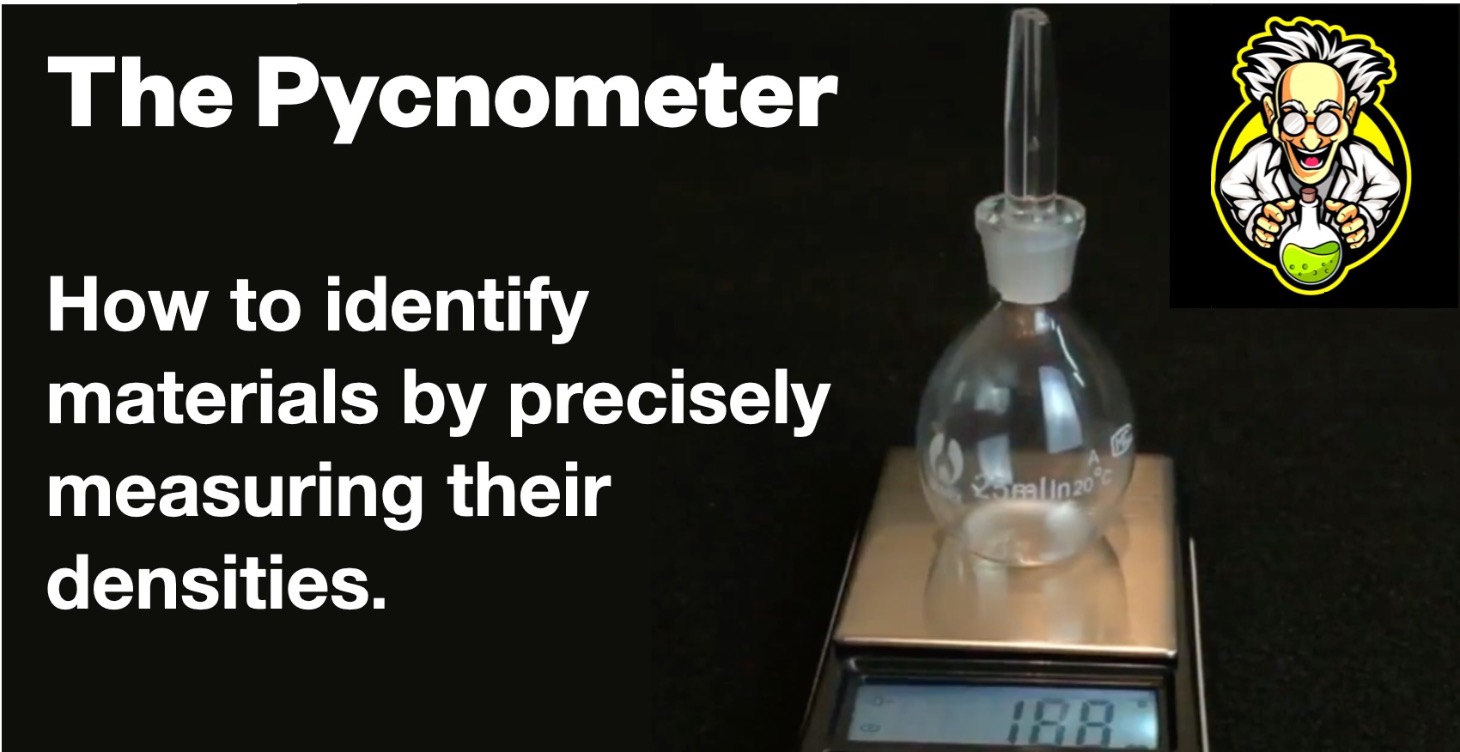
Pycnometer: Key to identifying mystery materials.
Density is a core property of matter that helps identify substances and determine their purity. In this work, accuracy and precision are everything. Professional use a device called a " pycnometer" to make these measures because it provides a highly accurate way to measure the density of liquids and solids, even those with irregular shapes. This is a foundational skill that all Mad Scientists need to know.
0%
Track the Solar Wind From Your Living Room
If you'd like to learning how to build one of the most sensitive instruments known to science, this course is for you. You're going to construct an instrument that is so sensitive it can track the tiny changes in your local magnetic field that is caused by the solar wind as it rushes through the earth's magnetosphere.
0%
Hot Ball Anemometry-Measure flow w.o. moving parts
Cup anemometers have their uses, but they are useless in tight spaces and when the air currents are moving slowly. So they can't monitor environments where animals and people live. In this course you will learn an ingenious first-principle method to detect and quantify slower moving currents air that works in tight spaces without moving parts.
0%
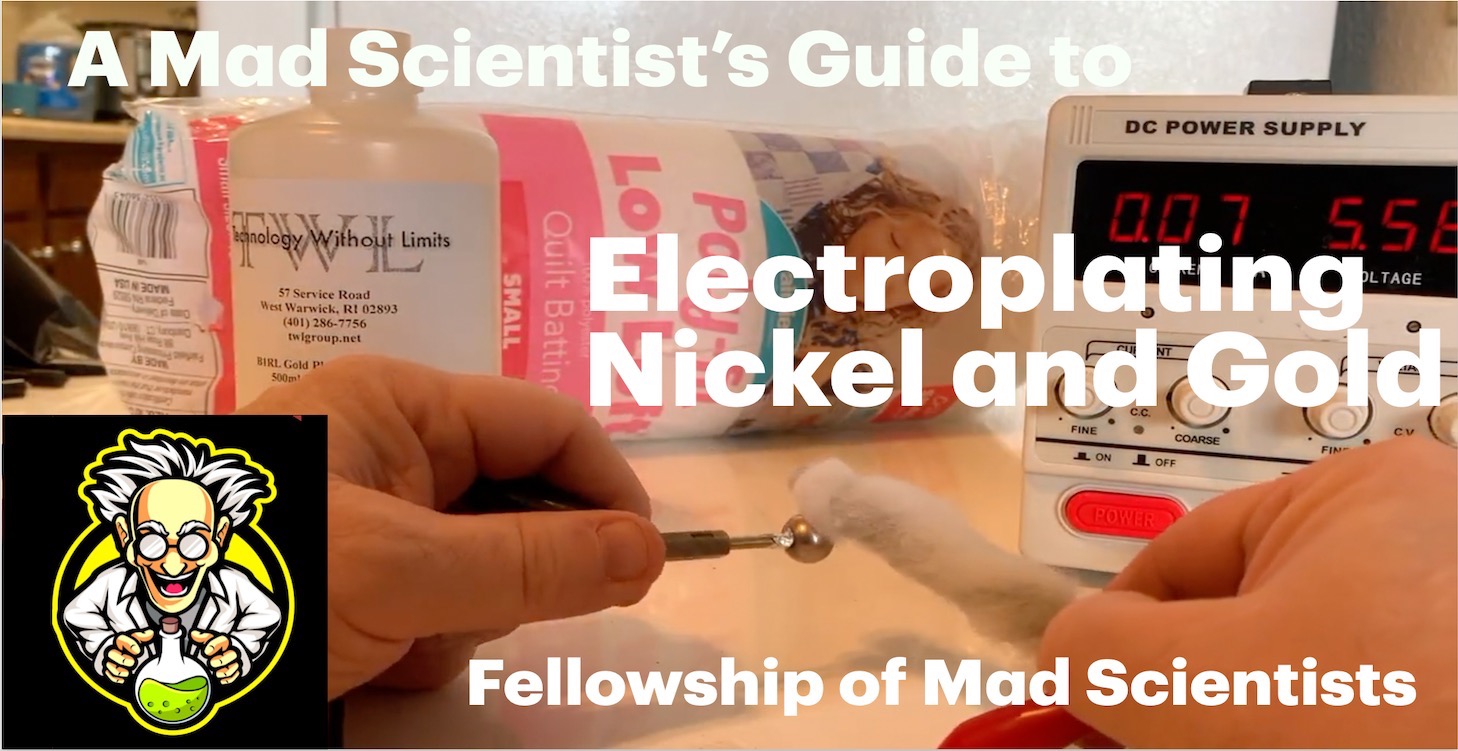
Plate Your Instruments With Nickel and Gold
Every instrument is a thermometer. They all react to changes in ambient temperature. And if yours needs to operate in sunlight, keeping a constant temperature can be difficult. Since gold is highly reflective in the infrared, gold-plating one's sensors is often the best solution. In this course, you will learn how to electroplate metals in general, and how to gold plate almost any surface, even a 3-D printed part, using our Hot Ball Anemometer as an example.
0%
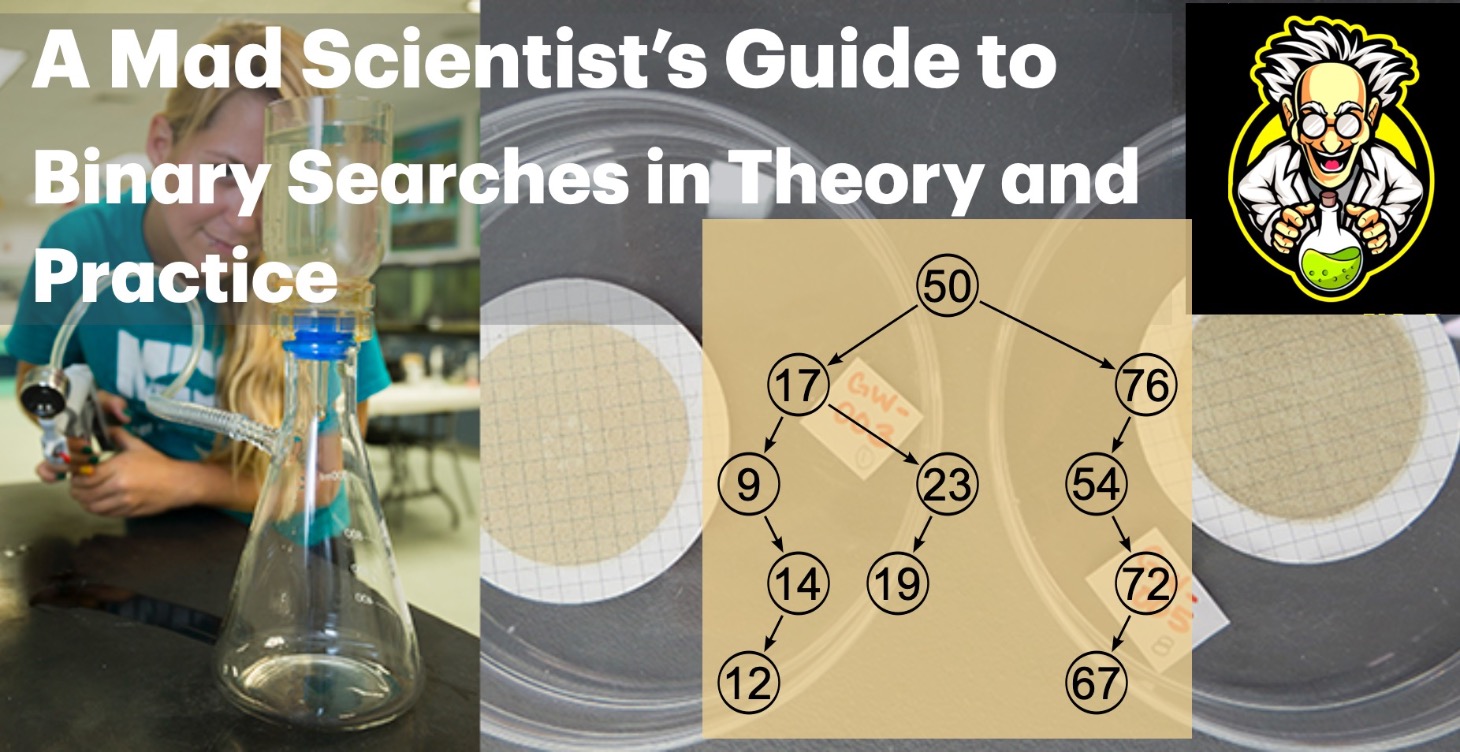
The Binary Searches in Theory and Practice
In computer science, the Binary Search Algorithm provides a fast and efficient way to find a particular value inside an ordered list. But the algorithm has applications well beyond computers. Every experimental scientist needs to know it. In this course, you'll learn not only the algorithm, but also how to apply it in your laboratory. As an example, I'll show you how to use it to quickly find the concentration of a given toxin needed to kill 50% of a group of cells (the so-called LD₅₀ dose).
0%
1-7 of 7