
Write something
Pinned

⭐
🔥
36m •
🍞 Remember the Starter Experiment? Here’s What It Baked.
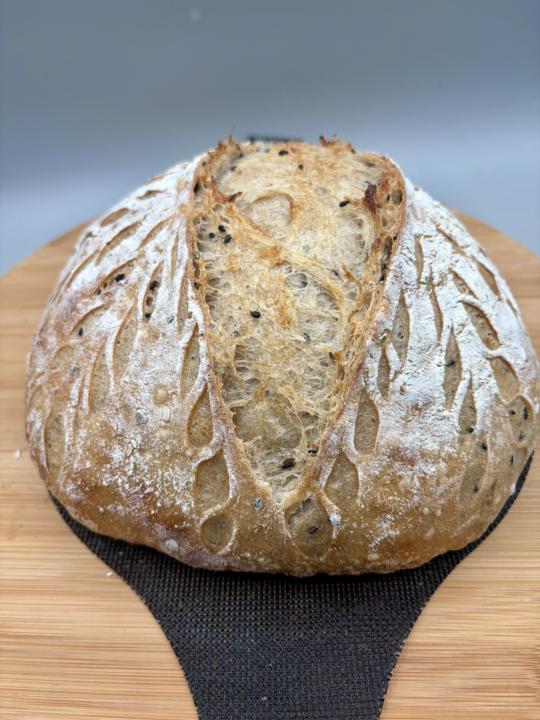
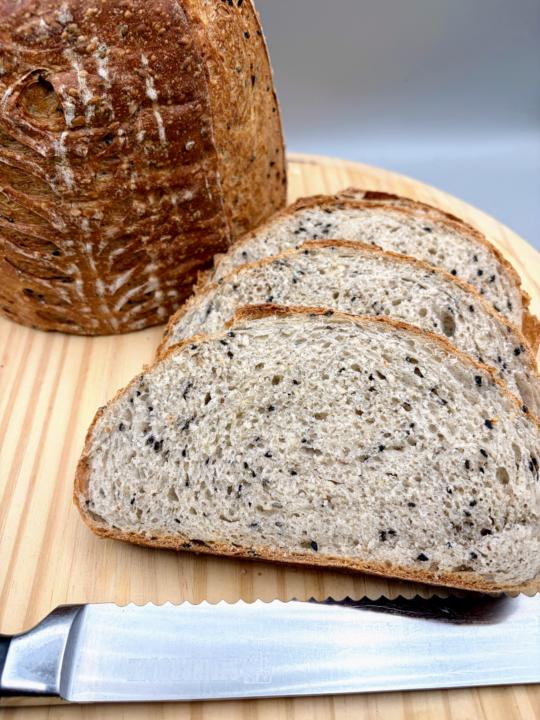
🍞 Last night I posted about my starter experiment water versus pineapple juice, the scale that died at midnight, and the volume measure I had to fall back on. You followed along all day. The coil folds, the toasting, the shaping, the pre-shape, the bench rest, the final shape, the bake. This is the loaf. 🌾 The Loaf Poppy seed sourdough from the Recipe Pantry, with one swap: I toasted black sesame seeds instead of poppy and folded them in at the first coil. The water-fed starter from the experiment is what raised it. The pineapple-fed jar got set aside. Same recipe. Different seed. Toasted, not raw. That's the whole change. 🔥 What I Got 🔹 Bloom that opened clean and proud where the score caught 🔹 A crumb that's open, glossy, evenly developed, with sesame distributed all the way through 🔹 Decorative scoring around the perimeter that held its shape because I kept those cuts shallow and the main score deep 🔹 A crust that's deep amber where it should be and lighter where the flour protected it 🔹 The kind of ear that makes you pause for a second before you slice it 🧪 The Lesson Worth Naming The high hydration sounds intimidating until you remember the wholemeal in this recipe is thirsty. It needs that water. Drop the hydration and you starve the dough. That's the whole reason the recipe is built the way it's built. And the toasted black sesame is the move I'd recommend to anyone who wants to take this loaf up a level. Two to three minutes in a dry skillet, shaking constantly, until you smell them. Then fold them in at the first coil like the recipe says. The toast wakes up the oil in the seed, which is where the flavor lives. Black sesame in particular has more oil than poppy, so the difference is dramatic. 📌 What Made This Bake Work 🔹 A clean, water-fed starter at peak (the right jar from yesterday's experiment) 🔹 Toasted seeds folded in at the first coil for crunch and flavor 🔹 3.5 coil folds, not 4, because at 75% hydration with wholemeal in the mix, four is too many
Pinned
⭐
🔥
2d •
🌾 Quick Update on the Poppy Seed Loaf Recipe
🌾 Small but important update on the poppy seed loaf in the Recipe Pantry. The original version called for T55 French wheat flour, and I'll be straight with you, that was a miss on my part. Most of us don't have T55 sitting on the shelf, and we shouldn't have to chase down specialty flour just to bake a poppy seed loaf at home. So I pulled it back and rewrote it. ✅ What Changed Both versions, yeasted and sourdough, now call for bread flour as the primary flour. If you've got AP on hand, that works too. If you happen to have T55, use it. The recipe works with any of the three. But the default is now whatever's already in your pantry. 🍞 Yeasted Version https://skoo.ly/yeasted-poppy-seed 🥖 Sourdough Version https://skoo.ly/sourdough-poppy-seed 📝 Quick Note on Flour Swaps 🔹 Bread flour gives you slightly more structure and a bit more chew. That's what I'd reach for first. 🔹 All-purpose flour gives you a softer, more tender crumb, which honestly suits a poppy seed loaf just as well. If you use AP, drop your water by about 5 to 10 grams because AP absorbs a touch less. 🔹 T55, if you have it, sits right in the middle around 11% protein. Use it the same way you'd use AP. That's it. No other changes to the recipe. Same hydration, same timing, same method. 👋 Your Turn If you've baked the old version, tell me how it went. If you're baking it this week, post your loaf in the thread. I want to see them. Perfection is not required. Progress is. Henry ⭐🔥
Pinned
⭐
🔥
4d •
🥖 Saturday Bake: Poppy Seed Loaf, Two Ways 🌾
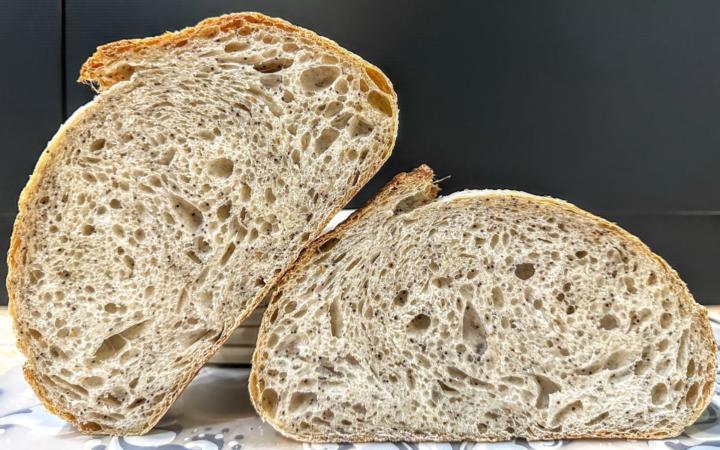
We’re staying on the road we’ve been building together. Baguettes. Pretzel bread. The Foolproof Sourdough Loaf. And this Saturday, we’re going somewhere beautiful. ✨ Poppy seed bread. ✨ Two versions. ✨ One bake-along. 📌 Why two versions? Some of you are deep into sourdough and ready to push hydration. Some of you are still building your starter, or just want to bake bread this weekend without a multi-day commitment. This Saturday, both of you get to bake the same loaf alongside everyone else. 🥖 The Sourdough Version T55 French flour and a touch of wholemeal at 80% hydration. The poppy seeds get folded in during the first coil, which laminates them through the crumb instead of mixing them away. The result is what you see in the photo: ✨ Open ✨ Airy ✨ Flecked with seed ✨ That nutty crunch you only get when the seeds keep their integrity This one teaches you: 🌾 How to handle higher hydration 🌾 How to time bulk fermentation in a warmer kitchen 🌾 Why we use 3.5 sets of coils instead of 4 (Hint: 80% hydration with wholemeal doesn’t want a fourth set. It tightens the crumb.) 📖 Full sourdough recipe in the Recipe Pantry: https://pantry.bakinggreatbread.com/recipes/poppy-seed-sourdough-loaf 🍞 The Yeasted Version Same flavor. Same beautiful crumb. Simpler timeline. ✅ Same-day bake ✅ No starter required We’ll use the same poppy seed lamination technique with a commercial yeast dough, so you still get that gorgeous seeded crumb without the multi-day fermentation. If you’ve been wanting to bake along but felt like sourdough was a barrier, this is your week. 📌 I’ll have the yeasted version uploaded to the Recipe Pantry by end of day today. Watch for the post. 🛒 What you need to know now: 🌾 Pick up poppy seeds this weekMost grocery stores carry them in the spice aisle. 🌾 If you can find T55 flour, grab it.If not, a strong all-purpose around 11–12% protein works beautifully.(King Arthur AP is the closest match.)
⭐
🔥
1d •
When Your Scale Dies at Midnight: A Stiff Starter Experiment
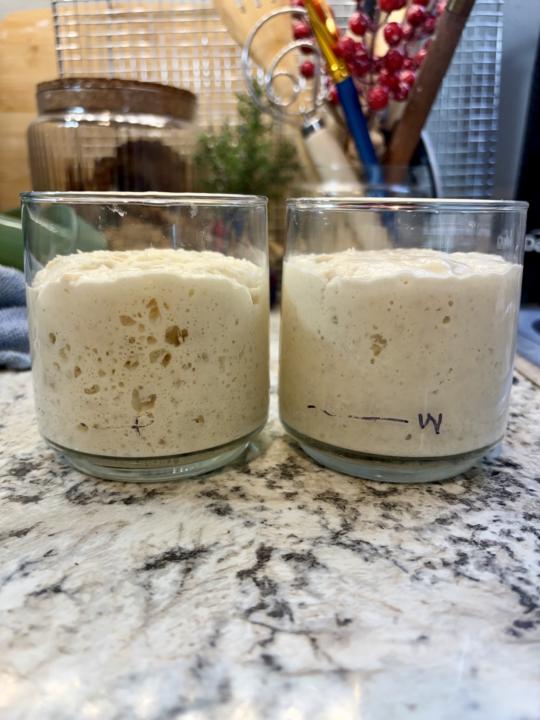
🌙 Last night around midnight I went to feed my starters for a little experiment I've been wanting to run. Stiff starter, two jars, side by side. One fed with water, one fed with pineapple juice. Same flour, same ratios, same temperature, same everything except the liquid. Except my kitchen scale had other plans. ⚖️ Scale Trouble The display started flashing "unstable." Then the numbers just started running. 12g. 47g. 3g. 89g. Whether there was anything on the scale or not. I sat there for a few minutes trying to coax it back to life, recalibrate, reset, the whole routine. Nothing. So I did what bakers did before digital scales existed. I went by volume. A quarter cup of liquid in each jar (water in one, pineapple juice in the other), and a half cup of flour each. Stirred them stiff, capped them, and went to bed. 🔬 What I Found This Morning Nine and a half hours later, both jars had risen to about the same height. Domed caps, pulled away from the sides of the glass, looking active. From the front, they looked like twins. But from the top, the story changed. 🔹 The pineapple jar (left): glossy, slack surface. Bubbles broken open. Bigger, more open holes throughout the body when you look through the side of the glass. The structure had given way. 🔹 The water jar (right): tighter, drier surface. You could still see the swirl pattern from how I mixed it. Smaller, more uniform bubbles. The structure was still holding. 🧠 Why This Happens Pineapple juice brings two things plain water doesn't: sugar and acid. Sugar gives the wild yeast a faster food source, so fermentation accelerates. Acid drops the pH and starts breaking down the gluten structure. Together they push a starter past peak faster and degrade its structure even at stiff hydration. Same rise height. Completely different internal behavior. 📌 The Takeaway Pineapple juice is a great tool for waking up a brand new starter in the first few days. The acid suppresses the bad bacteria long enough for your wild yeast to get established. But once you have a healthy, mature starter, pineapple juice isn't doing you any favors. It just accelerates fermentation and breaks down the structure you've worked to build.
⭐
🔥
20h •
That Moment Your Dough “Falls Apart” After Adding Salt 🧂
If you’ve been doing fermentolyse with me, you’ve probably had this moment. You add the salt. You start working it in. And suddenly the dough looks like it’s coming apart. Tearing. Going lumpy. Falling away in pieces in your hands. A lot of bakers panic right there. Some grab more flour. Some start over. Some assume they ruined the bake. Don’t. This is normal. And here’s why it happens. Salt tightens gluten. That’s its job. But when you sprinkle salt across the top of a dough and start pinching it in, the salt doesn’t hit the dough evenly. There’s more salt in some spots than others. The gluten where the salt is concentrated tightens fast. The gluten where there’s no salt yet stays slack. Tight gluten next to slack gluten means the dough literally pulls apart. You’re watching two different doughs in the same bowl, briefly, while the salt finds its way through. Keep working it. Pinch and fold. Wet hands. Two to three minutes of patient incorporation. The salt distributes, the gluten evens out, and the dough comes back together stronger than it was before. Then rest for 45 minutes before your first coil fold. That’s when you’ll really see the structure show up. This is the kind of thing you only learn by watching the dough through the moment instead of bailing on it. Trust the process. Saturday’s poppy seed bake is going to give a lot of you this exact moment. Now you know what to do when it shows up. Perfection is not required. Progress is. Henry ⭐🔥

1-30 of 1,692
powered by

skool.com/crust-crumb-academy-7621
#1 Sourdough Community on Skool 🍞
Coaching, not judgment. Sourdough, starter, yeasted, enriched & every bread between.
✅ ProveWorth Certified ⭐⭐⭐⭐⭐
Suggested communities
Powered by