
Write something
Pinned

10h •
🏆 HOW COMPETITIONS WORK FROM NOW ON 🏆
Quick update on the competition schedule so everyone knows what to expect. 📅 NEW CADENCE: TWICE A MONTH We're dropping comps on the 15th and the 30th of every month. Two chances to compete, every month, on a set schedule you can plan around. ✍️ WHY THIS SCHEDULE Spacing them out this way means we can give tailored feedback on every single submission. Not just the winners. Everyone who enters gets notes on what worked, where it's weak, and what to do next. 🎁 WHAT WINNERS GET Along with the prize, every winner gets a 15-minute one-on-one with Jake. Use it to talk through your build, ask questions, or bring whatever else is on your mind. Two comps a month. Feedback on every entry. Direct time with Jake for the winners. Mark your calendar for the 15th and let's get to work!
Pinned
10h •
🎆 GOOD NEWS: THE SALE STAYS OPEN. HAPPY 4TH 🎆
We're holding the last sale through the holiday weekend so nobody misses it. 🎉 Premium: $27 → $14/mo 🎉 VIP: $97 → $67/mo This is the cheapest it will ever be. Once it closes, the price is gone for good. ⏰ New deadline: July 5th, 10:00 AM EST. This is the last extension. If you've been on the fence, sign up now. You lock this rate in and keep it every month going forward. 🖥️ ONE MORE REASON TO JOIN The week of July 5th we're dropping the software we've been building for this community. It goes out for beta testing first, and only Premium and VIP members get access. Sign up before the sale closes and you're in from day one.

42m •
How do you give an agent the state of a relationship — not just the history — so its follow-up doesn't go generic?
I run a chunk of my commercial follow-up through agents now, and the wall I keep hitting isn't the writing — it's that the agent doesn't know where the relationship actually stands. Who owes whom a reply, whether we're warm or stalled, what the last real signal was. So I either hold all of that in my head (and I become the bottleneck), or I dump the whole thread history into context and the message comes back generic and expensive. For those of you running outreach or follow-up through agents: how do you represent relationship state as something structured the agent reads and acts on — a status field, a per-contact context file, a "next best touch" the system proposes? And just as important, how do you keep the output from feeling automated on the other end? I'm after the structural fix, not a better prompt. What actually lives in your setup, and what did you try that quietly failed?

1d •
Your ICM works. So why is it getting expensive to run?
Quick recap, because this is "part 3" following @Bas Rosario 'cake' post and my first follow up. Thank you @Brendan Tucek. Your post is what got me thinking about this 3rd part. Bas taught us to break the cake into ordered steps, one instruction per folder. My follow up post zoomed in on the step that checks the cake — the toothpick, the gate. This one is about the part nobody warns you about until it shows up on the bill: cost. Here's the symptom. Someone in here recently posted a folder system that genuinely works, doing real work in their business, and then admitted the part most people don't: it burns a lot of tokens just figuring out where to look. 🪙 If you've built anything past a toy, you've felt this. The structure is fine. It's getting slow and expensive anyway. 💸 Here's where it comes from. In most ICM setups there's one file the AI reads before every single task. The map. The "you are here" file. Every word in it gets paid for on every interaction, whether the task needed it or not. And that file has a way of growing. You add a rule, then a note, then the whole folder tree, then some history, and one day your always-open page is a 3,000-word document. Now the model re-reads a small book before it cracks the first egg. Every time. 🥚 The fix is the oldest trick in any real kitchen: 'mise en place'. 🧑🍳 You don'tdrag the whole pantry onto the counter to make one cake. You bring out what this step needs, and everything else stays in the cupboard until it's called. For your folders, that means the always-loaded file is an index, not the recipe. It points. "Buyers live here. Follow-ups here. Voice guide here." 📇 One glance, then jump. The actual detail lives down in the step folder that only opens when the AI is standing in it. Whoever needs the frosting technique walks to the frosting folder. They don't carry the frosting instructions around all day in case it comes up. So the through-line of all three posts is one discipline pointed at three different things.
Apr 15 •
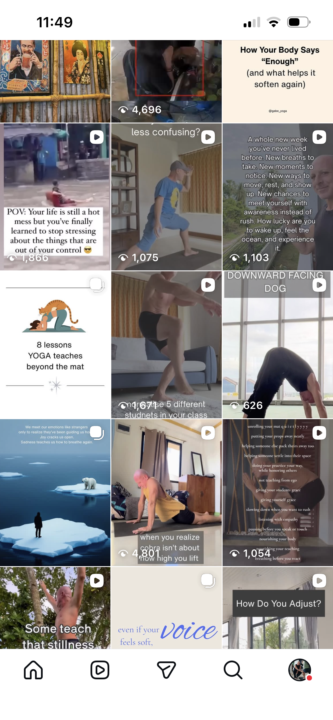
From messy to branded profile grid
With very little experience a week ago, I created a project outline to brand out the cover images on Instagram profile grid. In less than 30 min, after going through the foundations i had it completed. Claude code executes with just two words and can make as many cover on demand as i wish and output them neatly as PNG files in a folder. Jake - super thanks! I learned so much in less than a week 🙏🙏🙏🙏 See before and after :)
1-30 of 2,173

skool.com/cliefnotes
What we give away free beats most paid courses. Build durable AI systems with a Marine vet and Edinburgh researcher. 40+ lessons, growing.
Leaderboard (30-day)
1

🔥
+1767
2

🔥
+1700
3

+1217
4

+1004
5

+613
Powered by