
Write something
Pinned

16h •
🏆 HOW COMPETITIONS WORK FROM NOW ON 🏆
Quick update on the competition schedule so everyone knows what to expect. 📅 NEW CADENCE: TWICE A MONTH We're dropping comps on the 15th and the 30th of every month. Two chances to compete, every month, on a set schedule you can plan around. ✍️ WHY THIS SCHEDULE Spacing them out this way means we can give tailored feedback on every single submission. Not just the winners. Everyone who enters gets notes on what worked, where it's weak, and what to do next. 🎁 WHAT WINNERS GET Along with the prize, every winner gets a 15-minute one-on-one with Jake. Use it to talk through your build, ask questions, or bring whatever else is on your mind. Two comps a month. Feedback on every entry. Direct time with Jake for the winners. Mark your calendar for the 15th and let's get to work!
Pinned
16h •
🎆 GOOD NEWS: THE SALE STAYS OPEN. HAPPY 4TH 🎆
We're holding the last sale through the holiday weekend so nobody misses it. 🎉 Premium: $27 → $14/mo 🎉 VIP: $97 → $67/mo This is the cheapest it will ever be. Once it closes, the price is gone for good. ⏰ New deadline: July 5th, 10:00 AM EST. This is the last extension. If you've been on the fence, sign up now. You lock this rate in and keep it every month going forward. 🖥️ ONE MORE REASON TO JOIN The week of July 5th we're dropping the software we've been building for this community. It goes out for beta testing first, and only Premium and VIP members get access. Sign up before the sale closes and you're in from day one.

4h •
High tea
High tea at 3am is kinda rough. Are there a lot of us in my timezone? Anything we could do for our region or best to just watch the recordings?

6d •
I got a lead from my comp entry!
I turned one of my competition entries into a real business. That has been part of my goals with these comps—to see what I can drum up that’s been sitting in my head, waiting to escape into material reality. Like a true ADD entrepreneur, I have tried many other things while building my primary business. With every endeavor, I’ve either burnt out, or realized I didn’t have enough capital, or that I needed to stay focused on my original business. Well, I got my first lead ever (outside of the primary biz) for something I spun up here!!!! I will be mentioning ICM to them as “the final puzzle piece” since the core service I’m selling is marketing related, and I hope to upsell the client into the ICM later. I have the call on Friday. Even if they don’t buy, I’m so happy to get a lead. I have spent only $60 to test that business model and I got a lead. this is the best test I’ve conducted since my original business (luxury house cleaning, if you’re wondering) and I’m pumped. I’m looking for a 100/1 LTV/CAC ratio. I know it’s out there. Could this be it??? Let’s find out!

2d •
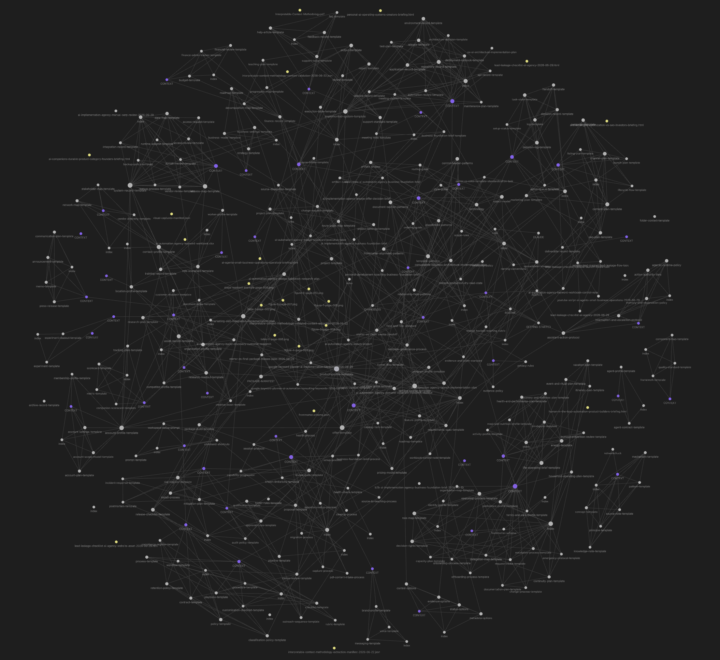
How are you linking files in ICM workspaces and Obsidian?
Curious how others are handling file links in ICM-style workspaces, especially if you’re also using Obsidian for visual navigation. I’ve been trying to keep links functional instead of decorative. My current pattern is: - Index = where this file primarily belongs - Links = closely related files worth navigating with it - Source Of Truth / Pointer / Route To = operational links, not just visual links - Avoid inter-linking every mentioned file, because the graph gets noisy fast - Only add links when they help with routing, ownership, review, or resume context So the goal is not “maximum backlinks.” We want a graph that shows how the workspace actually operates. As I see it: Obsidian rewards dense linking visually, but ICM rewards narrow context loading. Too many links can make the graph pretty but semantically weak. How are you all deciding what deserves a link vs what should stay plain text?
1-30 of 2,178

skool.com/cliefnotes
What we give away free beats most paid courses. Build durable AI systems with a Marine vet and Edinburgh researcher. 40+ lessons, growing.
Leaderboard (30-day)
1

🔥
+1762
2

🔥
+1693
3

+1231
4

+995
5

+614
Powered by