
10h (edited) • 💬 General discussion
The Infinite Monkey Theorem Is How I Think About LLMs
One LLM call is one monkey with one chance.
That sounds like a joke, but it has become one of my most useful mental models for AI. It helps me decide what tasks to give an LLM, how much trust to place in one output, and where deterministic guardrails are required before anything becomes automated.
Most AI workflows bet everything on one roll: write a prompt, get output, judge it, tweak the prompt, roll again. That is the common workflow, and it is also the least reliable version of the workflow. You are gambling on a single generation instead of designing the conditions that make good generations more likely.
The Core Idea
The Infinite Monkey Theorem is useful because it reminds me what an LLM is good at. It can generate. It can vary. It can surprise you. It can find directions you would not have found manually. But it should not be trusted just because one roll sounded confident. That is the mistake.
The theorem is not the whole architecture. It is the warning label that makes the architecture necessary. The model can roll the dice. The system decides which rolls are allowed to survive.
The Missing Part
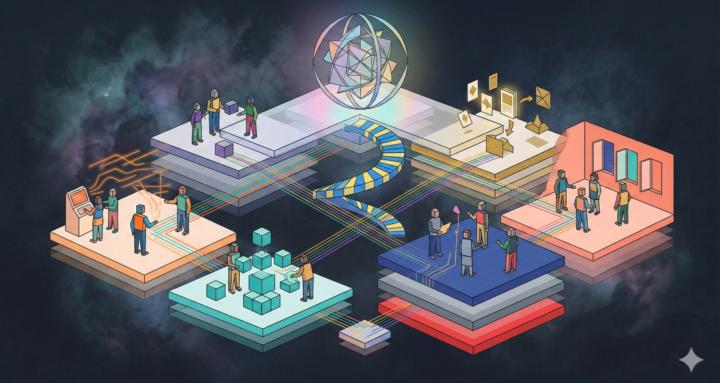
A room full of monkeys with no rules is just noise at scale. The real leverage comes from putting probabilistic generation inside deterministic constraints:
- tests
- schemas
- acceptance criteria
- file boundaries
- review gates
- evidence receipts
- human approval when the decision actually matters
That is the part people skip when they talk about agents. They imagine more agents mean more intelligence. It does not. More agents without constraints is just more noise.
Manage the Room, Not the Monkeys
Micromanagement is standing over one model's shoulder telling it exactly what to type: "Rewrite paragraph three." "Make it warmer." "Use a better hook." "Try again, but less generic." That works for small tasks. It collapses for systems. The better move is directional control.
| Old Workflow | Better Workflow |
| One prompt | Clear contract |
| One output | Bounded generation |
| One judgment | Deterministic checks |
| Human rewrites everything | Specialist review |
| Trust the model | Trust the evidence |
How the Loop Actually Starts
The first build is not automated. That part is important.
I go through the first loop with the agent manually. I give direction. The agent generates. I correct what is missing. It revises. I notice where it drifts. We tighten the structure. I decide what should become a rule, a test, a constraint, or a rejection gate.
That first loop teaches the system what matters. Automation comes after the pattern is understood, not before.
The Real Workflow
- The human does the hard work first. Define the problem. Map the constraints. Decide what done means.
- The human and agent do the first build together. This exposes the shape of the task, the failure modes, the taste boundaries, and the parts that should not be left to vibes.
- That direction becomes a contract. Not just a prompt. A contract.
- The factory executes inside those boundaries. Agents can generate, route, classify, review, test, and propose actions. But they do not get infinite freedom just because they are useful.
- The human returns where judgment matters. Accept. Reject. Refine. Escalate. Preserve the gold. Turn the failure into a better rule.
Contract and Evidence Over Generation
I used to say "evaluation over generation." That is directionally right, but incomplete. The stronger version is: contract and evidence over generation.
Evaluation matters, but the system also needs to control whether work is allowed to proceed. Some things should be judged by a human. Some things should be judged by a frontier model. Some things should be caught by tests. Some things should never reach judgment because the action was outside scope. That is where the architecture lives.
The Novelty Problem
The monkeys will type things you never thought of. Some will be garbage. Some will be strange. A few will be better than anything you had in your head. The common failure mode is filtering too aggressively. If the filter only rewards familiarity, the system collapses back into your existing taste. The filter should reject broken work. It should not automatically reject surprise. That is the tension. Guardrails should eliminate junk, not erase novelty.
What This Series Is About:
Part 1 is the mental model. The Infinite Monkey Theorem is how I remember not to overtrust a single stochastic output.
Part 2 is The Factory. That's the "room", the operator system: pre-production contracts, bounded dispatch, deterministic facts, specialist review, critic review, verification, safe action queues, and human judgment at the gates.
Part 3 is DEV-ARCH Framework. DEV-ARCH is the archaeology layer: after the work happens, it reads the commits, signals, eras, failures, decisions, and reports so the next run starts smarter.
The full loop looks like this:
human judgment
-> constrained generation
-> factory execution
-> deterministic review
-> evidence trail
-> development archaeology
-> better judgment next time
The monkeys are not geniuses. The architecture is.
Curious how others here are splitting work between prompts, local models, frontier models, tests, review, and human judgment. Where do you put the guardrails?
4
2 comments
The Infinite Monkey Theorem Is How I Think About LLMs
skool.com/cliefnotes
Jake Van Clief, giving you the Cliff notes on the new AI age.
Leaderboard (30-day)
1

+853
2

+818
3

+781
4

+655
5

+422
Powered by