17d • 💬 General discussion
I mean...we ARE building Discreet Music...
Brian Eno is the north star for how I think about AI systems. The production philosophy: he didn't make music, he made conditions for music to happen. He'd set up constraints, point musicians at instructions, and leave. What came back wasn't his. That was the point.
I've been building an AI operating system for my studio for about a year. Recently I renamed everything in it using music language, because the music metaphors turned out to be more precise than the business ones.
The first stage of any transformation sprint is called Signal. In music, a signal is what carries meaning from source to listener. In this work, Signal is the diagnostic stage: find the one operational constraint worth solving and quantify what it costs. Most companies skip this. They start at Build: pick a tool, deploy it, wonder why nothing changed. The signal was never found, so nothing has anywhere to go.
The second stage is Source: map where the knowledge actually lives before designing anything. In music, sourcing is knowing what's in the room before you hit record. What systems, what people, what undocumented institutional knowledge. You can't arrange what you haven't inventoried.
The third stage is Arrangement. This is where you decide who plays what, human versus agent, before a line of code is written. The arrangement is the most underrated stage in both music and AI work. Everyone wants to talk about the performance. Nobody wants to do the arrangement.
The agent that runs governance in my system is called The Monitor. Named for studio monitors: the speakers that give you accurate playback rather than flattering playback. They tell you what's actually there. The Monitor checks every output before it ships: voice, facts, completeness. Returns either CLEAR or HOLD. A monitor that flatters you isn't doing its job.
The gap-detection agent is called The Oblique, named for Eno's Oblique Strategies, the card deck he made for breaking creative blocks by approaching the problem from an unexpected angle. The Oblique reads the system periodically and surfaces what still requires manual intervention. Everything it finds is a proposed next build.
Where outputs wait before they ship is called The Mix.
None of this is cosmetic. The music language changed how I make decisions in the system because it keeps asking the producer question. A performer asks: how do I play this well? A producer asks: what does the room need so the thing plays without me in it?
That's the question most AI transformation work never gets to. It stays at performer: which tool, which prompt, which output. The producer question is structural. It's about arrangement, signal, constraint, and trust.
The future of this work isn't better performers. It's better producers.
10
5 comments
I mean...we ARE building Discreet Music...
skool.com/cliefnotes
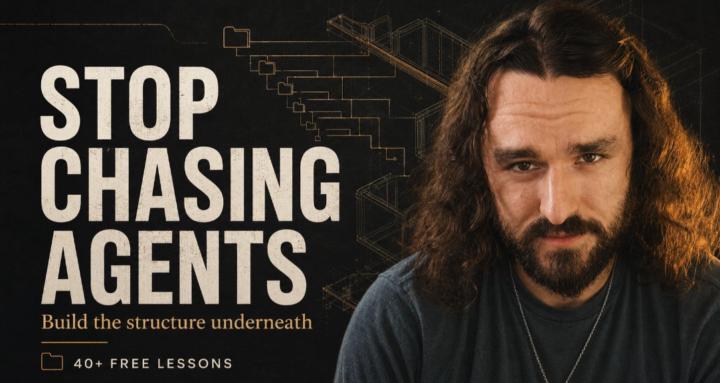
What we give away free beats most paid courses. Build durable AI systems with a Marine vet and Edinburgh researcher. 40+ lessons, growing.
Leaderboard (30-day)
1

🔥
+2022
2
+1652
3

+1257
4

+596
5

+538
Powered by