


8d •
DEA to Temporarily Schedule 7-OH and Related Substances to Protect Public Safety
https://www.dea.gov/press-releases/2026/07/01/dea-temporarily-schedule-7-oh-and-related-substances-protect-public
2
0
May 13 •
Natural Products Association Fly In Day
It's been a busy week already, and it's only Wednesday! I had the wonderful opportunity to join in and learn from some of the best minds in dietary supplements. We are fighting for all dietary supplements!

May 13 •
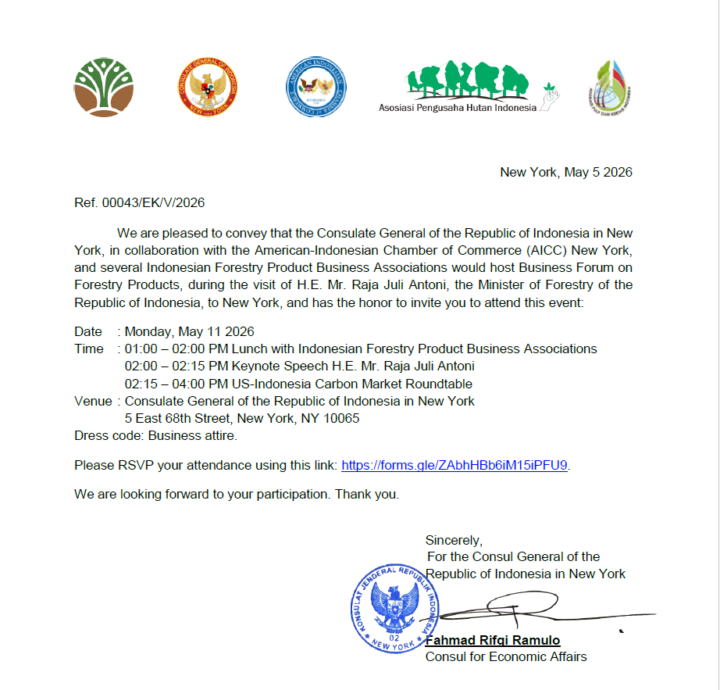
My Visit To The Indonesian Consulate New York City
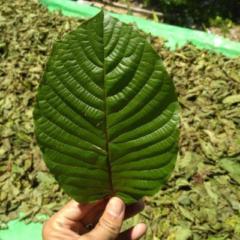
The Minister of Forestry for Indonesia was present and discussed the long-term goals of carbon reduction and how kratom trees could help with numerous issues beyond just the leaf we love. Kratom trees can be credibly framed as part of a tree-based, riverbank, wetland, and agroforestry conservation model. The strongest science-backed argument is not “kratom alone saves the planet.” The stronger, more defensible argument is: Kratom is a perennial tropical tree that grows naturally near river systems, wetlands, freshwater swamp forests, and saturated soils. When cultivated responsibly, especially along riverbanks and in degraded wetland areas, kratom trees can support carbon capture, soil stability, canopy cover, reduced erosion, increased water infiltration, and flood mitigation. 1. Kratom trees capture carbon dioxide like other woody trees Kratom is a tropical tree native to Southeast Asia. University of Florida IFAS describes kratom as a facultatively deciduous tropical tree that can reach up to 80 feet in its native environment, with a trunk, canopy, roots, branches, and recurring leaf growth. In Southeast Asia, farmers traditionally hand-harvest leaves repeatedly from living trees, rather than cutting down the tree each season. That matters because living perennial trees keep storing carbon in woody biomass, roots, and surrounding soil over time. (Ask IFAS - Powered by EDIS) The general agroforestry science supports this. USDA NRCS states that agroforestry, forestry, riparian buffers, tree and shrub establishment, forest farming, and related practices can improve carbon sequestration in perennial biomass, trees, and soils while also reducing erosion and improving water quality. (Natural Resources Conservation Service) Kratom trees are not an annual crop that gets replanted every season. They are living perennial trees. When managed responsibly, they can store carbon in trunks, branches, roots, leaf litter, and soil, while giving farmers a renewable leaf harvest.
May 5 •
2026 National Drug Control Strategy Released-White House
Key mentions I found: 1. Page 9 lists “kratom with high 7-hydroxymitragynine / 7-OH content” as an example of domestically marketed dangerous products, alongside tianeptine, mushroom edibles, and psychoactive hemp products. The word “7-hydroxymitragynine” appears misspelled there as “7-hydroxymitragyine.” 2. https://www.whitehouse.gov/releases/2026/05/2026-national-drug-control-strategy-released/Page 14 includes kratom under “Domestic Production” concerns, grouped with high-potency marijuana, hemp-derived psychoactive products like delta-8 THC, and “legal psychedelics.” 3. Page 33 says enforcement will focus on substances outside regulatory frameworks or sold illegally, including “dangerous substances like 7-hydroxymitragynine,” described as “an active component and potent opioid found in the kratom plant,” when illegally marketed or adulterated. 4. Page 34 has a full text box titled “Kratom Victim: it’s neither organic nor safe” and discusses Jordan McKibban. It says kratom sold in the U.S. can include “highly enriched levels of laboratory-made 7-OH” and references FDA warning letters against companies marketing 7-OH products. 5. Page 51 says treatment/diagnosis should account for new drugs, including “kratom products with high 7-OH levels.” 6. Pages 62, 64, and 67 connect high-7-OH kratom products to overdose response, breathing suppression, overdose fatalities, and naloxone planning. Page 62 also says CDC SUDORS data identified 995 overdose deaths with kratom or mitragynine detected in toxicology reports, which is detection language, not necessarily causation language. 7. Page 98 and Page 124 include a performance measure to increase FDA warning letters to companies selling unauthorized products containing Delta-8 THC, Kratom/7-OH, and other opioids. The target is 13 warning letters in 2026 and 18 in 2029. 8. Page 173 says smoke shops may sell products derived from kratom that “may contain 7-OH,” and importantly admits: kratom is a plant, products can be supplemented with synthetic 7-OH, and 7-OH is naturally found in kratom only in a small percentage. It also says HHS recommended classifying 7-OH as Schedule I in July 2025. 9. Pages 179, 184, 190, and 194 are mostly acronym/reference pages, including “7-OH: 7-hydroxymitragynine” and citations to FDA/HHS/CDPH materials.
1-25 of 25
powered by
skool.com/christophers-kratom-education-8543
Christopher’s Kratom Education: clear, science-based kratom education, beginner walk-throughs, brewing tips, safety, policy, and community together.
Suggested communities
Powered by