May 13 (edited) • General discussion
My Visit To The Indonesian Consulate New York City
The Minister of Forestry for Indonesia was present and discussed the long-term goals of carbon reduction and how kratom trees could help with numerous issues beyond just the leaf we love.
Kratom trees can be credibly framed as part of a tree-based, riverbank, wetland, and agroforestry conservation model. The strongest science-backed argument is not “kratom alone saves the planet.” The stronger, more defensible argument is:
Kratom is a perennial tropical tree that grows naturally near river systems, wetlands, freshwater swamp forests, and saturated soils. When cultivated responsibly, especially along riverbanks and in degraded wetland areas, kratom trees can support carbon capture, soil stability, canopy cover, reduced erosion, increased water infiltration, and flood mitigation.
1. Kratom trees capture carbon dioxide like other woody trees
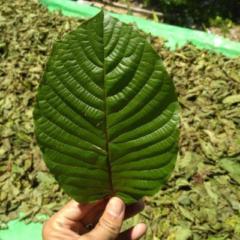
Kratom is a tropical tree native to Southeast Asia. University of Florida IFAS describes kratom as a facultatively deciduous tropical tree that can reach up to 80 feet in its native environment, with a trunk, canopy, roots, branches, and recurring leaf growth. In Southeast Asia, farmers traditionally hand-harvest leaves repeatedly from living trees, rather than cutting down the tree each season. That matters because living perennial trees keep storing carbon in woody biomass, roots, and surrounding soil over time. (Ask IFAS - Powered by EDIS)
The general agroforestry science supports this. USDA NRCS states that agroforestry, forestry, riparian buffers, tree and shrub establishment, forest farming, and related practices can improve carbon sequestration in perennial biomass, trees, and soils while also reducing erosion and improving water quality. (Natural Resources Conservation Service)
Kratom trees are not an annual crop that gets replanted every season. They are living perennial trees. When managed responsibly, they can store carbon in trunks, branches, roots, leaf litter, and soil, while giving farmers a renewable leaf harvest.
2. Kratom naturally fits wetland and riverbank environments
This is one of the strongest kratom-specific ecological points. UF IFAS states that kratom naturally inhabits tropical environments near freshwater swamps, wetlands, marshy regions, and riverbanks where soils are saturated for 8 to 10 months. It also notes that kratom prefers consistently moist soil and tolerates waterlogged conditions. (Ask IFAS - Powered by EDIS)
A 2024 soil study from Kapuas Hulu, West Kalimantan, reported that kratom cultivation is traditionally carried out on alluvial land and riverbanks, and that both mineral land and peat land in the study supported kratom cultivation. (arccjournals.com)
Kratom is well-suited to the landscapes where erosion and flooding are major concerns: riverbanks, wetlands, swamp forests, alluvial soils, and waterlogged areas.
3. Roots help hold soil and reduce erosion
The broad conservation science is very clear here. USDA describes riparian forest buffers as areas along streams, rivers, lakes, and wetlands where trees, shrubs, and perennial plants help stabilize eroding banks, filter sediment from runoff, and protect downstream communities from flood damage. (US Forest Service)
Kratom-specific field reporting from West Kalimantan makes the same ecological point. A 2026 policy paper on kratom governance from an Indigenous peoples’ perspective states that kratom grows along riverbanks and in wetlands, thrives in acidic and waterlogged soils, and helps prevent erosion and maintain soil stability. It also includes local testimony describing dense kratom roots gripping the soil and helping prevent landslides. (LBH MASYARAKAT)
Kratom roots can help bind vulnerable riverbank soils. That makes kratom potentially useful as a living erosion-control crop, especially in areas where flooding, abrasion, and soil loss are already problems.
4. Canopy reduces rainfall impact and runoff
Tree canopy is a major stormwater asset. EPA explains that tree leaf canopies reduce erosion caused by falling rain, provide surface area where rainwater lands and evaporates, and roots help create soil conditions that promote infiltration. (US EPA)
USGS describes tree canopy as functioning like an umbrella. It intercepts precipitation until the storage capacity of leaves is exceeded, delaying and reducing the immediate force of rainfall hitting the ground. USGS also reported increased stormwater runoff after street trees were removed in a measured study. (U.S. Geological Survey)
A kratom tree canopy acts like a natural stormwater buffer. The leaves slow rainfall, reduce the force of raindrops hitting bare soil, and give water more time to soak into the ground instead of rushing into rivers all at once.
5. Kratom can help reduce flooding when used as part of riparian buffers
This is where you want to be accurate. Kratom trees do not “stop floods” on their own. But trees along waterways can help reduce flood impacts by slowing runoff, stabilizing banks, increasing infiltration, and protecting downstream communities.
USDA says riparian forest buffers can protect cropland and downstream communities from flood damage. USDA also describes riparian buffers as filtering runoff and stabilizing stream, river, lake, and pond banks through root systems. (US Forest Service) (USDA)
The kratom-specific Indigenous policy paper includes a figure captioned “Kratom planted to restrain river overflow during flooding,” and it states that kratom is used for reforestation and greening initiatives because it can grow without fertilizer or special care in those conditions.
Kratom should be viewed as part of a natural flood-mitigation strategy, not a replacement for engineering. Along riverbanks, kratom trees can help slow water movement, reduce erosion, hold soil in place, and support living buffers that reduce flood damage.
6. Kratom supports soil health through perennial cover
Agroforestry systems improve soil health because trees and shrubs increase root diversity, reduce soil disturbance, and keep living roots active longer through the year. USDA’s National Agroforestry Center explains that trees and shrubs feed soil organisms, support living cover, and work alongside other soil health practices like cover crops, low tillage, and nutrient management. (US Forest Service)
For kratom specifically, this matters because a standing kratom tree system can keep roots in the ground, add leaf litter, reduce exposed soil, and provide a longer-term soil structure compared with bare or heavily disturbed land.
Healthy soil is not built by constantly disturbing land. Kratom trees keep living roots in the ground, provide leaf litter, support microbial life, and help create a more stable soil system.
Kratom Trees and Environmental Stewardship
Natural kratom is more than a harvested leaf. It comes from a perennial tropical tree that naturally grows near rivers, wetlands, freshwater swamp forests, and waterlogged soils. When responsibly cultivated, kratom trees may provide several environmental benefits:
- Carbon captureLiving trees absorb carbon dioxide and store carbon in trunks, branches, roots, leaves, and soil.
- Soil stabilityRoot systems help bind soil, especially along vulnerable riverbanks.
- Canopy protectionLeaf canopy slows rainfall, reduces raindrop impact, and helps limit erosion.
- Flood mitigationTrees and riparian buffers slow runoff, improve infiltration, and help protect downstream communities.
- Reforestation potentialIn West Kalimantan, kratom has been discussed as a conservation plant for riverbanks, degraded land, and greening initiatives.
The exact carbon sequestration rate for kratom trees has not been well quantified in the scientific literature yet. The strongest claim is that kratom likely provides many of the same ecological services as other perennial tropical trees and riparian agroforestry systems, especially because it naturally grows in wetland and riverbank environments. The responsible policy position is to encourage sustainable kratom agroforestry, not monoculture expansion or clearing native forests to plant kratom.
When people talk about kratom, they usually only talk about the leaf. But in Indonesia, kratom is also a tree, a livelihood, a riverbank stabilizer, a canopy plant, and a potential conservation crop. If we care about sustainability, we should protect responsible natural kratom cultivation, not push farmers away from a renewable tree crop and toward extractive land use.
4
3 comments
My Visit To The Indonesian Consulate New York City
powered by

skool.com/christophers-kratom-education-8543
Christopher’s Kratom Education: clear, science-based kratom education, beginner walk-throughs, brewing tips, safety, policy, and community together.
Suggested communities
Powered by