
Write something

Jun 7 •
To meet or not to meet... that is the question
Take a moment and think about the job you have now, a job you had before... now answer these questions: 1. what meetings are effective and add value? 2. What meetings are ineffective and need to change or be eliminated? (ya know those "this could have been an email" meetings)

Jun 3 •
Long week… and it’s only Tuesday
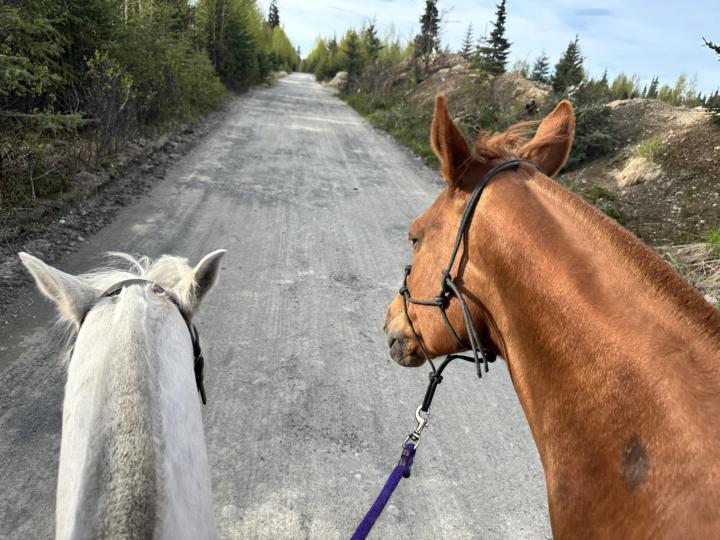
Some weeks are just longggggg even when they have only been 2 days. How do you de-stress? Mine is pictured below.
3
0
May 31 •
Somewhere Along the Line, We Forgot How to Lose
Today something tragic happened in Las Vegas within the equestrian world. A young woman allegedly made the choice to harm multiple horses belonging to competitors — some reportedly belonging to people she had just publicly congratulated and supported on social media moments before. The full details have yet to come out, and right now much of what is circulating is still speculation. As this unfolds, there will no doubt be more answers, more questions, and a lot of heartbreak. But sitting here tonight, I cannot stop thinking about what we as a society are teaching our younger generations about competition, failure, identity, and self-worth. Have we reached a point where losing feels so unbearable that some people no longer know how to process it in healthy ways? Somewhere along the line, it feels like we stopped teaching that it is okay to lose. That there will always be winners, losers, and people who cheer for both. That another person’s success does not diminish your own value. That character matters more than the buckle, ribbon, title, or check. My heart breaks for everyone affected. It breaks for the horses. It breaks for the competitors, the families, the trainers, and the friendships that will never look the same again. And honestly… it breaks for the future of a sport I deeply love. I am not a barrel racer, but this will ripple far beyond one discipline. This will be talked about across the entire equestrian world because trust, sportsmanship, and integrity are foundational in every barn, every arena, and every event. The scary part is this mindset is not isolated to horses. If this exists here, it exists in schools. In workplaces. In business. In communities. In everyday life. Maybe it is time we start having harder conversations about resilience, accountability, emotional regulation, jealousy, and what healthy competition is actually supposed to look like. Winning matters. But who you become in the process matters far more.
1
0
May 22 •
Some Days Leadership Feels Heavy — And Then Something Surprises You
Today started with dread. It was membership day for the organization I serve as Executive Director, and if I’m honest, the last 18 months have been exhausting. Every time we think we’ve reached the bottom of the issues we inherited, we uncover more: • More fraud • More financial inconsistencies • More compliance concerns • More things that simply do not make sense There are days when leadership feels less like “leading” and more like carrying the weight of untangling years of problems while still trying to protect the people who rely on the organization every day. I walked into today knowing I didn’t have a presentation full of shiny wins or easy answers. But I showed up anyway. I gave the honest update.I answered difficult questions.I spoke transparently about where we are and where we still need to go. And something important happened: I was supported. Not because everything is fixed.Not because the work is done.But because people can feel honesty, effort, and commitment. Sometimes leadership wins are not about applause, growth charts, or big announcements. Sometimes the win is simply: 👉 You showed up. 👉 You told the truth. 👉 You kept going. 👉 And people stood beside you anyway. Today was a good day.
2
0

May 20 •
The Curveballs Don’t Stop — Neither Can You
Business leadership is not about avoiding problems. It is about learning how to stand when the problems keep coming. This week was a reminder of that for me. While preparing an executive report for a board meeting, more financial discrepancies surfaced from years prior — including debts that had never been properly recorded in financials. Discoveries like that are exhausting. They hit emotionally, mentally, and operationally all at once. And yet… leadership still requires you to show up. Not because you have all the answers.Not because you are never overwhelmed.But because people are counting on you to keep moving the mission forward. Business has a way of throwing curveballs at the exact moment you already feel stretched thin: • Cash flow problems • Staffing shortages • Vendor issues • Public criticism • Legal concerns • Unexpected financial discoveries • Personal stress while trying to lead professionally The question is not “How do I avoid this?”The real question is: “How do I stay strong through it?” For me, the answer has been: • Staying transparent • Focusing on facts instead of panic • Taking one problem at a time • Leaning on trusted people • Remembering why the work matters • Accepting that leadership is sometimes carrying weight nobody else sees Strength in leadership does not mean you never struggle. It means you keep building, even while carrying the hard stuff. If you are in the trenches right now too — keep going.Some of the strongest leaders are being forged in the hardest seasons.

1-9 of 9
powered by

skool.com/business-leadership-trenches-8973
Real-world business leadership. Practical tools, tough conversations, and honest support for leaders in the trenches.
Suggested communities
Powered by