
Write something
Pinned
Pinned

May 5 •
Welcome — really glad you're here.
A bit of honesty up front: the Burnout Survival Club is brand new. The room is quiet, the membership is small, and the conversation is still finding its shape. That's not a problem — that's the good part. Early members get to define the culture, and there's no noise to compete with. This is a space for people working through burnout, compassion fatigue, or vicarious trauma. No fixing, no toxic positivity, no "have you tried yoga." Just real recovery, with people who get it. A few things to do first: 1. Start with the Start Here course in the Classroom tab — five short lessons that orient you to this place and walk you through the free Burnout Profile. Everything else here makes more sense once you've done it. 2. Introduce yourself when you're ready — even just a few words about what brought you here. No pressure to share anything more than that. 3. Lurk if you need to. Plenty of people read for weeks before joining the conversation. That's not just allowed — it's often the right move when your bandwidth is low. Looking forward to having you here. — Suzanne
Pinned
May 5 •
Who's behind this place — and why it exists
I burnt out before I was fully qualified as a psychologist. I was halfway through my Masters at the time and had absolutely no idea what was happening to me. Burnout wasn't discussed in my training — not even in a psychology program. I ended up stepping away and taking a year overseas just to put myself back together. When I came back, I chose burnout recovery as my Masters thesis topic — partly because I'd lived it, and partly because I could only find two studies in the entire literature on how to actually recover. Almost everything was about what burnout is. Almost nothing was about what to do once you're in it. That gap never really closed. I'm Suzanne Robertson — registered psychologist, 25+ years in clinical practice — and most people I see in burnout are still working, still showing up, still holding everything together while quietly falling apart. Burnout Survival Club exists because those people deserve a real map out, not just a reminder to take a bath or do yoga. Glad you're here. — Suzanne
May 5 •
If you want something more structured
Some people prefer having something step-by-step to work through. That’s why I created the Burnout Reset Kit. It’s: - practical - grounded in real-world burnout - designed for people who are still working It won’t fix everything.But it can help you start to make sense of things and work out what to do next. If that’s useful, you can find it here: 👉 https://flowpsyche.com/burnout-reset-kit/
0
0
Apr 30 •
What actually helps vs what makes burnout worse
A lot of burnout advice sounds helpful… but doesn’t work in real life. Things that often don’t help much: - trying to push through harder - waiting for a holiday to fix it - ignoring it and hoping it passes Things that tend to help more: - understanding what’s actually happening - adjusting expectations (not just effort) - making small, realistic changes - having a way to think clearly again Burnout isn’t just about being tired. It's about your system being overloaded for too long. What have you tried that didn’t actually help?
1-8 of 8
powered by
skool.com/burnout-survival-clubj-1954
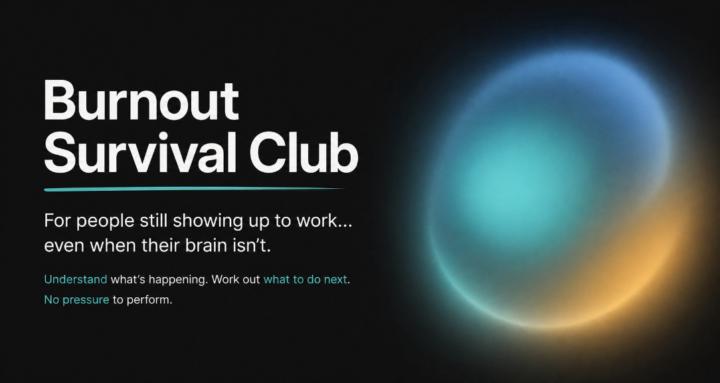
For people still showing up to work while burnt out. Understand what’s happening and work out what to do next.
Suggested communities
Powered by