
Write something

Feb 27 •
Relief ≠ Recovery
Just because the fever is gone doesn’t mean you’re better. Modern wellness celebrates symptom relief like it’s resilience. But real recovery isn’t passive. It’s orchestrated. By what? Your brain. If the brain stays in overdrive, the body stays stuck. Regulate the brain → restore the system. 🧠 Question for the group: Have you ever felt “better” on paper… but still off?
0
0
Feb 27 •
Meditation induces shifts in neural oscillations, brain complexity, and critical dynamics: novel insights from MEG
Saw this article about increased brainwave activity during meditation proving that meditation isn't just thinking about nothing! https://academic.oup.com/nc/article/2025/1/niaf047/8340544?login=false
0
0
Jan 31 •
Brain wave frequency names
Anyone know how the different brainwave frequencies where named and why? need a clue, ...comment....
Jan 19 •
From Kenneth S. Sharlin, M.D. Sharlin Health & Neurology Ozark, MO
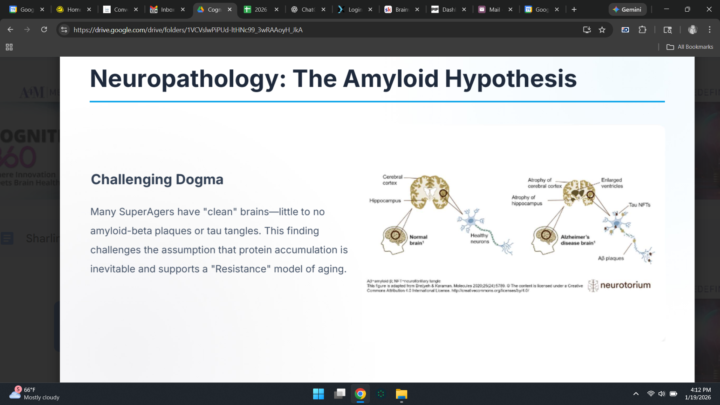
Dr. Sharlin's presentation pointed out this contradiction regarding super agers' brains & plaques....
Jan 15 •
Im at Cognition360 conference...
Alot of great info on brain health here today! Overload of biochemistry...lol fascinating stuff!! Hope to distill and simplify some key points to share with you!
1-7 of 7
skool.com/brainwaves-matter
Discover How Brainwave Regulation Helps the Brain Shift from Reactive to Resilient
Leaderboard (30-day)
1

+1
Powered by