
Write something

Dec '25 •
Unclear responsibilities kill accountability
Here’s how to make ownership crystal clear for your team A client said his team "wasn't taking ownership." I showed him that ownership is impossible when nobody knows what they own. Responsibilities were fuzzy. "Someone should handle this" became "everyone thought someone else was handling it." When things fell through, there was no clear owner to hold accountable. You can't take ownership of what isn't clearly yours. I built a system where every task, every project, every deliverable had one name attached. Not a team. Not a department. One person. Full visibility for everyone. The "ownership problem" vanished overnight. People weren't avoiding responsibility. They genuinely didn't know it was theirs. Accountability doesn't start with culture. It starts with clarity. → See how this works https://atlasium788.ca/
1
0
Dec '25 •
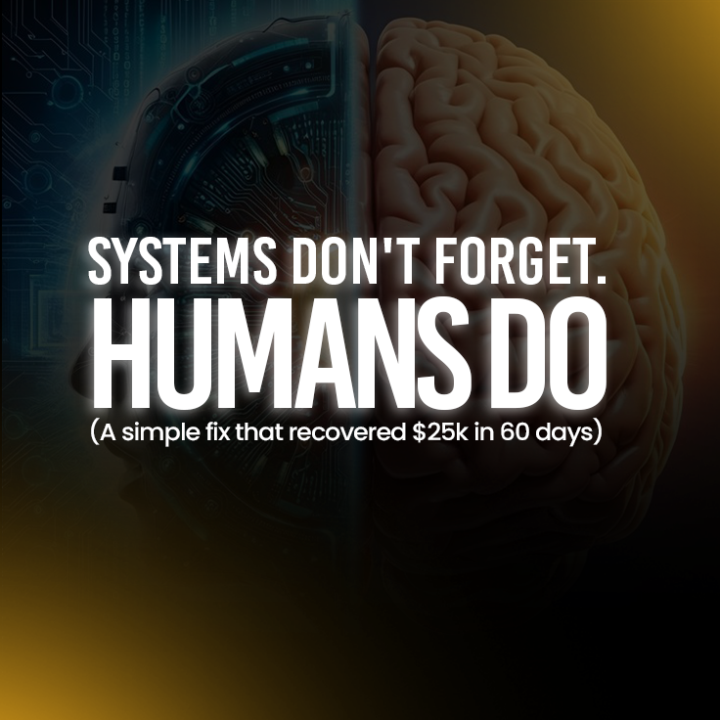
Systems Don't Forget. Humans Do (A simple fix that recovered $25k in 60 days)
Systems Don't Forget. Humans Do (A simple fix that recovered $25k in 60 days) A client was losing $4,000/month because his team forgot to follow up with leads. Not on purpose. They were just busy. A lead would come in, they'd respond once, then get pulled into other work. If the lead didn't reply immediately, they'd slip through the cracks. I pulled the numbers: 47 leads per month got one response, and then nothing. At a 20% close rate and $4,200 average deal size, he was leaving $39,480/month on the table. That's $473,760/year in lost revenue because of forgotten follow-ups. I built an AI system that tracks every lead and automatically follows up until they respond or opt out. Personalized. Timely. Never forgets. Within 60 days, he closed 6 deals that would've been lost. That's $25,200 in recovered revenue from leads that were already in his system. Your team isn't bad at follow-up. They're human. Humans forget. Systems don't. → See how this works 👉https://atlasium788.ca/
1
0
Nov '25 •
Why Clients Don’t Pay Premium (And How to Fix It)
A client asked me why his premium service felt cheap. I told him it's because his delivery was inconsistent. One project would be smooth. The next would be chaos. Clients never knew which version they'd get. When delivery is unpredictable, people don't pay premium prices. They pay average prices for average reliability. Here's what I did: I mapped out every step of his delivery process and built an AI system that standardized it. Same client communication. Same project milestones. Same quality checks. Every single time. Within 90 days, he raised prices by 30%. Nobody complained. Why? Because his clients finally knew exactly what they were getting. Premium pricing isn't about being the best. It's about being the most reliably great. Inconsistency kills pricing power faster than anything else.
1
0

Nov '25 •
Understanding your business fundamentals is crucial.
Most of us want to build a $100K business as fast as possible… without understanding the basics. We jump straight into spending, marketing, and hiring, thinking that action alone will bring results. Scaling too quickly without clarity is how good ideas fail. The difference between those who succeed and those who burn out is simple: taking the time to learn, test, and refine every step of the way. Use tools like AI to speed up research, analyze trends, and validate ideas. A business built on insight lasts longer than one built on guesswork. Take the next step toward scaling smarter
1
0

Nov '25 •
Cut down the back and forth with this simple automation setup
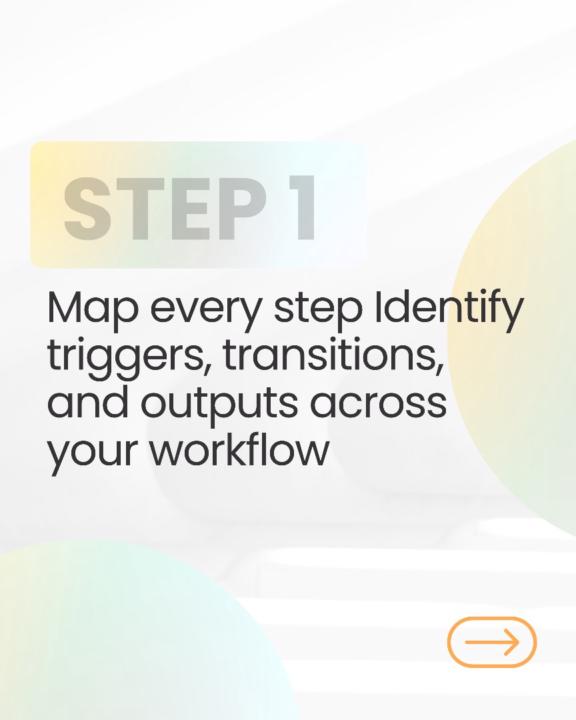
Most workflows don’t stay in one app. A client request starts in email, moves to Slack, gets added to Asana, needs a file from Drive, and ends with a response in email. Five steps. Five tools. Five chances to waste time or miss something. Here’s how I stop manually connecting the dots. 1. Map the flow. Write every step: where it starts, where it moves, what happens at each stage, and the final output. 2. Connect the tools. Use Zapier or Make so data moves automatically with no copy-paste. 3. Let AI summarize. Pull updates from every tool into one snapshot. AI tells me what to do next: “Client approved design. Next: send invoice, schedule kickoff.” 4. Push it back. Send the summary to my project board automatically. I don’t automate everything at once. I start with the workflow wasting the most time and build from there. The result? Less back-and-forth, fewer missed steps, and more time to focus on actual work.
1
0
1-10 of 10
powered by
skool.com/blair-r-barton-ai-consultant-5426
For business owners, consultants, and creators to learn and apply AI automation using proven systems from Atlasium 7/88 AI.
Suggested communities
Powered by