
Write something

22d •
Why You Can’t Get Better by Yourself: The Myth of Beating Addiction Alone
BigmommaJ Image found on Google “I can do this on my own.” For many people struggling with addiction, those words feel empowering. They reflect determination, independence, and resilience. But addiction is one of the few battles where trying to fight alone often becomes part of the problem. Addiction thrives in secrecy, isolation, and shame. Recovery thrives in connection, accountability, and support. The truth is that most people do not recover because they are strong enough to do it alone. They recover because they become strong enough to ask for help. Addiction Changes More Than Behaviour Addiction is not simply a bad habit or a lack of willpower. Research shows that prolonged substance use affects areas of the brain involved in reward, motivation, memory, impulse control, and decision-making (Volkow et al., 2016). As substances repeatedly activate the brain’s reward system, the brain begins to prioritize obtaining and using the substance over other important aspects of life, including relationships, health, work, and personal values. This helps explain why many individuals continue using despite severe consequences. According to the ccsa.ca, substance use disorders are complex health conditions influenced by biological, psychological, and social factors. If addiction were simply a matter of wanting to quit badly enough, relapse would not be so common and treatment would not be necessary. Addiction Distorts Thinking One of the most difficult realities of addiction is that it affects the very tool needed to recognize the problem: the mind. Addiction often creates distorted beliefs such as: *”I can stop whenever I want.” *”I’m not as bad as other people.” *”Nobody can help me.” *”One more time won’t hurt.” *”I don’t need support.” These thoughts are not necessarily character flaws; they are often symptoms of a condition that impacts judgment and insight (American Psychiatric Association, 2022). Trying to recover alone while addiction continues influencing thoughts and decision-making can be like trying to navigate a maze while blindfolded.
0
0

Mar 24 •
The Battle for her Crown
They're once was a girl who avoided her pain she looked in the mirror with such disdain her heart feels numb and body weak she slowly falling apart and doesn't know where to seek The help That she needs feel so far away Even though it's within her almost clear is day the struggle is real there's no doubt about that how can she relieve the rift between herself and the "her" that she needs back. The substance called crack that promised to be there and take the pain away When all it did was ruin her day, her week,her year, her life as a whole only to take over and control; to strip her of what she should have consoled that little girl screaming inside for help wishing someone would come save her from this hell But no one comes to her side to rescue her to save her from herself she's left in pieces of shame guilt and remorse To put herself back together with no Force To hold her down or have her back.She's on her own to get herself back From the pain and sorrow that holds her down. Where is her Crown? The one that reminds her of her strength, importance and worth on this Earth So she will stand tall and straighten her Crown in order to fight what brings her down She will free herself from the hell within. The fire that's been extinguished will ignite and she will win The battle. The battle between who she was and is..... With a grin.
0
0

Mar 24 •
Taking Your Power Back: Reclaiming Yourself from Addiction and Mental Health
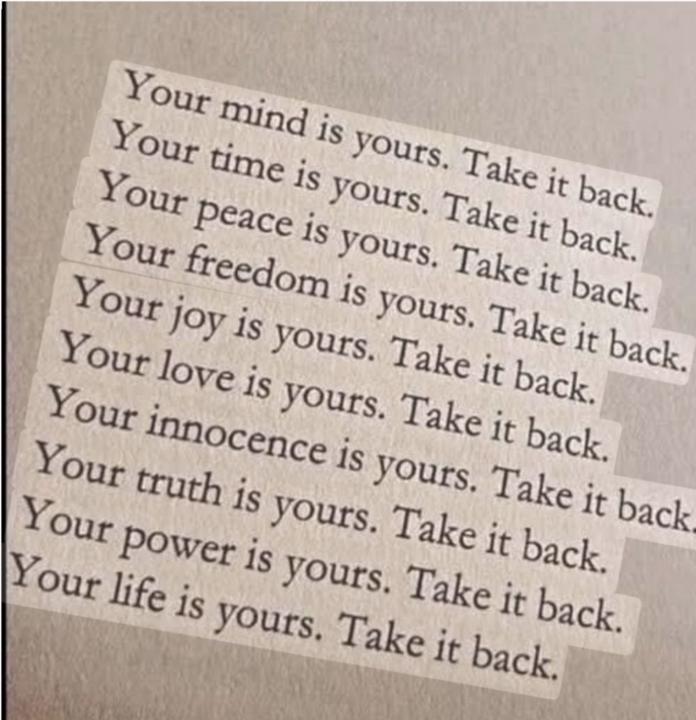
There comes a moment—quiet, almost unnoticeable at first—when something begins to shift. Not everything. Not all at once. But enough. Enough to recognize that the life being survived is not the life meant to be lived. For individuals navigating addiction and mental health challenges, “taking power back” is not a motivational phrase. It is not a single breakthrough moment. It is a process of reclaiming self—piece by piece. What Addiction and Mental Illness Take Addiction does not only involve substances—it impacts identity. Mental illness does not only affect mood—it distorts thinking, self-worth, and the ability to trust internal judgment. Together, they create a cycle: *Self-doubt *Emotional instability *Shame *Escapism *Regret Research from the Centre for Addiction and Mental Health confirms that substance use disorders frequently co-occur with mental health conditions, reinforcing patterns of emotional dysregulation and negative self-concept (CAMH, 2023). Over time, individuals can lose connection with who they are. Internal narratives become dominated by criticism, and self-trust begins to erode. Trauma—particularly early and repeated trauma—further intensifies this cycle, increasing vulnerability to both addiction and mental health challenges (Public Health Agency of Canada, 2020). What “Taking Power Back” Actually Means Taking power back does not mean controlling everything. It means learning where control truly exists. Within trauma-informed practice, power is defined as the ability to exercise awareness, choice, and intentional response—not perfection or dominance (SAMHSA, 2014). It can look like: *Choosing not to engage with shame-based thinking *Setting boundaries, even when discomfort arises *Acknowledging triggers instead of avoiding them *Taking accountability without becoming consumed by guilt *Showing up consistently, even on difficult days The Mental Health Commission of Canada emphasizes that recovery is nonlinear and rooted in self-determination and hope (MHCC, 2015).
0
0
Mar 24 •
Putting Yourself First: Mental Health and Addiction Recovery
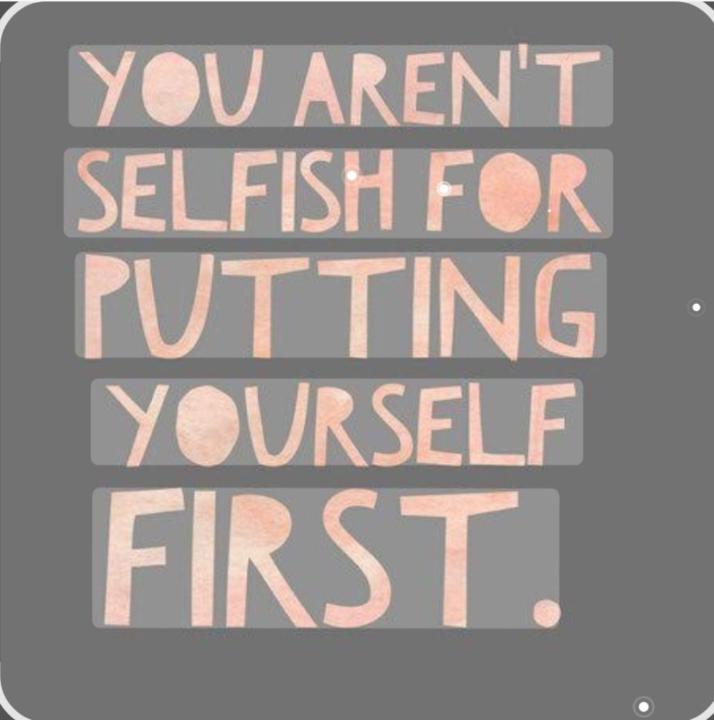
Putting yourself first is often misunderstood. In clinical spaces—particularly within mental health, addiction recovery, and child welfare—we see a consistent pattern: individuals who have survived trauma, chaos, caregiving burdens, and systemic gaps are often the last to receive care themselves. When they begin to prioritize their own stability, they are labeled selfish. They are not selfish. They are stabilizing. Self-Abandonment: A Trauma Pattern Self-abandonment is common in both mental illness and substance use disorders. It can present as: *Ignoring early warning signs of relapse *Staying in unsafe or dysregulated relationships *Avoiding treatment because others “need you more” *Neglecting sleep, nutrition, and medical care *Silencing emotional needs to prevent conflict The Canadian Centre on Substance Use and Addiction (CCSA) identifies trauma, chronic stress, and social instability as major drivers of substance use harms in Canada (CCSA, 2023). Similarly, the Centre for Addiction and Mental Health (CAMH) emphasizes that trauma exposure significantly increases risk for both mental health disorders and substance use disorders (CAMH, 2022). When we continuously put ourselves last, our nervous system does not regulate—it remains in survival mode. Prolonged activation of stress pathways increases vulnerability to depression, anxiety disorders, and relapse (Public Health Agency of Canada, 2020). What once protected you may now be exhausting you. Why Putting Yourself First Feels So Wrong For trauma survivors, prioritizing oneself can activate guilt, shame, and fear of abandonment. From a clinical lens, this may be linked to: *Insecure attachment patterns *Codependency dynamics *Learned hyper-independence *Developmental trauma *Internalized beliefs that worth is tied to usefulness Trauma-informed practice teaches us that self-neglect is often adaptive. It was a strategy to maintain safety, connection, or survival. But strategies built for survival rarely sustain recovery.
0
0
Mar 24 •
Addiction and Mental Health: When the System Fails the People It Was Meant to Protect
We talk a lot about personal responsibility when it comes to addiction and mental health. We talk far less about system responsibility. That silence matters—because for many people, addiction is not a failure of willpower. It is the predictable outcome of fragmented systems, delayed intervention, and policies that respond to crisis instead of prevention. In Canada, substance use and mental health challenges continue to rise, particularly among individuals with histories of trauma, poverty, child welfare involvement, and untreated mental illness (Canadian Centre on Substance Use and Addiction [CCSA], 2023). Yet our systems remain largely disconnected, reactive, and risk-driven. Addiction Is Not the Root Problem Addiction is a symptom, not the disease. Research consistently shows strong links between substance use, trauma exposure, adverse childhood experiences, and mental illness (Public Health Agency of Canada [PHAC], 2023). When addiction is treated in isolation—without addressing trauma, attachment, housing instability, or mental health—outcomes are predictably poor. People are told: “Get sober first, then we’ll treat your mental health.” “Stabilize your mental health, then address the addiction.” For individuals living in survival mode, this binary approach is not only unrealistic—it is clinically unsound. Best-practice Canadian frameworks clearly support integrated treatment for concurrent disorders, yet access remains inconsistent across provinces (Mental Health Commission of Canada [MHCC], 2021). Fragmented Care Creates Predictable Harm Mental health services, addiction treatment, income assistance, housing supports, and child welfare often operate in silos. Each system has its own eligibility rules, waitlists, and thresholds—many of which require a level of stability that the individual does not yet have. The result: Emergency department become default mental health providers. Detox programs function as revolving doors instead of pathways to recovery.
0
0
1-17 of 17
powered by
skool.com/big-mommas-community-1961
To guide, support, and empower individuals by sharing wisdom born from lived experience.
Suggested communities
Powered by