Activity
Mon
Wed
Fri
Sun
Aug
Sep
Oct
Nov
Dec
Jan
Feb
Mar
Apr
May
Jun
What is this?
Less
More
Owned by Jacqueline
To guide, support, and empower individuals by sharing wisdom born from lived experience.
Memberships
9D Breathwork Community
31.8k members • Free
GET FIT TOGETHER
12.8k members • $1/month
Your First $5k Club w/ARLAN
32.2k members • Free
Synthesizer: Free Skool Growth
44.4k members • Free
REVENUE REVOLUTION
10.4k members • Free
Skoolers
168.2k members • Free
Addiction Recovery Alchemy
55 members • Free
Family Addiction Support
4.6k members • Free
The Substance Solution
27 members • Free
69 contributions to Addiction and Mental Health

18d •
Why You Can’t Get Better by Yourself: The Myth of Beating Addiction Alone
BigmommaJ Image found on Google “I can do this on my own.” For many people struggling with addiction, those words feel empowering. They reflect determination, independence, and resilience. But addiction is one of the few battles where trying to fight alone often becomes part of the problem. Addiction thrives in secrecy, isolation, and shame. Recovery thrives in connection, accountability, and support. The truth is that most people do not recover because they are strong enough to do it alone. They recover because they become strong enough to ask for help. Addiction Changes More Than Behaviour Addiction is not simply a bad habit or a lack of willpower. Research shows that prolonged substance use affects areas of the brain involved in reward, motivation, memory, impulse control, and decision-making (Volkow et al., 2016). As substances repeatedly activate the brain’s reward system, the brain begins to prioritize obtaining and using the substance over other important aspects of life, including relationships, health, work, and personal values. This helps explain why many individuals continue using despite severe consequences. According to the ccsa.ca, substance use disorders are complex health conditions influenced by biological, psychological, and social factors. If addiction were simply a matter of wanting to quit badly enough, relapse would not be so common and treatment would not be necessary. Addiction Distorts Thinking One of the most difficult realities of addiction is that it affects the very tool needed to recognize the problem: the mind. Addiction often creates distorted beliefs such as: *”I can stop whenever I want.” *”I’m not as bad as other people.” *”Nobody can help me.” *”One more time won’t hurt.” *”I don’t need support.” These thoughts are not necessarily character flaws; they are often symptoms of a condition that impacts judgment and insight (American Psychiatric Association, 2022). Trying to recover alone while addiction continues influencing thoughts and decision-making can be like trying to navigate a maze while blindfolded.
0
0

May 22 •
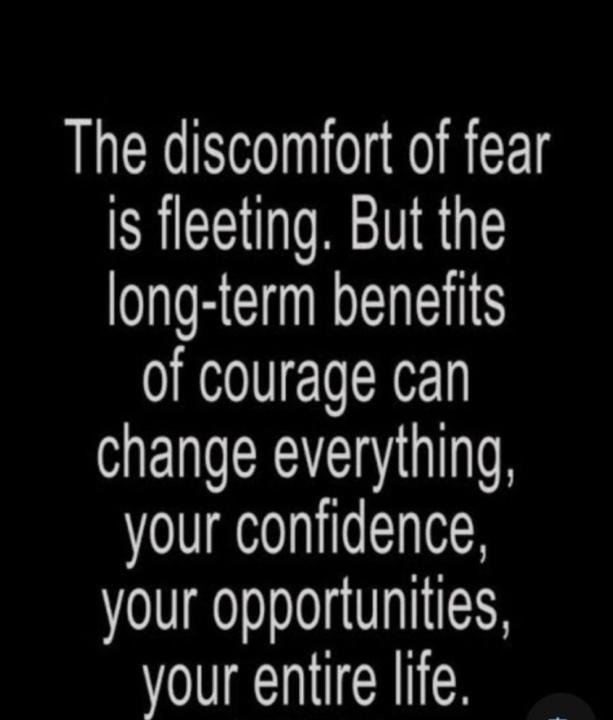
The Benefits of Fear by BigmommaJ
Fear doesn’t show up politely. It doesn’t knock, wait, and ask if this is a good time. It floods, it tightens, it whispers lies that feel like truth. And for a long time, the instinct has been simple: get rid of it. Avoid it. Numb it. Run from it. But here’s the shift—one that changes everything: Fear isn’t always the thing holding you back. Sometimes, it’s the thing pointing you forward. Fear Kept You Alive — But It Was Never Meant to Keep You Small Fear is not a character flaw. It’s biology. Deep in the brain, the amygdala is wired to detect danger and activate survival responses (LeDoux, 2012). That response—the racing heart, the tension, the urge to escape—has one job: protect you. And for many, especially those who have lived through trauma, addiction, or unstable environments, fear has been working overtime for years. It learned quickly: *What was unsafe *What hurt *What needed to be avoided That fear? It served a purpose. But what protected you then may be restricting you now. When Fear Gets Misunderstood Not all fear means danger. Some fear is rooted in past experiences—what research on adverse childhood experiences (ACEs) shows is that early trauma can sensitize the nervous system to perceive threat where there isn’t one anymore (Felitti et al., 1998). So now fear shows up when: *You try to trust someone *You speak your truth *You step outside your comfort zone *You choose recovery over old patterns And it feels the same as danger. But it’s not. It’s unfamiliarity. And unfamiliarity can feel just as intense as threat when your system has been conditioned to expect harm. Fear and the Cycle of Avoidance Let’s be direct—avoidance feels good in the moment. It lowers anxiety. It gives relief. It creates the illusion of control. That’s why it’s so addictive. In fact, the self-medication hypothesis explains how substances and behaviors are often used to regulate overwhelming emotions like fear (Khantzian, 1997). But here’s the cost:
0
0
Apr 20 •
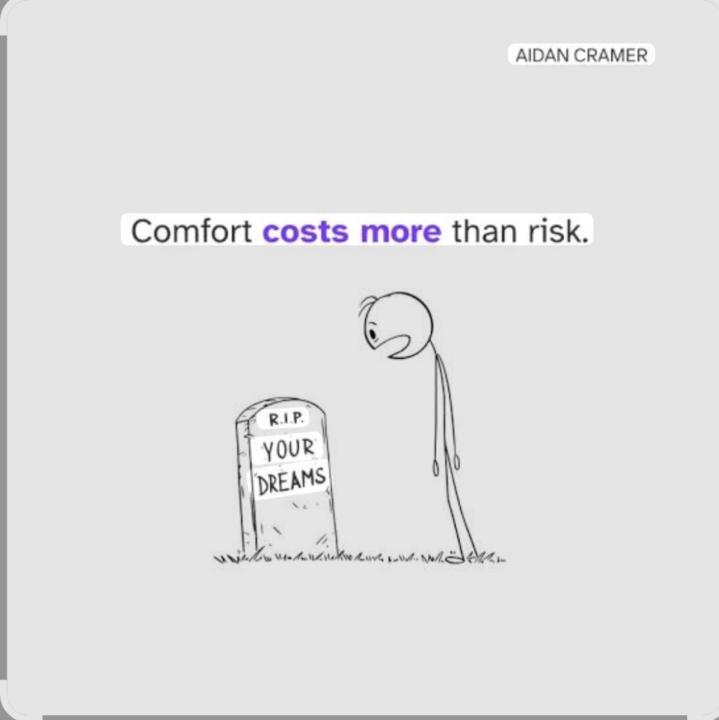
What Is My Comfort Costing Me?
By BigmommaJ Comfort feels safe. Predictable. Controlled. But comfort can also be a quiet thief. It doesn’t kick down doors or demand attention. It whispers. It convinces. It keeps people right where they are—stuck in patterns that feel familiar but are slowly eroding growth, healing, and purpose. The real question isn’t whether comfort feels good. It’s what it’s costing. The Illusion of Safety The human brain is wired for survival, not transformation. The amygdala scans for threats and pushes toward what feels known—even if that “known” includes dysfunction, addiction, or emotional pain. This is why people stay: *In toxic relationships *In cycles of addiction *In silence about their mental health *In roles shaped by trauma and social conditioning Because familiar pain can feel safer than unfamiliar healing. From a neurobiological perspective, repeated behaviors—healthy or not—become reinforced through neuroplasticity. The brain literally wires itself to prefer what it practices (Doidge, 2007). So when someone says, “Why don’t they just leave?” or “Why don’t I just stop?”—they’re missing the point. Comfort isn’t passive. It’s conditioned. Comfort vs. Growth: You Can’t Fully Have Both Growth requires discomfort. There’s no clinical workaround for that. In fact, avoidance of discomfort is strongly linked to mental health struggles. Experiential avoidance—a concept rooted in Acceptance and Commitment Therapy—refers to the attempt to escape or suppress difficult thoughts and emotions. Research shows this avoidance actually intensifies distress over time (Hayes et al., 2006). In addiction, this is even more pronounced. Substances and maladaptive coping strategies become tools to: *Numb emotional pain *Regulate overwhelming states *Maintain a false sense of control But the cost? *Loss of identity *Damaged relationships *Chronic shame *Physical and psychological deterioration Comfort, in this context, becomes a trauma response—not a solution.
0
0
Apr 10 •
Social Conditioning: The Invisible Script We Learn to Live By
By BigmommaJ There are rules many people follow without ever remembering when they agreed to them Be strong—but not too emotional. Be independent—but don’t struggle. Be successful—but don’t fail publicly. Cope—but don’t talk about how you’re coping. This is social conditioning—the quiet, persistent shaping of beliefs, behaviors, and identity through family systems, institutions, culture, and lived experiences. It is not always intentional, but it is always influential. And for those navigating mental health challenges and addiction, it can become one of the most powerful—and most damaging—forces to unlearn. What Is Social Conditioning? Social conditioning refers to the process by which individuals internalize societal norms, expectations, and roles through repeated exposure and reinforcement (Bandura, 1977). From childhood, people are taught what is “acceptable,” what is “weak,” and what must be hidden. Through observational learning, individuals absorb not just behaviors, but emotional responses—how to express pain, how to suppress it, and when to pretend it does not exist at all. In systems like education, child welfare, and healthcare, these norms are often reinforced under the guise of “functionality” and “compliance.” The message becomes clear: adapt, or be labeled. When Conditioning Meets Mental Health and Addiction For individuals living with mental illness or substance use disorders, social conditioning often compounds the struggle. Research in Canada has consistently shown that stigma remains one of the most significant barriers to seeking help (Mental Health Commission of Canada, 2021). This stigma is not created in isolation—it is learned. People are conditioned to believe: *Mental illness equals weakness *Addiction equals moral failure *Asking for help equals failure These beliefs become internalized, forming what clinicians refer to as self-stigma, which is strongly associated with decreased treatment engagement and poorer recovery outcomes (Corrigan et al., 2016).
0
0

Apr 3 •
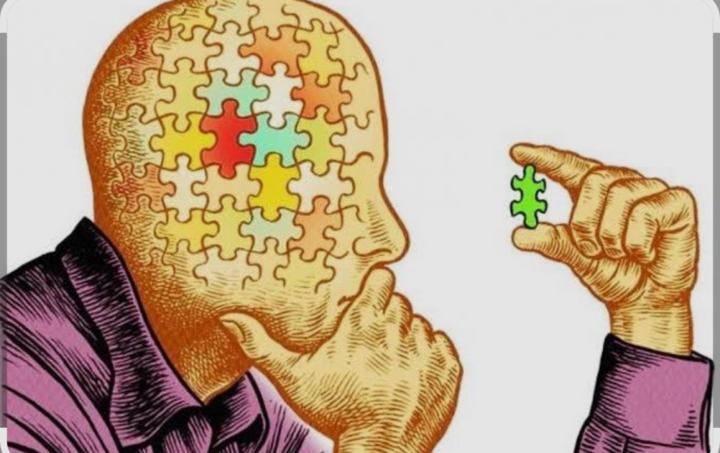
Call to ActionRise Above Your Norm: This Is Where It Shifts
By BigmommaJ There comes a point where awareness no longer enough. Where understanding your patterns, your pain, and your past stops being something you just recognize—and becomes something you decide to confront. Because insight without action keeps people stuck in the same cycles… just with more awareness of why. Rising above your norm means choosing differently—especially when everything in you is wired to go back to what feels familiar. For You This is personal This is where the work begins—not in perfection, but in honesty. Start asking yourself: *Is this belief mine—or was it taught to me? *Is this coping strategy helping me—or just helping me survive? *Then begin, slowly but intentionally: *Speak what you’ve been conditioned to silence. *Feel what you were taught to suppress *Reach for support, even when it feels uncomfortable. *Challenge the voice that tells you you’re “too much” or “not enough” You don’t have to do everything at once. But you do have to start. Because what was learned can be unlearned—and you are allowed to outgrow the version of you that was built in survival mode. For Those Doing the Work Professionally This is where practice meets accountability. It is not enough to treat symptoms without understanding the systems and conditioning behind them. *See behaviour through a trauma-informed lens—not a compliance lens *Replace judgment with curiosity *Create spaces where people feel safe enough to be real—not just “stable enough” to be discharged *Advocate beyond your role—because the system is part of the story The Mental Health Commission of Canada continues to emphasize that stigma and systemic barriers remain central to why people do not access or stay in care (Mental Health Commission of Canada [MHCC], 2022). If the system contributed to the harm, it has a responsibility to be part of the healing. For the Bigger Picture Communities don’t change by accident. They change when silence is disrupted. *Talk about mental health and addiction openly
0
0
1-10 of 69

@jacqueline-hayes-2365
My mission is to guide, support, and empower individuals by sharing wisdom born from lived experience and education.
Active 12d ago
Joined Oct 21, 2025
Winnipeg, mb