
Write something

15d •
Please reply me we need to holy bibles for new believer
Dear brother and sister in Jesus Christ *I have wonderful news to share with you today!* I went to serve God at the brick kiln, and *many people believed in Jesus Christ*. They accepted Jesus Christ as their Savior. *Praise God!* *But these new brothers and sisters don’t have Bibles.* They are like newborns — hungry for the Word, but with no spiritual food in their hands. *I want us to place the Holy Bible in their hands.* *Because the Bible is their daily bread.* It will teach them God’s promises, strengthen their weak faith, and help them stand firm in trials. _“Your word is a lamp to my feet and a light to my path.”_ — *Psalm 119:105* _“Faith comes from hearing, and hearing through the word of Christ.”_ — *Romans 10:17* 📖 *Will you join me in this great work?* Together, we can give these new believers the Word of God so they grow strong in the Lord. *Every Bible is a seed that will bear fruit for eternity.* *To God alone be the glory. Amen
0
0

18d •
Greeting in the name of Jesus Christ
I am thankful to God for you and God has chosen us for the world in which billions of people live so that we can serve Him and achieve salvation and everlasting life. The Lord says that you are not but I have chosen you from this world God has the purpose in everything and everything. No work or thing happens without God's will I believe that God has mixed us out of this great world. There is definitely a purpose in God
0
0

Feb 2 •
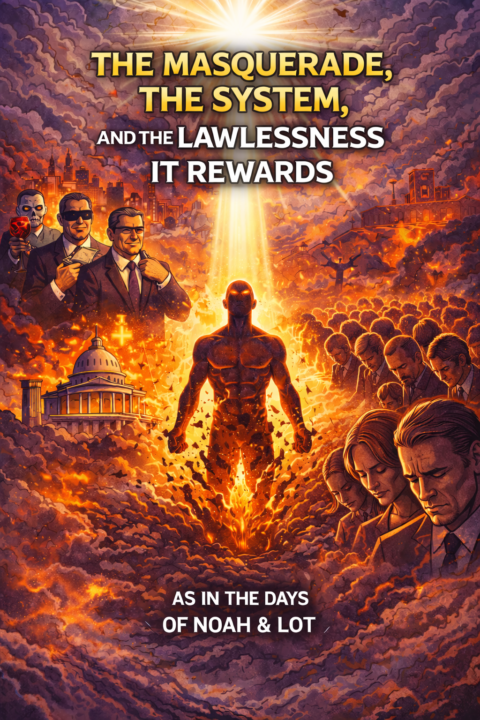
🎭 THE MASQUERADE, THE SYSTEM, AND THE LAWLESSNESS IT REWARDS
How the powers of the world manufacture sons of darkness—and why only a crucified Savior can break the cycle ⸻ 🗝️ Introduction: Something Has Been Exposed The silence is over. The veil is torn. The release of the Epstein files has confirmed what many once whispered but few dared believe: the world’s most powerful institutions are not merely flawed—they are steeped in exploitation, secrecy, and, in some cases, spiritual wickedness in high places. This isn’t just corruption. It’s cosmic. We are not witnessing isolated scandals. We are witnessing the systemic discipling of darkness—one that echoes ancient patterns from Eden to Babylon. And Scripture says this unveiling was always coming. ⸻ 👑 The Religion of Power Jesus didn’t come to tidy up religion. He came to expose it. When He addressed the Pharisees, He wasn’t debating minor theology. He was confronting a religious machine built on performance, pride, and coercion. “Woe unto you… for ye compass sea and land to make one proselyte, and when he is made, ye make him twofold more the child of hell than yourselves.” — Matthew 23:15, KJV This is the playbook of all corrupt institutions: Create false sons. Reproduce spiritual heirs—not of God, but of power. Make disciples of ego, not truth. And it continues today—through every corrupted government, compromised pulpit, hollow megacorp, and self-worshipping influencer. These entities reproduce themselves by initiating followers into systems of lawlessness. “For the wicked boasteth of his heart’s desire, and blesseth the covetous, whom the Lord abhorreth.” — Psalm 10:3, KJV They don’t rebuke the greedy—they exalt them. Because greed is the fuel of their machine. ⸻ 🕷️ The System Requires Initiation To belong in the system, you must compromise. To rise, you must participate. This is not failure—it is initiation. You are first seduced by opportunity. Then tested through moral compromise. And finally rewarded if you do not flinch. From boardrooms to political chambers to pulpits, this cycle repeats.
0
0
Jan 23 •
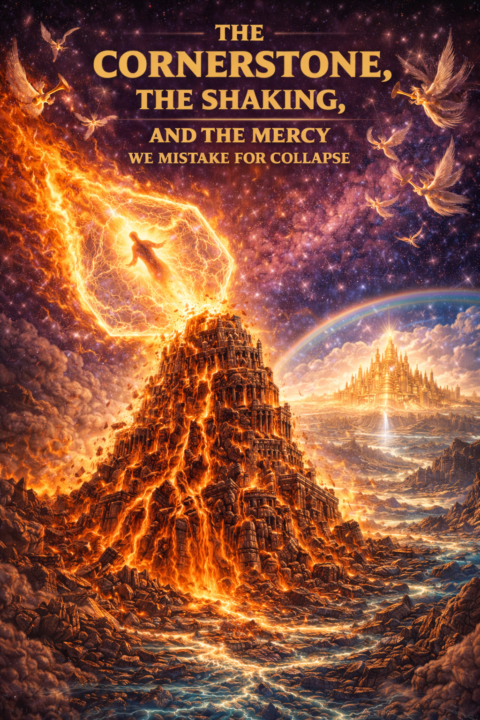
🪨 THE CORNERSTONE, THE SHAKING, AND THE MERCY WE MISTAKE FOR COLLAPSE
Why everything feels like it’s falling apart—and why that may be the most loving thing God could allow 🫥 You feel it too, don’t you? The tension behind your eyes when you open the news app. The pressure in your chest that doesn’t go away—not even after the scroll, the drink, the joke, the worship song. That aching whisper: “Something is wrong… and I can’t hold it together.” You’re not alone. Underneath all the posts and productivity, there’s a growing awareness: The world is being shaken. Everything we trusted—media, politics, education, even the church—feels unstable. And in your honest moments, you feel unstable too. Your convictions falter. Your identity shifts. You cycle between confidence and collapse. We’re not just watching institutions fall apart. We’re watching ourselves come undone. But what if this isn’t a sign of God’s absence? What if it’s proof that He’s nearer than ever? 🧠 The Psychology of False Foundations You were created to build your life on something solid. Psychologists call it a core schema. Neuroscientists call it the default mode network (Andrews-Hanna, 2012). The Bible calls it a cornerstone (Isaiah 28:16, Ephesians 2:20). Whatever you make central to your life—success, image, control, religion, even morality—shapes your entire nervous system. What you fear. What you chase. What you justify. What you sacrifice others for. But most of what we build on is sand: - Approval - Autonomy - Patriotism - Sexual identity - Self-improvement - Being a “good Christian” These things feel sturdy. But over time, they can’t carry the weight of your soul. And your brain knows it. Your body starts to break down. Your emotions spiral. Your faith becomes performative. Because you’re trying to be the builder and the foundation. And the human soul was never designed for that. 🌪️ Entropy Isn’t Evil—It’s What Happens When God Lets Go In physics, entropy is what happens when order is no longer sustained. It’s not destruction.
0
0
Jan 20 •
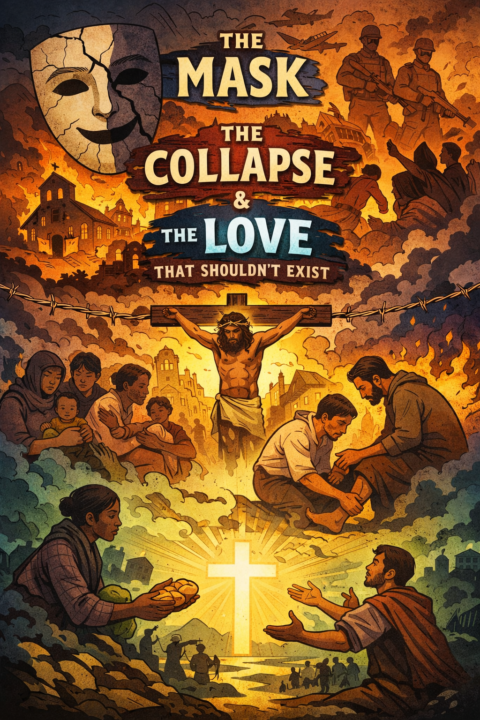
🎭 THE MASK, THE COLLAPSE, AND THE LOVE THAT SHOULDN’T EXIST
How biology, betrayal, and brutality reveal the need for a new kind of humanity You already know this—if you stop performing You’ve done it before. You smiled while silently resenting. You gave while quietly expecting something in return. You told the truth—except where a lie was more convenient. You said “I’m a good person”… while hoping no one asked too many questions. That’s not rare. That’s normal. Because what we call “goodness” is often a mask. Civilization isn’t built on virtue. It’s built on performance. The ancient Greeks had a word for this kind of living: ὑποκριτής (hypokritēs). It meant “actor”—one who plays a role on stage, wearing a mask to please the crowd. We wear masks too. Not out of malice—but out of necessity. We adapt, blend in, conform to survive. “Every way of a man is right in his own eyes…” (Proverbs 21:2) But the truth is, that’s rarely reality. It’s just… presentation. Modern sociology agrees. Morality, for many, is “norm maintenance behavior”—actions that preserve status within a group (Haidt, 2007). In other words, we do good… when we think someone’s watching. The collapse exposes what’s underneath But masks crack under pressure. Wars. Famines. Injustice. Survival conditions. Suddenly, the illusion of human decency collapses. People loot their neighbors. Men abandon their families. Governments betray their citizens. Ethnic lines harden. Violence explodes. We’re seeing this now—in Gaza, Sudan, Myanmar, and especially Nigeria, where thousands of Christians have been murdered or displaced by extremist violence. Entire congregations are wiped out. Churches torched. The government often looks away. Sociobiology explains this: humans prioritize kin and survival over altruism in high-stress environments (Nowak & Highfield, 2011). When survival is at stake, “virtue” becomes optional. This doesn’t just expose society. It exposes us. Our biology explains our fall. It cannot explain what rises Here’s the problem: In those same Nigerian villages, persecuted believers are gathering to pray for their enemies.
0
0
1-24 of 24
powered by
skool.com/bible-scholar-1705
A community for truth-seekers using Scripture, discussion, and BibleScholar.io to grow in wisdom, discernment, and Spirit-led understanding.
Suggested communities
Powered by