
Write something
Pinned

Sep '25 •
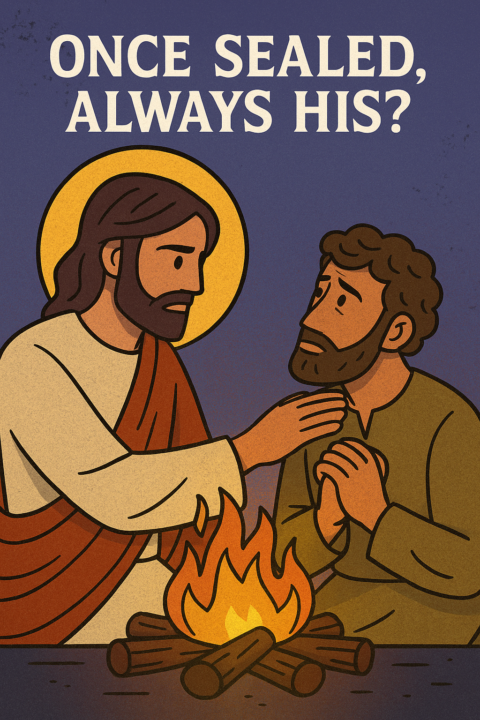
📜 Once Sealed, Always His? Wrestling with the Seal of Salvation, Sin, and Assurance
The Seal and the Son: What Secures Us in Christ When we talk about salvation, we must begin with the source: God’s will, not human effort. Ephesians 1:13–14 makes it clear: “When you believed, you were marked in Him with a seal, the promised Holy Spirit, who is a deposit guaranteeing our inheritance…” The Spirit is not a symbolic stamp. He is a living Person who indwells the believer and secures the promise of redemption. Paul echoes this in Romans 8:38–39: nothing — not death, life, angels, demons, things present or to come — can separate us from the love of God in Christ. This isn’t conditional security. It’s covenant loyalty from a God who cannot lie (Titus 1:2). But this seal isn’t cheap. It was bought by blood, applied by faith, and results in transformation — not perfection, but direction. A sealed believer is not sinless, but submitted. Jesus told His disciples in John 10:28–29 that His sheep are held by the Father’s hand — and “no one can snatch them.” That includes Satan. That includes you. To be sealed is to be claimed — forever. Peter, the Betrayer Jesus Prayed For Luke 22:31–32 provides a window into divine intercession: “Simon, Simon, Satan has asked to sift all of you as wheat. But I have prayed for you, Simon, that your faith may not fail.” Jesus doesn’t pray for Peter’s sin to be avoided — He prays for his faith not to be extinguished. And Peter fails — miserably. Three denials. Cursing. Fear. He weeps bitterly, not because he lost salvation, but because he broke the heart of the One who called him. Yet Jesus restores him in John 21 — not with condemnation, but with commission. This is what the Spirit does. Romans 8:26–27 says the Spirit “intercedes for us with groanings too deep for words.” He is not waiting for your perfection — He is preserving your faith. You may stumble, but you are not forsaken (2 Corinthians 4:9). Peter’s story reminds us: security is not in performance, but in possession. Jesus prayed — and the Spirit sealed. Peter didn’t lose his salvation because the One who began the work was faithful to complete it (Philippians 1:6).

8d •
Holy bibles
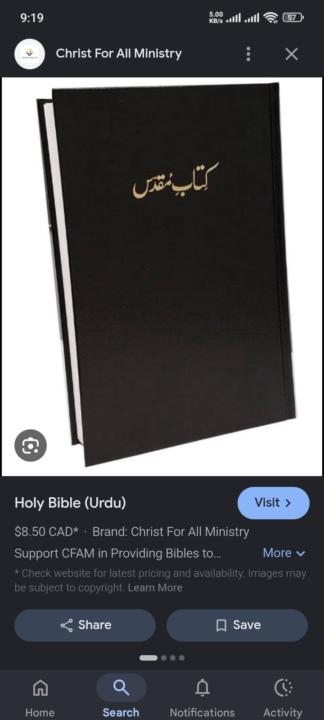
“A Call for 85 Holy Bibles”* 📖❤️ *Dear brother and sister in Jesus Christ,* *We come before you with a burden and a hope.* *There are 85 new believers in Jesus Christ* *whose hands are empty, though their hearts are full.* _Acts 2:41_ *They toil daily at the brick kilns,* *with no means to own the Holy Bible.* *Yet they hunger for the Bread of Life.* _John 6:35_ *We need 85 Holy Bibles,* *so we can place the Word of God* *into the hands of each new believer.* _Psalm 119:105_ *Please help us in this holy work.* *Together we will strengthen them in the Scriptures,* *that they may stand firm in all God has promised.* _Romans 15:4_ *For His glory alone. Amen.*
0
0
13d •
Holy bibles
”: *“A Call for 85 Holy Bibles”* 📖❤️ *Dear brother and sister in Jesus Christ,* *We come before you with a burden and a hope.* *There are 85 new believers in Jesus Christ* *whose hands are empty, though their hearts are full.* _Acts 2:41_ *They toil daily at the brick kilns,* *with no means to own the Holy Bible.* *Yet they hunger for the Bread of Life.* _John 6:35_ *We need 85 Holy Bibles,* *so we can place the Word of God* *into the hands of each new believer.* _Psalm 119:105_ *Please help us in this holy work.* *Together we will strengthen them in the Scriptures,* *that they may stand firm in all God has promised.* _Romans 15:4_ *For His glory alone. Amen.*
0
0
20d •
Holy bibles for new believers in Jesus Christ
Dear brother and sister in Jesus Christ *I have wonderful news to share with you today!* I went to serve God at the brick kiln, and *many people believed in Jesus Christ*. They accepted Jesus Christ as their Savior. *Praise God!* *But these new brothers and sisters don’t have Bibles.* They are like newborns — hungry for the Word, but with no spiritual food in their hands. *I want us to place the Holy Bible in their hands.* *Because the Bible is their daily bread.* It will teach them God’s promises, strengthen their weak faith, and help them stand firm in trials. _“Your word is a lamp to my feet and a light to my path.”_ — *Psalm 119:105* _“Faith comes from hearing, and hearing through the word of Christ.”_ — *Romans 10:17* 📖 *Will you join me in this great work?* Together, we can give these new believers the Word of God so they grow strong in the Lord. *Every Bible is a seed that will bear fruit for eternity.* *To God alone be the glory. Amen
0
0
Jun 21 •
Please reply me we need to holy bibles for new believer
Dear brother and sister in Jesus Christ *I have wonderful news to share with you today!* I went to serve God at the brick kiln, and *many people believed in Jesus Christ*. They accepted Jesus Christ as their Savior. *Praise God!* *But these new brothers and sisters don’t have Bibles.* They are like newborns — hungry for the Word, but with no spiritual food in their hands. *I want us to place the Holy Bible in their hands.* *Because the Bible is their daily bread.* It will teach them God’s promises, strengthen their weak faith, and help them stand firm in trials. _“Your word is a lamp to my feet and a light to my path.”_ — *Psalm 119:105* _“Faith comes from hearing, and hearing through the word of Christ.”_ — *Romans 10:17* 📖 *Will you join me in this great work?* Together, we can give these new believers the Word of God so they grow strong in the Lord. *Every Bible is a seed that will bear fruit for eternity.* *To God alone be the glory. Amen
0
0
1-27 of 27
powered by
skool.com/bible-scholar-1705
A community for truth-seekers using Scripture, discussion, and BibleScholar.io to grow in wisdom, discernment, and Spirit-led understanding.
Suggested communities
Powered by