
9d (edited) • Predation Tidbits
Marker Training and Predation
Marker training is such a valuable communication tool that we as humans can have with our dogs and it is so easy to train (for most dogs). If you would like a detailed explanation on how to marker train your dog you may look at ’s first book.
Most dogs will accept treats and this is the easiest way to get repetitions of what you are trying to teach. If your dog is not very treat motivated do not worry most, if not all, of this can also be accomplished with toys just remember you will get less repetitions per session.
Once you have a marker trained dog this will make telling your dog that they have done the correct behavior much easier. It is important that your dog clearly understands his marker and that you mark the correct behavior at the right time. If your timing is off once or twice it is fine just make sure that mistakes are kept to a minimum.
So how can this skill be used in predation substitution training? If you have watched my classroom videos then you may have seen me use a marker in a couple of the games when my dog performed a certain behavior. This is great practice in a setting that has no distractions that way my dog can understand what I am marking and rewarding and it ensures to me that my dog understands his marker is various context.
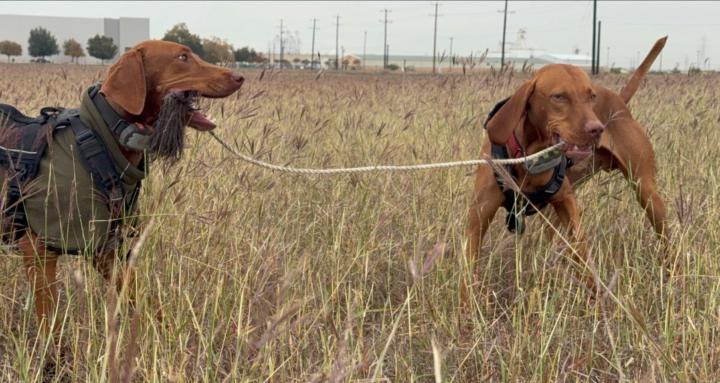
So, let’s say you are out at a local park or trail and a stimulus catches your dog’s attention. You’ve been playing some counter conditioning games and so you are ready for this moment! Your dog is staring at the stimulus, you are ready with your dog’s treats (and/or toy), your dog does the correct behavior (turns back and looks at you), you mark and…your dog turns back and continues to stare. This is where having an understanding and a plan comes in VERY handy and sometimes that plan has to change on the fly. This may not or may not mean adjusting your current plan or completely having to come up with a new one. In either case I would suggest having 1 goal in mind that you would like to accomplish with your dog.
It is important to understand: the breed you have, the age of the dog, and, if you are lucky, their history. The other thing that is important to understand is how much dopamine your dog is experiencing in this moment. Depending on what the stimulus is and how high your dog’s treat/toy drive is that stimulus may be way more enticing to your dog and there isn’t much short of being a nag or doing something that would be seen as punishment to your dog that would change the situation. If it is safe to do so and if you are able to wait it out with your dog (actively - so stay off your phone and stay out of conversations). Hold on to your dog’s leash, stand firm and when your dog shows even a small sign of resisting and impulse control you may give a calm/relaxed/nonexciting verbal praise such as “good” and let your dog continue to look. In this moment you are tampering down the dopamine response that is natural and unavoidable in your dog. This is something that can take hundreds of encounters before you are able to have a continuous walk without having to stop and stare at each exciting stimulus. Also, when going on these walks keep in mind that these dopamine rich encounters do stack with each one so as you continue your dog is likely to become frustrated. Due to this it is recommended to recognize when your dog has had their impulse control battery drained and will need to go somewhere where they will not be distracted and satiate their need and desire to chase. This can be done with a tug toy/flirt pole (preferably if your dog is interested), a ball, some treats tossed back and forth, or something else your dog enjoys that requires a bit of running, grabbing and consuming (of treats not the toy – please don’t let your dog eat toys).
It is very important to end on a good note so it is very helpful to recognize when your dog has had enough and it is time to go home. If you are unsure what that looks like it is NOT recommended to “one more” it. Instead it is better to end your walk a little bit early on a good note than try “just one more time” and then it all falls apart and that is what your dog remembers: failing at the games with you AND they failed to get the stimulus. Remember your dog is still learning and thinking about what made them successful or not successful and here we want to teach them success so ending with a success will capitalize that learning.
When you get to the car or get home if your dog is still a bit wired up then giving them something to chew or lick such as a stuffed KONG or a lick mat can help them relax to ensure that they are remembering what you had just helped teach them.
6
2 comments
Marker Training and Predation
powered by
skool.com/beyond-the-leash-9053
Go beyond obedience! Build engagement, reliability, and a deeper bond through canine psychology and proven force free methods.
Suggested communities
Powered by