

Sep '25 •
"When do you start to decrease calories or increase calories , if your cutting or looking to then bulk?"
WHEN TO DROP OR BUMP CALORIES (CUT vs LEAN BULK) Here’s the simple way to know when to adjust 👇 ➡️ Daily weigh-ins lie — focus on your WEEKLY AVERAGE. ➡️ Track 3 things weekly: weight trend, waist, and gym performance. ➡️ Before changing anything: be 80% consistent with steps, training, sleep, protein. CUTTING (fat loss): • Aim to lose 0.5–1% of bodyweight per week. • After 2 consistent weeks: – If progress is SLOW → drop 100–200 kcal or add 2–3k steps. – If progress is TOO FAST & energy/performance tank → add 100–150 kcal. LEAN BULK (muscle gain): • Don’t jump straight from deficit → surplus. • Spend 4–12 weeks at maintenance, then add ~100 kcal every 1–2 weeks. • Aim to gain 0.25–0.5% of bodyweight per week. 👉 The sweet spot = maximise fat loss while keeping muscle (cut) OR maximise muscle gain while keeping fat low (bulk). 🎯 ACTION: Drop your goal (cut or build) + your weekly average weight + waist change below. I’ll help you decide your next tweak.
0
0

Aug '25 •
10 Nutrition Guiding Principles
No more diets. No more guessing. Just 10 principles that give you clarity, control, and confidence with your food: 1. Calories control your weight Stop guessing. Know your numbers to take back control. 2. Protein shapes your body. Stay full, recover faster, and finally see tone and definition. 3. Structure beats willpower. Have a plan, remove the stress, and make progress feel easy. 4. 80/20 balance works best. Enjoy the foods you love while still hitting your goals. 5. Awareness creates control. Track what matters so you stop spinning your wheels. 6. Progress > Perfection You don’t need perfect days — you need consistent weeks. 7. Adjust, don’t quit. Plateaus and slip-ups happen. Adapt and keep moving forward. 8. Nutrition is a skill, not a diet. This isn’t another short-term fix. It’s a system you’ll own for life. 9. Appreciate what you eat. Say thank you. Practice gratitude for your food. 10. Relax, enjoy it. Slow down, breathe. Don't rush. Taste it, smell it. Be present with it. What one's your favourite and why?
Aug '25 •
🔑 Stop Calling It Self-Sabotage
You work your arse off. You come home wrecked after a long shift. Sometimes you grab food or have a few drinks at the weekend just to take the edge off. Then the next day you feel heavy, drained, and guilty — like you’ve ruined your progress or “sabotaged yourself.” You tell yourself you’ll be better next week… but let’s be honest, that week never comes. Sound familiar? Here’s the truth: 👉 That isn’t failure. 👉 That isn’t weakness. 👉 That isn’t “self-sabotage.” It’s feedback. Feeling shit after a week off plan isn’t proof you can’t do this — it’s your body and mind telling you: “This matters to me. I don’t want to feel like this again.” That’s a GOOD thing. It means you actually care. And this whole idea of “self-sabotage”? It’s usually just your brain trying to meet a hidden need — comfort, stress relief, connection, escape. When you see the benefit you were chasing, you can replace it with a better way to get the same thing — without wrecking your progress. ✅ Action for you today: Think back to the last time you went off track. Ask yourself: “What benefit was I really getting in that moment?” (relaxing, numbing stress, socialising, avoiding something, etc). 👉 Drop your answer in the comments — the more honest you are, the more powerful this becomes.
Jul '24 •
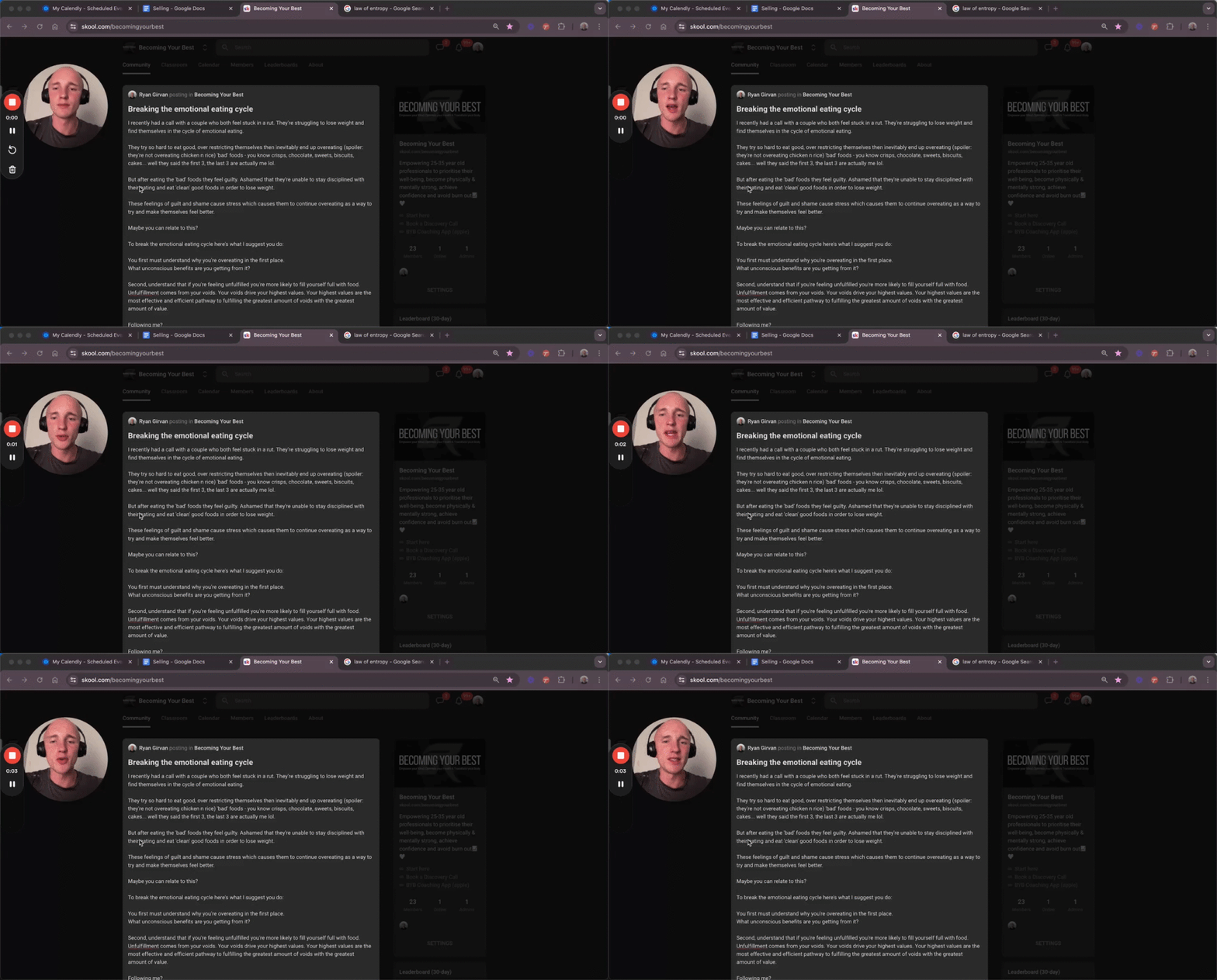
Breaking the emotional eating cycle
I recently had a call with a couple who both feel stuck in a rut. They're struggling to lose weight and find themselves in the cycle of emotional eating. They try so hard to eat good, over restricting themselves then inevitably end up overeating (spoiler: they're not overeating chicken n rice) 'bad' foods - you know crisps, chocolate, sweets, biscuits, cakes... well they said the first 3, the last 3 are actually me lol. But after eating the 'bad' foods they feel guilty. Ashamed that they're unable to stay disciplined with their eating and eat 'clean' good foods in order to lose weight. These feelings of guilt and shame cause stress which causes them to continue overeating as a way to try and make themselves feel better. Maybe you can relate to this? To break the emotional eating cycle here's what I suggest you do: You first must understand why you're overeating in the first place. What unconscious benefits are you getting from it? Second, understand that if you're feeling unfulfilled you're more likely to fill yourself full with food. Unfulfillment comes from your voids. Your voids drive your highest values. Your highest values are the most effective and efficient pathway to fulfilling the greatest amount of voids with the greatest amount of value. Following me? So basically when you can't perceive how whatever is happening right now, or how the actions you're taking are fulfilling your highest values (and so deepest voids) - in other words the things that are most important and meaningful to you in your life right now - then the result is unfulfillment The feeling of unfulfillment comes from unfulfilled highest values. Understanding this is key to breaking the cycle. So what'd you do? Fill your day with high priority challenges that inspire you, so that it doesn't fill up with low value distractions that don't. It's the law of entropy. Can't you see that when you're present, focused and fully engaged in an activity you enjoy you don't tend to overeat?
0
0
1-4 of 4
powered by
skool.com/becoming-your-best-9754
Mindset, fitness, and self-mastery for people ready to stop drifting, build structure, and start becoming their best - inside and out
Suggested communities
Powered by