
Write something

Mar 23 •
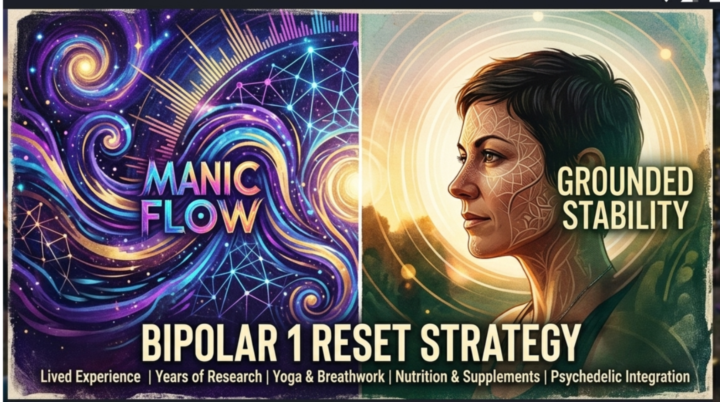
My Bipolar Type 1 Journey: The Reset Strategy 🧠✨
The Deep Search for Balance. Living with Bipolar Type 1 is a reality of extreme contrast. It's a spectrum that demands we become masters of our own physiology. For years, I followed the standard prescribed protocols. They are vital for many, but for my specific biology and lifestyle, I needed more. I needed alternative strategies for real-world stability. This need drove me into a deep search—a decade-long journey of research, self-experimentation, and meticulous tracking. I wanted to understand how to down-regulate a manic system naturally, how to halt the spiral of anticipatory anxiety, and how to protect my nervous system from the demands of managing Bom Shanka Bookings and global festivals. What I Have Learned (Through Years of Trials). My stability isn’t accidental; it’s a deliberate design. I have forged a "Reset Strategy" built on three pillars, which I am now ready to teach. My offerings are not theoretical, they are experiential. Pillar 1: Somatic & Nervous System Regulation - Hatha & Vinyasa Yoga: Using specific asanas to ground intense energy or release tension. - Conscious Breathwork: I mastered techniques like 4-7-8 Breathing and Box Breathing as immediate, on-demand "emergency breaks" for panic and manic spirals. Pillar 2: Functional Lifestyle & Cellular Health - The Diet for Stability: Developing specific nutritional protocols that support stable energy and mitochondrial function, minimizing insulin spikes and inflammatory foods. - Supplement Optimization: Identifying key micronutrients (e.g., Magnesium, Omega-3s, and target amino acids) crucial for neuroprotection and balance. - The Sleep Fortress: Using specific behavioral and supplemental protocols to safeguard restorative sleep—the critical cornerstone of bipolar management. Pillar 3: Integration & New Pathways - Psychedelic Therapy: My most recent, carefully integrated exploration involves Ketamine Therapy and meticulous Psilocybin Microdosing, used under supervision for deep trauma work and breaking long-term cognitive loops. This is not casual exploration; it is disciplined inner work.
0
0
Mar 21 •
Which somatic/physical sensation do you notice FIRST when elevating?
A. The "Internal Buzz" or Vibration—A persistent, hum in the body 🐝✨ B. Tightness in the Chest or a Racing Heartbeat 💓🚫 C. Clenched Jaw or Tension in the Shoulders 😬💥 D. A Feeling of Expansion—As if my physical body is too small for my energy 🌌🤸♀️ E. Sharp, Rapid Movements (Hands, gestures) ⚡🙌 F. A Change in Appetite (Significantly reduced desire for food) 🍽️🚫 G. A Sensory Shift—Colors look brighter, sounds are louder/more intense 🌈🎧 H. Increased Physical Agitation / Inability to sit still 🏃♂️🚫 I. Other (Detail below!) 👇
1
0
Mar 21 •
Stigma thrives in the dark, but we bring the color. 🌸
Bipolar disorder isn’t a punchline or a personality quirk, it’s a complex neurological reality. The biggest hurdle isn’t just the highs and lows; it’s the judgment that comes with them. Choosing to be visible means choosing to dismantle the labels. You see the dress, but I’m proud of the bones that hold it up. #EndTheStigma #BipolarDisorder #MentalHealthAdvocate #SelfLove #Mindset
1
0

Mar 21 •
Navigating the Highs and Lows: My Story with Bipolar Disorder
Living with bipolar disorder is like being on an emotional rollercoaster that never seems to stop. From euphoric highs to crushing lows, it impacts every aspect of my life and the lives of those around me. There are moments when I feel incredibly energized and creative, like I can conquer the world. But these peaks are often followed by periods of deep despair, where getting out of bed feels like an impossible task. It’s an ongoing struggle, but I’ve learned that the first step to navigating this challenging journey is admitting that I have a problem. For a long time, I tried to hide my struggles, thinking that if I ignored them, they would go away. But the roller coaster didn’t stop, and my relationships, career, and overall well-being began to suffer. Admitting I needed help was a difficult but necessary step towards reclaiming my life. Since seeking professional support, I’ve learned to manage my symptoms and develop coping strategies. I’ve discovered the importance of routine, self-care, and building a strong support network. I’ve also come to understand that bipolar disorder doesn’t define me; it’s just one part of my story. By sharing my journey, I hope to raise awareness and reduce the stigma surrounding bipolar disorder. I want to show others that they are not alone and that it is possible to live a fulfilling life with this condition. The rollercoaster ride may continue, but with the right support and strategies, it can become a journey of resilience, self-discovery, and hope. To bring some lightness into the space, share something you love, like your favourite movie, book, or even a place that inspires you. These small details help us see each other beyond labels and experiences. And to keep things interactive, join in the polls when they come up, starting with something simple like your favourite pet. It’s a light way to engage and begin building a sense of community together. This is a space to connect, share, and support one another, one step at a time.
1
0

1-4 of 4
powered by

skool.com/balance-beyond-mind-4652
A grounded community for people living with bipolar, focused on stability, nervous system regulation, yoga, and shared lived experience.
Suggested communities
Powered by