
Write something

6d •
Introduction
Hey legends 👋 Glad to join HEFF • creative! I’m here as a creative artist exploring new ideas and trying to improve my work every day. Can’t wait to see everyone’s art and connect with you all. Let’s grow together 🔥🎨
0
0
26d •
🎨 Painting Edges Made Easy (It's Just Like Colouring In!)
Remember when you were a kid and you liked to colour in? One of the first things I learnt was to colour around the outer edges first. Once the outline was done, it became much easier to stay inside the lines and fill in the rest of the picture. Painting works much the same way. Whether you're painting flowers, landscapes, portraits or buildings, you're eventually going to come across areas where you need to paint neatly along an outer edge or follow a line. It could be the edge of a flower petal, the side of a tree trunk, the outline of a face or the roof of a house. That's what this lesson is about. Learning how to load your brush correctly and control the paint so it flows smoothly along those edges without fighting you every step of the way. Choosing the Right Brush Your brush plays a huge role in this exercise. For practice, I'd suggest using either a flat brush or a filbert brush about 1 cm wide, with bristles around 1 cm long or slightly longer. You want a brush that can hold enough paint while still maintaining its shape. Brushes that are too short often don't carry enough paint, while brushes that are too soft can be difficult to control. Preparing Your Paint If you're using acrylics, lightly wet your brush first. Dip about one-third to halfway into clean water and allow the moisture to travel up through the bristles for a few seconds. Next, start working the brush into your paint. Rather than plunging straight into the centre of the paint blob, begin at the outer edge and gradually mix the moisture into the paint. You're aiming for a smooth, creamy consistency — almost like a slurry. Be careful not to make it watery or runny. If it's too thin, the paint will flow uncontrollably when applied. For oil painters, the principle is exactly the same. Instead of water, use a small amount of linseed oil or your preferred painting medium to improve the paint's flow and help it glide smoothly from the brush. Practising Your Lines On a spare sheet of paper, draw a few straight lines and curved lines.

19d •
Allow me to introduce myself..
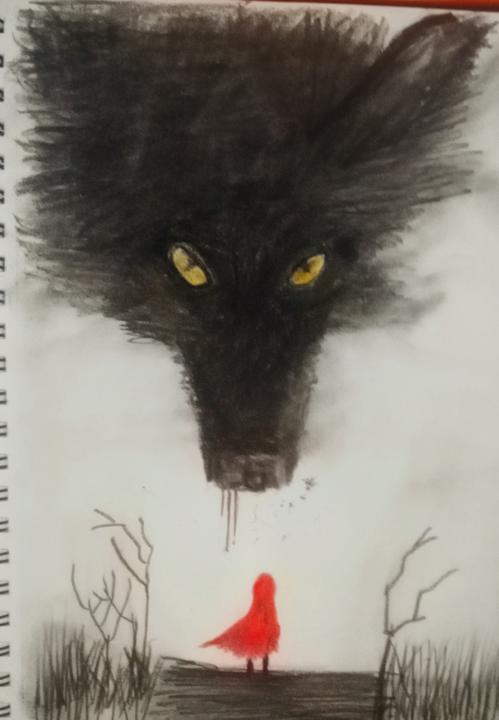
I'm 55, I do a lot of dark pieces. I'm also color blind, so there's that.
0
0
May 20 •
🎨 Have You Ever Heard of Lapis Lazuli? Me Either… But This Is Interesting (and It Once Cost More Than Gold!) 💰
Imagine walking into an art store today and seeing a tiny tube of blue paint worth more than your car 🚗 That was basically Ultramarine Blue during the Renaissance — roughly 500 to 700 years ago. This wasn’t just “blue paint.” This was luxury.Power.Status.The colour of the rich 👑 The pigment came from a rare stone called Lapis lazuli, mined deep in the mountains of Afghanistan and shipped across dangerous trade routes into Europe. Artists then had to crush the stone into powder and carefully refine it into pigment by hand And the craziest part? The finest Ultramarine Blue was sometimes worth MORE than gold 🥇 Yep… painters were literally brushing wealth onto canvas. That’s why wealthy patrons often demanded it in contracts: “Use genuine ultramarine.” Because they were paying a fortune for that brilliant glowing blue 🔵 You’ll notice many old Renaissance paintings show Virgin Mary wearing deep blue robes. That wasn’t random. Blue became associated with holiness and importance partly because the pigment itself was so expensive It was basically medieval luxury branding 😄 Meanwhile today… we squeeze ultramarine acrylic from a $10 tube while eating a meat pie in trackies 🥧😂 Makes you appreciate modern paint a bit more hey. I sure do! Cheers Heff...
May 26 •
🎨 The Strange Story Behind Van Gogh’s Ear 👂
Vincent van Gogh is one of the most famous artists in history… but during his life he was struggling badly with loneliness, mental health, money problems, and rejection. Back in 1888, Van Gogh was living in a small yellow house in the south of France with fellow artist Paul Gauguin. At first, Van Gogh was excited. He dreamed of creating an artist community together 🎨 But the two clashed constantly. Gauguin was confident and dominant.Van Gogh was emotional, intense, and mentally fragile. The arguments became worse and worse until one night Gauguin threatened to leave. That completely shattered Van Gogh 💔 Historians still debate exactly what happened next, but most believe Van Gogh suffered a severe mental breakdown. In a state of distress, he cut off part of his own ear with a razor 😳 But here’s the part people always remember… Instead of calling for help, he reportedly wrapped the ear in newspaper and delivered it to a woman at a nearby brothel. Why? Nobody knows for certain. Some believe the woman was someone he knew and trusted. Others think he may have been seeking comfort or connection during a moment of complete emotional collapse. Some historians even think it was his way of making a dramatic gesture of apology or affection. The woman was understandably horrified 😬 Van Gogh then returned home and was later found weak and bleeding by police. The Really Sad Part Despite becoming one of the most celebrated artists in history, Van Gogh sold very little work while he was alive. Today his paintings are worth millions upon millions 💰 Which is why his story hits artists so hard. The bloke spent his life doubting himself, struggling mentally, and feeling ignored… Yet generations later the world sees him as a genius. A reminder that sometimes the value of your work isn’t recognised straight away 🎨 I used Chat gpt to help out here but never knew of the part where he wrapped his ear in newspaper and delivered it to a woman in a brothel...? I only wish he made enough to live comfortably so he could keep painting. Poor guy. Anyway let me know what you think. Plus do you like these little bouts of trivia? I find it interesting myself. Let me know, Heff.
1-30 of 55
powered by
skool.com/artrepeneur-9896
Reignite your passion for art. Whether you’re just starting out or returning, I teach beautiful, easy art — without all the theory. Join me, free.
Suggested communities
Powered by