
Write something
Pinned
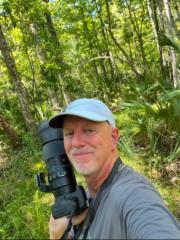
Jun 15 •
How and Why to Subscribe to The Art of Birding
How and Why might you Subscribe for just $2 a month to The Art of Birding? Because you get to do more than just identify #birds! You'll get fun tools to help you appreciate birds in artful and compelling ways, like these coloring sheets* created from Christopher Cudworth's original artwork and photography. He'll illustrate "live" for you (sample included today!) And, we'll bring you photos and #birding insights from Friends of the Community, all amazing contributors too. Authors, photographers, artists, and naturalists. *Everything's Downloadable in your choice of detailed or simple guides for adults or kids. I'll also be offering courses on birding, drawing, and more. You'll also get "walk along" videos as expert #birder Chris guides you on field trips to fascinating birding locations to help you learnwhere to find and how to identify birds. We'll review the best birding apps, how to use them, and what kind of optics are best for you. The Art of Birding Great for all ages. It's like going to Fun Skool! There's not homework. Just the joy of doing cool stuff. And, Coming soon: The Art of Birding podcast features leading birders, wildlife artists, bird photographers, citizen scientists. PLUS, Christ will LIVE "learn along" drawing sessions. Questions? Write [email protected] or comment here for quick response! Invite your friends and SHARE to grow this Community.
1
0

Pinned
Mar 31 •
How my birding and art evolved together
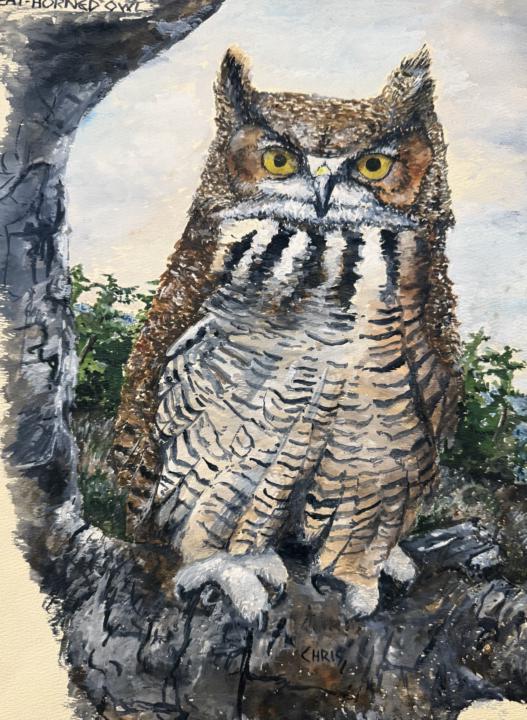
I began painting birds as a twelve-year-old. My initial paintings were copies of photos or attempts at capturing something I'd seen in the field, such as this first rather squat depiction (1) of an owl I'd seen in the Elburn Forest Preserve where they nested. Aching to refine my understanding of birds and art, at the age of about 16 I encountered the work of Louis Agassiz Fuertes, whose paint of a great horned owl mesmerized me in its economy with watercolor and its anatomical grasp of the bird. (2) In high school, I copied that painting by flipping it in reverse. (3) and put a blue jay under its talons. During my first year at Luther College, I had access to bird skins, and there were ruffed grouse in Decorah, Ia, so I did both a pen-and-ink drawing (4) and a watercolor in the same pose shown, and the watercolor was sold. That painting found its way out to California. Three years ago a woman snatched it up where she found it in an alleyway after the couple who bought it from me at Luther got divorced. She said that she had to fight people off to get the painting. Then, she looked me up on the Internet, and called to ask if I wanted it back. I told her, "No, you've earned it. Please enjoy it." A few years ago, I painted an acrylic of a great horned owl in the bluff country of Decorah. That painting (5) hangs in a friend's home along with several other works they collected from me over the years. It show a far more natural pose than my earlier efforts, as it's based off my own photography. But notice that it still echoes the Fuertes' economy I've always appreciated. The last image (6) represents my full growth as an wildlife artist combining years of experience with a touch of respect for another artist I admire, Robert Bateman. I made a point of depicting the patterns found in the owl's face and body with those found on the aging bur oak on which I saw it perched. You can see a hint of the moss growing on the north side of the tree, and the bird "in place" is what I most value about painting birds these days. This series illustrates one person's journey from novice birder to one who tries to appreciate and present nature in its beautiful complexity and relationships. How do you think I've done?
2
0
10h •
Coot reflections
American coots are an odd combination of duck-like traits and additions. Rather than webbed feet, they have lobed feet. Rather than a duck-like bill, they have a pointy white beak with a little red cap at the top and a black tip on it. Rather than a patterned plumage they are charcoal grey from head to butt with two white crescents visible when seen from behind. While they swim somewhat like a duck, they bob their heads in a distinctive motion while smoothing along the water surface. That's often how they are identified from a distance because they often appear as dark shapes from a distance. They don't technically "dive" for food, but are not above sticking their heads down to get something edible below surface. More often they swim around picking 'eatable' stuff off the surface. Coots are a highly successful bird species, found all over the North American continent with the exception of the tundra. They winter a bit south of the Chicago region where I live, but show up fairly early in spring, often following rivers north until the marshes that they love open up. One May morning I was birding at Nelson Lake Marsh and saw a coot flopping near the edge of the cattails below the viewing platform on the East Side of Dick Young Forest Preserve. I hiked down to water's edge and saw that its foot appeared to be stuck in something below the water surface. I reached down to see if it was caught in vegetation or a wire, and felt the large, solid head of a snapping turtle that had grabbed the coot from below. "Sorry," I told the bird. "I can't help you." Nature works that way. Coots are common as heck and whenever something's numerous, the odds are good that something else will prey upon them. #birding #birder #birds #bird #ornithology #nature Photos by Christopher Cudworth
0
0

1d •
A rusty blackbird is not what you think
No, they are not rusty from too much moisture and lack of lubrication. These birds turn rusty in fall plumage and are one of my favorite migratory and winter bird species. Males take on a slightly rusty appearance with their feather edges tinged with yellow ochre and burnt sienna. Females go the whole rusty route, with their entire bodies except the tail looking like an old road sign. I waited for these birds to arrive this year and walked out this morning wondering if they'd showed up. Sure enough, I saw them doing their food searching by walking along logs. When startled, they fly high up in bare trees to survey the area. They behave differently than red-winged blackbirds that way. I love their pale yellow eye, the crisp profiles they make against a clear autumn sky, and their high-pitched "pert-seee!' call and gurgling mutterings. Together in a flock it all creates a merry sound. They are known to winter in Illinois, but I have not seen them around much in our area after the first freeze as they prefer feeding along a shallow water edge in swamps like the one behind our home. I placed one photo of a young red-winged blackbird with slight feather tinging. Some of this species do stay the winter. We've had them at our feeders most years. All photos by Christopher Cudworth, 2026. #bird #birds #birding #birder #ornithology
0
0

7d •
What kind of bird am I? Are you?
What kind of bird would you be if you were to choose one? I drew this self-portrait during my senior year at Luther College. It has the visage of an eagle or hawk, which is sort of fitting, as I wore a red-tailed hawk claw (illegal as hell, as I cut if off a road kill bird) mounted in a silver bracket on a chain. You can see it around my neck in the running photo. It symbolized two things: my determination to fulfill my potential as a runner, and my commitment to get back to my art after a season that I knew would take every ounce of my energy and concentration. We ran 750 miles in ten weeks, covering 8-12 miles a day in cross country. During those runs I saw many red-tails flying above the bluffs around Decorah, Iowa. So I guess this self portrait was a convergence of sorts.
0
0

1-30 of 84
powered by
skool.com/art-of-birding-2447
Birding expert and wildlife artist Christopher Cudworth brings birding to life
Suggested communities
Powered by