

33m •
Friday Fixes
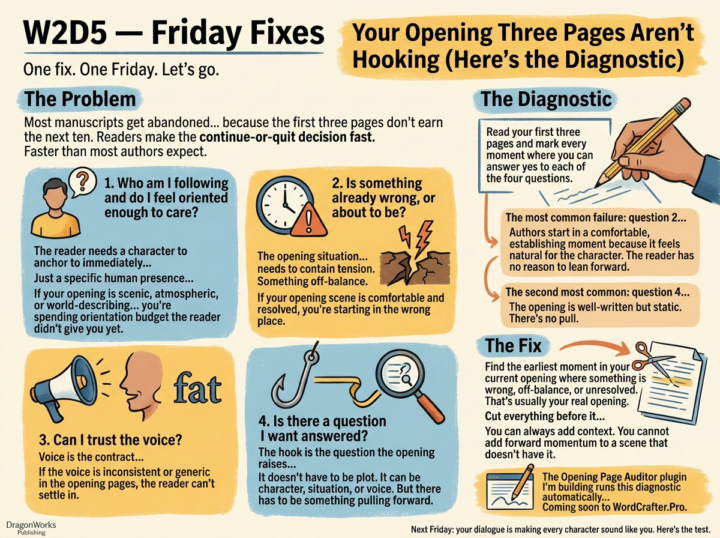
Your Opening Three Pages Aren't Hooking (Here's the Diagnostic) One fix. One Friday. Let's go. The Problem Most manuscripts that get abandoned by readers, agents, or reviewers don't fail because of a bad story. They fail because the first three pages don't earn the next ten. Readers make the continue-or-quit decision fast. Faster than most authors expect. The opening pages have to answer four questions before the reader consciously realizes they're asking them. The Four Questions Your Opening Must Answer 1. Who am I following and do I feel oriented enough to care? The reader needs a character to anchor to immediately. Not a full backstory. Not a character sketch. Just a specific human presence doing something specific that tells us who we're with. If your opening is scenic, atmospheric, or world-describing before a character appears, you're spending orientation budget the reader didn't give you yet. 2. Is something already wrong, or about to be? The opening situation doesn't need to be the inciting incident. But it needs to contain tension. Something off-balance. A question the scene implies even if it doesn't state. If your opening scene is comfortable and resolved, you're starting in the wrong place. 3. Can I trust the voice? Voice is the contract. The opening pages tell the reader how this book is going to feel to read. Pacing, register, humor or the lack of it, how close to the character's interiority we're going to get. If the voice is inconsistent or generic in the opening pages, the reader can't settle in. 4. Is there a question I want answered? The hook is the question the opening raises that the reader needs answered enough to turn the page. It doesn't have to be plot. It can be character (what is she hiding?), situation (how does this resolve?), or voice (where is this going?). But there has to be something pulling forward. The Diagnostic Read your first three pages and mark every moment where you can answer yes to each of the four questions. If any question goes unanswered for more than a page, that's the gap.
2
0
19h •
Thoughtful Thursday
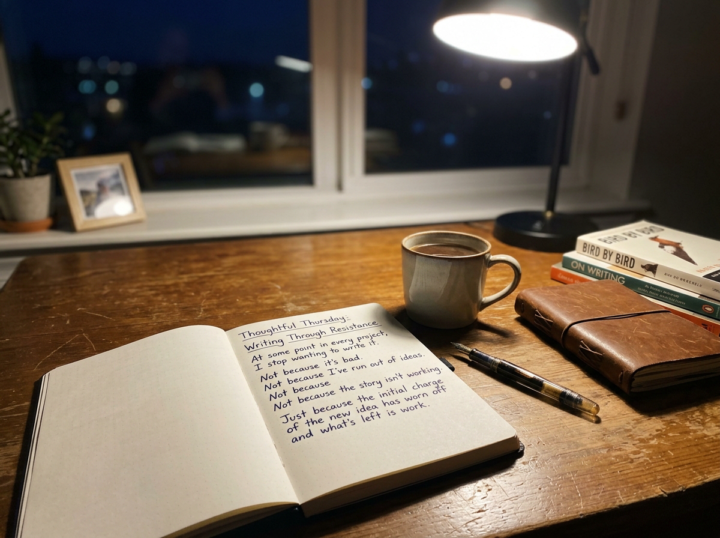
Writing Through Resistance (Not Through Pretending It's Not There) At some point in every project, I stop wanting to write it. Not because it's bad. Not because I've run out of ideas. Not because the story isn't working. Just because the initial charge of the new idea has worn off and what's left is work. For a long time I treated this as a signal. The resistance meant something was wrong. Maybe the story wasn't right for me. Maybe I needed a different project. Maybe I should take a break and come back fresh. What I've figured out is that the resistance is just the project settling into reality. It happens to almost everything at around the same point. And the authors who finish books aren't the ones who don't feel resistance. They're the ones who stopped treating it as meaningful information. What Resistance Actually Is The new project feeling is a neurochemical event. Novelty generates dopamine. Your brain rewards you for starting. It does not reward you at the same rate for continuing. By the time you're thirty or forty percent into a draft, the novelty has expired. The reward system has recalibrated. The work now generates satisfaction in a different, slower way, the kind that comes from completion and craft, not from the buzz of beginning. The writers who get stuck at 40% aren't less talented or less dedicated. They're just misreading what the resistance means. They think the low-reward phase is a sign the project is wrong. It's not. It's a sign the project has become real. What I Do With It Instead A few things that actually help: Name the specific friction, not just the general feeling. "I don't want to write" is too vague to fix. "I don't know what happens when she gets to the warehouse" is a problem with a solution. Most resistance dissolves when you identify what specifically is causing it. Lower the bar for the next session. The blank page is the hardest part. If you end a session by writing the first line of the next scene before you close the document, the next session has somewhere to start. The resistance is about starting. Give yourself a start.
2d •
Work Flow Wednesday
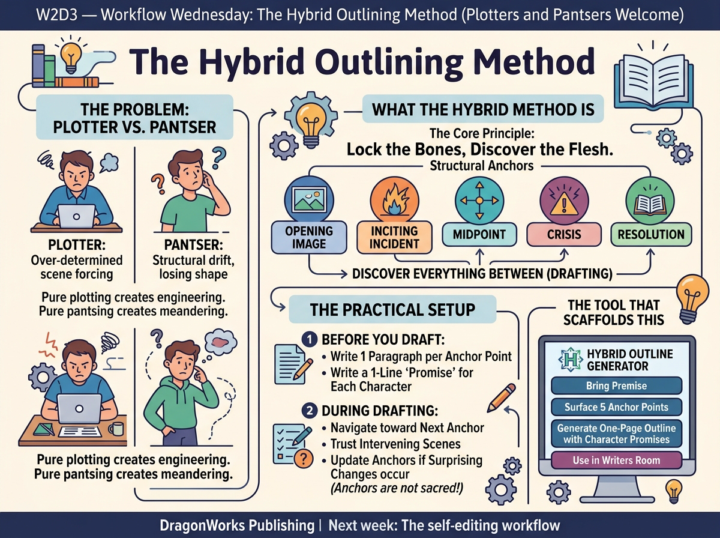
The Hybrid Outlining Method (Plotters and Pantsers Welcome) The plotter-versus-pantser debate is one of those conversations that feels important and is mostly a distraction. Here's what's actually true: pure plotting produces manuscripts that feel engineered. Pure pantsing produces manuscripts that meander. Most published novels are written by people who do some version of both, even if they don't call it that. The hybrid method isn't a compromise. It's just an accurate description of how stories actually get written. What the Hybrid Method Is The core principle: lock the bones, discover the flesh. You decide a small number of structural anchors in advance. These are the plot points that cannot move without requiring a completely different story. Everything between those anchors is discovered during drafting. For a novel, the anchors are usually: The opening image or situation (what the reader walks into). The inciting incident (what forces the story into motion). The midpoint (what changes the direction of the second half). The crisis (the worst moment, where everything is lost). The resolution (where things end, even if you don't know exactly how they get there). Five points. That's the skeleton. Everything else, all the scenes and beats and character moments and subplots, gets discovered in the draft. Why This Works Better Than Either Extreme The plotter's problem is over-determination. When every scene is plotted in advance, the draft stops being a discovery process and becomes transcription. The writer stops listening to what the characters are doing and starts forcing them to hit marks. The prose knows it. The pantser's problem is structural drift. Without anchors, the story tends to follow whatever is most interesting in the moment, which is not always what the story needs. The second half loses shape. The ending arrives before the reader is ready or long after they've stopped caring. The hybrid method gets you a container that holds the story's shape without predetermining its texture.
3d •
Throwaway Tuesday
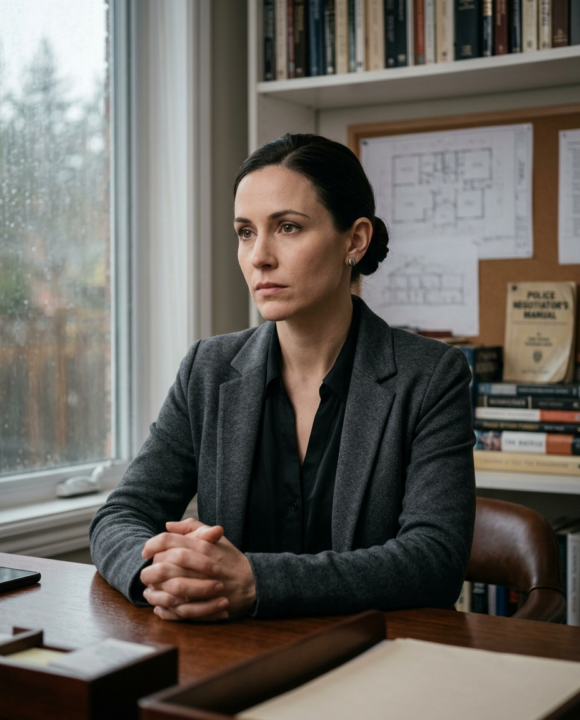
Doing somethign a little different today with characters instead of plots 5 Character Archetypes With the Wounds Already Built In Five character starters. Take them, rename them, twist them. Each comes with a wound that drives behavior and a voice note so they don't all sound the same. 1. The Fixer Who Can't Fix Themselves Background: Former crisis negotiator, voluntarily resigned after a hostage situation that ended badly despite a textbook-perfect performance on her part. Spent three years convincing everyone she's fine. Wound: Doing everything right and still failing taught her that competence is a lie she tells herself. She micromanages everything now because if she controls every variable, she can't be blindsided again. Goal in story: She wants to solve the problem in front of her. What she needs is to learn that some things can't be negotiated. Voice note: Precise. Reads the room before speaking. Says less than she means. Never asks for help out loud. 2. The Optimist With a Body Count Background: Small-town mayor, beloved, genuinely good at the job. Three terms in, two major local crises averted, one that wasn't — a factory closure he supported that gutted the town's working class. He still thinks it was the right call. Wound: His optimism isn't naive. It's a survival mechanism. If he stops believing things can be better he has to sit with what his decisions have already cost. Goal in story: He wants to save the town from whatever's threatening it now. The complication is that he might be part of the problem. Voice note: Warm, persuasive, slightly too practiced. Says the right thing slightly too quickly. 3. The Youngest Who Never Got to Be Young Background: Youngest of six siblings in a family where resources were always thin. Became competent early, responsible early, invisible early. Now in her thirties and still defaulting to taking care of everyone around her while having almost no idea what she actually wants. Wound: She learned that her needs were less important than other people's needs and she's never fully unlearned it. She reads as capable and low-maintenance. She is exhausted.
4d •
Marketing Monday
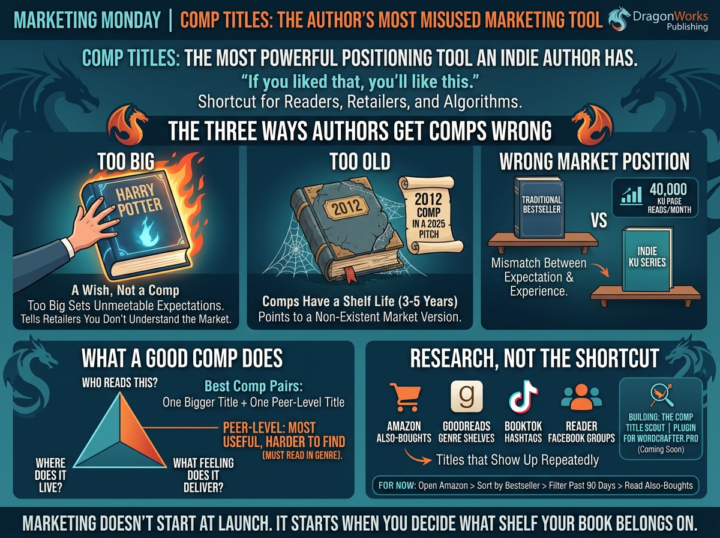
Comp Titles: The Author's Most Misused Marketing Tool Comp titles are the most powerful positioning tool an indie author has. They're also the one most authors get completely wrong. A comp title tells a reader, a retailer, and an algorithm: "If you liked that, you'll like this." It's a shortcut that bypasses the need to explain your entire book. Done right, a comp title does more marketing work than a blurb. Done wrong, it makes you invisible at best and actively misleading at worst. The Three Ways Authors Get Comps Wrong Using titles that are too big. "It's like Harry Potter but for adults" is not a comp. It's a wish. Harry Potter is one of the best-selling series in publishing history. Comparing yourself to it doesn't tell a reader where to shelve you. It tells a retailer you don't understand the market. Comps work by setting specific expectations. A title that big sets expectations no debut or mid-list author can meet. Using titles that are too old. Comp titles have a shelf life. Most industry guidance puts it at three to five years for a useful comp. If your target reader discovered your comp title in college and graduated a decade ago, that comp is pointing at a version of the market that no longer exists. Readers change. Genres evolve. A 2012 comp in a 2025 pitch is a red flag. Using titles from the wrong market position. A traditionally published bestseller and an indie series with 40,000 Kindle Unlimited page reads per month are in different market positions even if they share a genre. Comping up too far creates a mismatch between the expectation you set and the experience you deliver. What a Good Comp Does A good comp title answers three questions simultaneously: Who reads this? Where does it live on the shelf? What feeling does it deliver? The best comp pairs are one slightly bigger title for brand recognition and one peer-level title for precise positioning. Something a reader would recognize, and something a reader in that community is actively talking about right now.
1-30 of 59
skool.com/ai-pro-writers-studio
The Home for AI-Powered Authors. Master story, prose, and marketing with expert AI personas to finish & sell your book fast. Never write alone again
Leaderboard (30-day)
1
+358
2

+199
3
+127
4

+115
5

🔥
+94
Powered by