
Write something

Apr 3 •
Easter Church Traditions Around the World: How 15 Cultures Celebrate the Resurrection
Easter Church Traditions Around the World: How 15 Cultures Celebrate the Resurrection Easter sits at the center of the Christian calendar. For pastors and church leaders looking beyond their own tradition, the ways other cultures mark the resurrection can open up fresh angles for worship planning, sermon series, and Easter programming. Here are fifteen of the most distinctive Easter church traditions from around the world. Salubong — Philippines In many Filipino Catholic communities, Easter begins before sunrise with the Salubong. Two processions move through the streets. One carries the image of the risen Christ, the other carries Mary veiled in black. When they meet, the veil is lifted. It is a simple ritual, but the image of grief giving way to joy lands with real weight. Holy Week Processions — Spain Cities like Seville and Malaga hold long, elaborate processions throughout Holy Week. Participants carry large religious statues through the streets, often for hours at a time. These events are deeply public and communal. Worship moves beyond the church building and into the city itself, which is part of the point. Święconka — Poland On Holy Saturday, many Polish families bring baskets of food to church to be blessed in a tradition known as Święconka. The baskets typically include eggs, bread, and salt. The blessed food is later shared during the Easter meal, which creates a direct and tangible link between the church service and the family table. Paschal Vigil — Greece For many Greek Orthodox believers, Easter centers on the midnight service. Just before midnight, the church darkens before a single flame is shared from the altar outward, one candle to the next, until the whole space is lit. The priest announces "Christ is risen" and families gather afterward to break the fast and greet one another with "Christos Anesti." The movement from darkness to candlelight is one of the more striking moments in Christian worship anywhere in the world. Sunrise Services — United States
Mar 28 •
How to Move Your ChatGPT Memories to Claude (Step by Step)
Claude is our number 1 tool right now, and they've made it incredibly simple to import your saved memories from other AI tools, so you can pick up right where you left off instead of starting from scratch. (Only takes 5 minutes) Note: If you are on a free plan with ChatGPT or Claude, your options for managing and transferring memories may be limited. Some settings and features referenced in this guide may only be available to paid subscribers. Check your account plan before getting started. Step 1: Set up ChatGPT to extract everything ➤ Open ChatGPT and click your profile picture ➤ Go to Personalization ➤ Go to Settings > Personalization > Memory > Manage and remove anything outdated, incorrect, or irrelevant before exporting ➤ Turn ON all three of these (options may vary based on your plan): - Reference saved memories - Reference browser memories - Reference chat history ➤ Bottom Line: Turn on every memory-related setting you can find Step 2: Review the official Switch to Claude migration guide thoroughly ➤ Visit: Switch to Claude without starting over ➤ Review every screenshot and read the entire page before moving on ➤ If you don't have a Claude account, click on Get Started or Try Claude to create your free/paid account Step 3: Get the import prompt from Claude ➤ Ensure you are logged in to Claude.ai, then click your profile picture ➤ Open Settings ➤ Navigate to the Capabilities tab ➤ Click "Import memory from other AI providers" ➤ Click Copy to copy the prompt that appears - it might begin with "Export all of my stored memories" or "I'm moving to another service and need to export my data" Step 4: Paste & Run the prompt in ChatGPT ➤ In ChatGPT, click the model dropdown menu at the top of the chat ➤ Select the latest Thinking model available to you ➤ If you don't have a Thinking model, add the words "think hard" to the beginning of the prompt you received from Claude ➤ Using a Thinking model (or prompting it to use a thinking model) pulls significantly more information from your account than the default
Mar 26 •
What the Algorithm and Jesus Have in Common
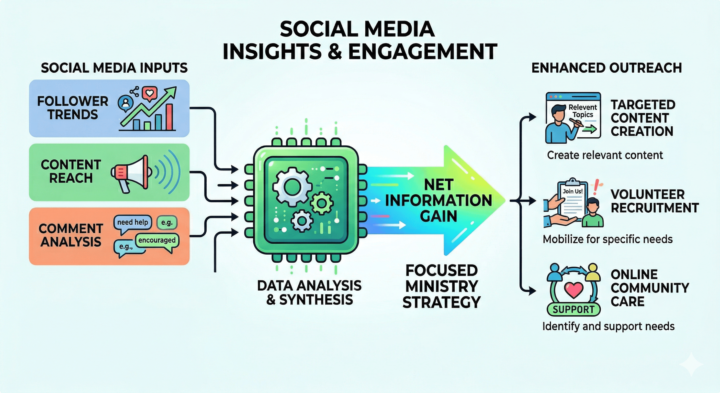
The day I discovered AI could help me instead of replace me was the day my current mission was born. AI is now summarizing content before most people ever read it, but that is not the only problem. After 52 churches in 52 weeks evaluating social media posts across the country, the bigger issue is simpler. Most church content gives people nothing worth passing on. If they do not share it, the algorithm never pushes it. "Net Information Gain" starts there. That concept is called Net Information Gain, and it is reshaping how platforms decide what you see. During my 52 churches tour I noticed the fastest growing ministries were posting nine or more pieces of content per week across leading platforms, but the number was never the real difference. It was the mixture. Each post added something the others did not. That is what the algorithm is looking for and what most churches are missing entirely. For Christian creators, that is actually good news. Your lived faith, your specific calling, your real encounters with Scripture cannot be summarized by AI. They are yours. That is "Net Information Gain" in its purest form. The Parable of the Talents was never just about money. It was about multiplying what only you were given. AI is one of the tools available to do exactly that. The problem is most believers never have enough time or margin to bring that depth to their content consistently. The stakes are not just algorithmic. I have watched churches lose ground on attendance simply because their content gave people nothing worth sharing. And I have seen the opposite too. When a ministry starts producing content with genuine Net Information Gain, people share it, new visitors find it, and the community grows. The slowest growing churches I visited posted once a week. Always the full sermon. Always to the same audience that already heard it. If your content is not adding something new for someone, the algorithm already knows. So does your congregation/members! Recognizing that pattern was the moment I knew there had to be a better way, and that is exactly what this community was built to provide. Not to make you sound like AI, but to give you back the time and margin to sound more like you.
1
0
Mar 13 •
Generative AI for Pastors: What It Means and Why It Matters
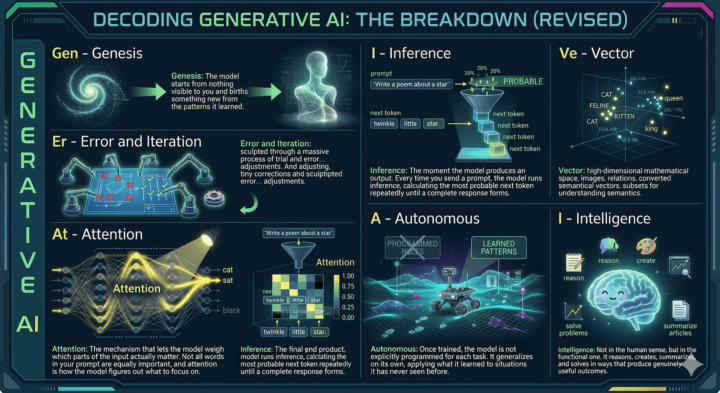
Ever notice how we throw around terms like "Generative AI" without really stopping to think about what the words themselves are telling us? Most church leaders and pastors have heard the term dozens of times by now, in conferences, newsletters, and technology conversations happening across every denomination. Most people either gloss over it or assume it just means "AI that makes stuff." And while that is not wrong, it is a bit like describing a sermon as "a thing someone says on Sunday." So here is a different approach. Instead of defining Generative AI from the outside in, we can break the term apart letter by letter and let each fragment point to something real happening under the hood. Gen, Er, At, I, Ve, A, I. Seven pieces, seven concepts, each one a window into how these AI tools for churches and ministry actually work. The goal is not to be technically exhaustive. It is to make the term feel earned. Because when church leaders understand what is powering the AI tools they are being asked to adopt, the phrase stops being intimidating jargon and starts being something far more approachable. Think of it as a mnemonic with depth. A way to remember not just what Generative AI is called, but what it actually does, and why it matters for ministry. Breaking Down Generative AI One Letter at a Time Gen — Genesis. The model starts from nothing visible to you and creates something new from the patterns it learned. Much like starting a sermon from a blank page, the model generates original output every single time. This is the foundation of every AI tool for ministry you will encounter, including popular tools like ChatGPT for pastors and church leaders. Er — Error and iteration. The training process behind every AI writing tool, AI sermon assistant, or church communication platform is built on getting things wrong, measuring that wrongness, and adjusting. Billions of tiny corrections shaped what the model knows. In many ways it mirrors the process of growth and refinement that is central to faith itself.
2
0
1-4 of 4
powered by

skool.com/ai-for-ministry-7784
Free AI knowledge & training for ministry leaders. Discover tools & strategies to drive growth, retention & impact rooted in Biblical wisdom.
Suggested communities
Powered by