
Write something

May 21 •
Formal Symbolic Representation Prompts
🚨 "Formal Symbolic Representation" prompts 🤔 Good morning, everyone! 🤓 I’m excited to share that I’ll be promoting "Formal Symbolic Representation" prompts as a way to tackle some of today’s challenges with Artificial Intelligence usage. Follow me ✅ to learn more about how this innovative prompting method can save you both time and money! 🤖⌛️💰
0
0


May 20 •
Looking for a Partner
I am looking for a partner based in Netherlands. For expanding my development business and cooperation with partner, I have clear idea. Programming skills are preferred but not mandatory. Let's talk in dm in more details.
0
0

May 14 •
Which AI platform should I use at home?
I have used ChatGPT at home (free version) and Microsoft copilot at work. (With limited access) I want to play about with systems more, do I upgrade to ChatGPT plus? What’s everyone else using?

May 4 •
You don’t need to learn 50 AI tools
✨You just need to understand enough to use it in your actual work/life!✨ We’ve had a wave of new people in here so hello 👋🏽 If you’ve just joined and you’re thinking “ok…now what?” 🤔 you’re exactly where you’re meant to be. Most of what’s out there either overcomplicates things, makes it sound like you need to become a data scientist overnight, or overwhelms you with the gazillion tools you feel like you should know 🫠 You don’t. You just need to understand the basics of AI to use it in your actual work. I’ve dropped a short clip below from the course on computer vision 👇🏽 It’s one of those moments where things start to shift and where you stop seeing AI as this vague, abstract thing…and start recognising what it’s actually doing. The full course is here in Skool if you want to go further. Dip in, skip around, come back to it - all yours! If you’re a founding member, you’ve got access. ‼️That won’t be the case forever, so if someone comes to mind who’d benefit, bring them in‼️ And before you disappear into the content say hello 👋🏽 What do you do, and what made you join? Always interesting to see who’s in the room😃 Rachel
Mar 23 •
👋 Welcome!
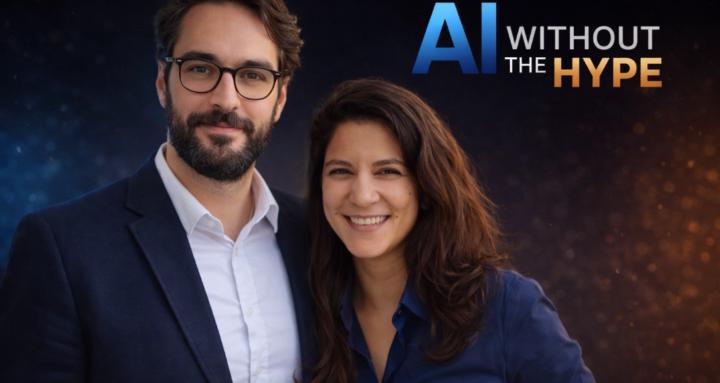
Hi everyone, I’m Rachel :) I’m a doctor and entrepreneur by background, now working in health leadership and innovation, and like many of you… I’ve spent many years hearing about AI everywhere and felt lost in the hype, anxious about the future and overwhelmed with the constant information. This is where this space came from. I’ve partnered with Bassam (AI expert, builder with PhD in machine learning, and the person who actually understands the deep layers of this technology 😄) to create something simple: 👉 A place to understand AI without the hype 👉 A place to ask questions and get real answers from real humans 👉 A place to figure out how this actually applies to your work 👉 And a place to start using it in a way that genuinely helps A lot of what’s out there is either very technical or very abstract and not useful. This space sits in the middle. It’s especially relevant for people working in healthcare, public services, or complex organisations - but if you work anywhere that feels a bit busy, layered, or inefficient, you’ll recognise a lot of what we talk about here. At its core we will help you use AI to reduce unnecessary work, so more of your time and energy go where it actually matters. A quick ask from you🙏🏼 Drop a comment below and tell us: 1️⃣ What do you do? 2️⃣ What’s one thing about AI that confuses or worries you? 3️⃣ What are you hoping to get out of this course? We’ll be in here with you along the way, answering questions, sharing ideas, and supporting each other. Now go ahead and say hello! We would love to hear from you! — Rachel & Bassam
1-16 of 16
powered by
skool.com/ai-fluency-for-professionals-5207
AI for non tech professionals: understand the language, confidently evaluate what’s real and position yourself to stay relevant and ahead of the curve
Suggested communities
Powered by