
Write something

Apr 6 •
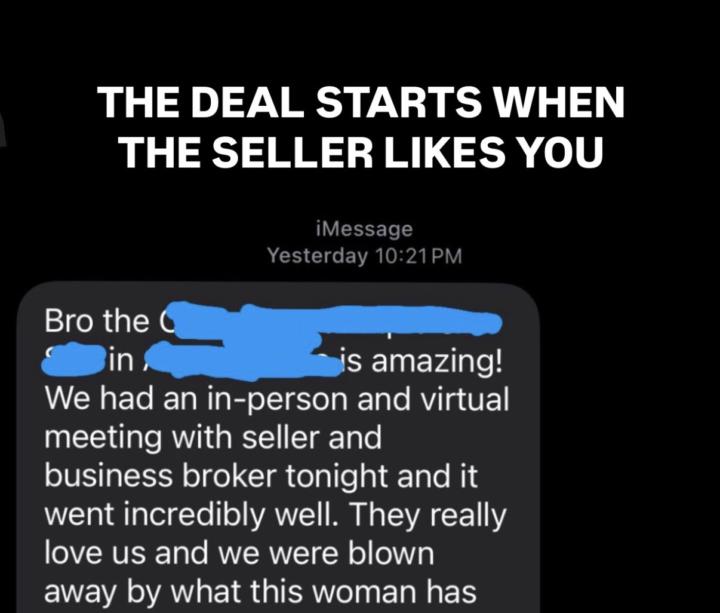
This is how deals actually start
Most people think buying a business is about numbers It’s not This is a message from someone inside the mentorship after getting in front of a seller Before anything is signed Before financials are finalized The relationship is what moves the deal forward
1
0
Apr 1 •
How this deal was actually funded
Most people think they need a lot of money to buy a business. That’s usually what stops them from even starting, because they assume they need hundreds of thousands sitting in the bank. But that’s not actually how this works. We recently looked at a deal with my brother that’s a good example of this. It’s the largest cat sitting business in Northern Virginia, where they send people into homes while owners are away and take care of their cats. The business was doing about $186,000 a year in profit and was listed for $650,000. We ended up getting it under contract for $625,000. Here’s how the deal was structured: $250,000 down $375,000 seller financed over 6 years at 8% So most of the purchase price was not paid upfront. Now here’s the part most people don’t realize. We’re not putting up the $250,000 ourselves. We’re bringing in one investor to cover that. In exchange, they get 33% of the business. They don’t operate it. They don’t manage anything day to day. They just participate in the upside while we run and grow it. So we’re acquiring a business that already exists, already has customers, and already makes money… Without needing to fund the entire deal ourselves. This is how a lot of deals actually get done. It’s not about having all the money. It’s about knowing how to structure the deal. Using seller financing. Bringing in the right investor. Putting the pieces together. If you’re only thinking in terms of “how much cash do I have,” you’re looking at this the wrong way. Scott
1
0
Feb 6 •
Why brokers ignore most buyers
Once you start looking at real deals, this comes up fast. Business brokers. If you’ve reached out to a few already and felt ignored, slow-walked, or brushed off, you’re not doing anything wrong. This is just how the system works. Business brokers are a lot like realtors. There are some very good ones, and there are plenty that are sloppy, slow to respond, or purely transactional. It’s a mixed bag. Here’s the part most buyers misunderstand: Brokers are not focused on building relationships with buyers. They’re focused on selling the business they represent. They get contacted all day, every day by people saying: “I’m interested.” “Looks cool.” “Can you send more info?” Most of those people are not serious buyers. Brokers don’t know who’s real and who isn’t, so they default to treating everyone transactionally. That’s normal. I’ve taken brokers out for coffee. I’ve tried to build relationships. Even while actively buying businesses, that hasn’t always translated into special treatment. If there’s a deal I really like, I’m persistent. I’ll call multiple times in a day to get someone on the phone. Not because I’m being aggressive, but because that’s what seriousness looks like in this market. Here’s what actually changes how brokers respond: You package yourself clearly You know what you’re looking for You follow up consistently You don’t take slow responses personally They’ll send the NDA. They’ll send the information. They’ll work with you. But you may need to push the process forward. If you’re expecting enthusiasm or hand-holding from brokers, you’ll get frustrated fast. If you expect a transactional process and show up professionally, things move. Persistence and professionalism go a lot further than trying to be liked. That’s just how the game works. If this has been confusing or discouraging for you so far, you’re not behind. You’re just early. I’ll break this down further in upcoming posts, including how experienced buyers signal seriousness early so brokers know who they’re dealing with.
Jan 27 •
Why owners sell great businesses
“If this business is so great, why would someone ever sell it?” It’s a fair question, but it’s usually based on a wrong assumption. Most people assume businesses only get sold when something is broken. In reality, that’s not how it usually works. In most cases, owners aren’t selling because of the business. They’re selling because of life. Retirement is the big one. A lot of owners are in their 60s or 70s and have been running the same business for decades. They’re tired. They’ve made their money. They want to slow down. Relocation is another common reason. Family moves. Health changes. Grandkids show up in a different state. The business works, but life pulls them somewhere else. I talk to sellers all the time. The most common reasons I hear are retirement and relocation. Sometimes both. A surprising number of people just want to be done. They want to travel. They want to spend time at the beach. They want to walk their dog every morning instead of dealing with employees and customers. In the past, a lot of these businesses would have been passed down to kids. That happens far less now. Many kids don’t want to take over their parents’ company, which leaves selling as the most practical option. That’s why there are more good businesses for sale than people expect. It’s also why plenty of solid businesses never sell at all. They just shut down because there aren’t enough serious buyers who know how to evaluate them. If you’re early in the process, it’s easy to talk yourself out of opportunities by asking why someone would sell a good business. Once you start having real conversations with real owners, the answer becomes obvious. People change. Priorities change. Great businesses still get sold. Scott
2
0
Jan 23 •
Business Brokers: How This Actually Works
Once you start looking at deals, this comes up fast: business brokers. If you’ve started searching for businesses to buy, you’ve probably already interacted with one or two. Business brokers are a lot like realtors. There are some very good ones, and there are plenty that are sloppy, slow to respond, or hard to work with. It’s a mixed bag. One of the most common questions I get is how brokers get paid. In almost all cases, they’re paid by the seller, usually around 5–10% of the sale price, and often closer to 10% on smaller deals. Their job is straightforward. They help the seller package the business, market it, find buyers, and push the deal to closing. Here’s the important part for buyers. Most brokers are not focused on building long-term relationships with buyers. They’re focused on selling the business they represent. They get contacted constantly by people who say they want to buy a business, and most of those people aren’t serious. Because of that, they don’t know who’s legit and who’s not. So don’t expect them to be overly responsive or excited right out of the gate. I’ve taken brokers out for coffee and tried to build relationships. Even while actively doing deals, that hasn’t always translated into special treatment. That’s normal. If there’s a business you really like, you’ll probably need to be persistent. I’ve called brokers multiple times in a day just to get them on the phone. That’s part of the process. You’ll sign an NDA, they’ll send the information, and they’ll work with you, but you may need to follow up more than once to keep things moving. The key is not to take it personally. Package yourself well. Be clear about what you’re looking for. Follow up consistently. Persistence and professionalism go a lot further than expecting enthusiasm. That’s just how the game works. Scott
1-5 of 5
powered by

skool.com/acquisition-wolf-free-8124
Learn how to find, evaluate, and buy businesses that actually cash flow 🪓
Suggested communities
Powered by