Activity
Mon
Wed
Fri
Sun
Apr
May
Jun
Jul
Aug
Sep
Oct
Nov
Dec
Jan
Feb
Mar
What is this?
Less
More
Memberships
Mastering.com Members Club
33.3k members • Free
44 contributions to Mastering.com Members Club

Jan '24 •
Try to remove clickings
Is it possible to remove the clickings in this file only using mixing and/or mastering techniques? If so, tell me how. The clicking occurred only after I extracted the file from a CD. The CD itself did not have the clickings.
0 likes • Jan '24
@Berlin RedluX If you like getting stressed out, that is fine. I was just saying that I do not have an urgent need for the file to be fixed.
0 likes • Jan '24
@Yehudi Matthew Thanks. But my question was whether it is possible to remove the clickings entirely using mastering and/or mixing tools like EQ, compression, etc. I know you said using RX will result in loss of sound quality. Will trying to use mixing or mastering tools like EQ, compression, etc. result in a similar issue as RX?
Jan '24 •
Mixing-Mastering challenge question
In this audio file, there are bird sounds and people talking. Is it possible to remove the talking? If so, tell me how. The file is in my comment below.
0 likes • Jan '24
[attachment]
Nov '23 •
Brauer Motion Plugin
https://www.youtube.com/watch?v=lRZCzrAvmQ0&t=10237s At around 3:01:00 time stamp, what was Jake's purpose of using the Brauer Motion plugin?
Jul '23 •
A room acoustics puzzle
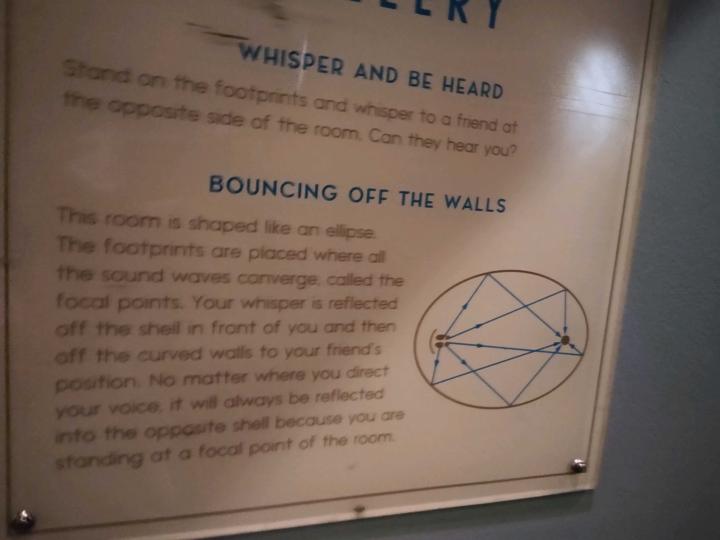
Before trying to answer my question, read what is in the picture below. (This is not a problem I can figure out myself, LOL). Question: Suppose that in an elliptical room, one person is speaking at a focal point, and another person, who is quiet, is at another focal point. Assume that the distance between the focal points is 23 meters. How many dB softer is the sound at the non-speaker's position, than at the speaker's position, assuming an absorption coefficient of 0.2? Tell me if you are able to answer this question.
1 like • Jul '23
@Kostja Rohe A reduction of 1.5 dB seems sensible to me, but let's wait for someone who knows how to nail the answer! (which isn't me)
0 likes • Jul '23
@Andy Laird How did you derive that answer? Also, if that were the case, how come I could hear my brother when I was at the listening position if the sound intensity is like 24-25 times weaker than at the speaker's position (assuming a reduction of 27 dB)? Also, keep in mind that the point of the elliptical room is so that all the reflections come to the focal point at the same time. This means that if the listening position is at a focal point, the sound at the listening position will be considerably louder than at other places in the room. I was not given the absorption coefficient. I am just assuming that the absoprtion coefficient cannot be very large (using my common sense). Maybe the absoprtion coefficient of the walls is less than 0.2.
Jun '23 •
A Theoretical Room Acoustics problem
This is one of my attempts to create a digital reverberator. In part 1, I intended to simulate the reflections of a rectangular room based on the smallest dimension. In part 2, I intended to simulate the reflections of a rectangular room based on the middle-length dimension (1.6 times the length of the shortest dimension). In part 3, I intended to simulate the reflections in a rectangular room of the largest dimension (2.6 times the length of the shortest dimension). In part 4, my intention is to simulate the reflections of a rectangular room in all dimensions. But when I decrease the "dimensions", I get terrible "room modes." How could I digitally "treat" these modes ( via EQ, compression, or limiting, etc...) without removing the reverb? Does anybody have any suggestions? Also, is it possible for an environment to have modes that are this bad (as bad as in the videos)?
0
0
1-10 of 44
@yeeray-low-7364
I compose music, play viola, and play piano as hobbies. Writing electro-acoustic music is one of my fascinations.
Active 600d ago
Joined Nov 12, 2022
Fairfax, VT
Powered by