Activity
Mon
Wed
Fri
Sun
Nov
Dec
Jan
Feb
Mar
Apr
May
Jun
Jul
Aug
Sep
Oct
What is this?
Less
More
Not Knowing
628
Free
4 contributions to Not Knowing
23d •
Meditation Vs. Contemplation?
Hello, Not Knowing community. This is my first proper post in here. I’m very curious to see what you think of my questions here. To start, I’ve realized that my perception of meditation is one of mostly belief. I grew up being told that meditation was a valuable way to spend one’s time, and that if one were to meditate with focus and discipline, insights beyond imagination could be found. I’ve heard meditation explained like this in many different ways, by many people throughout my entire life. A few years ago I started to take meditation more seriously, since around that time I decided I wanted to develop myself and change my life for the better. Since then I’ve meditated in phases, sometimes meditating for streaks of 100-200 days (30min a day). My current meditation practice is 30 minutes twice a day. So one hour, and I’ve been at this for two weeks now. Every time I get into a serious meditation phase I encounter the same experience. It’s rocky in the beginning, but the more consistent I am, the more peaceful the meditation is. I have had many peaceful meditations where I’ve let go of expectations. What I’m questioning now is: why am I meditating? I’m realizing that all this time I’ve believed that meditation was worthwhile. While I am meditating I feel that an am able to do so with openness and curiosity (sometimes) - I suspect that part of me is only meditating because I “know” that it is a good thing to do. I “know” that it can yield deep insights or other kinds of breakthroughs like access concentration or samadhi states. I still have not experienced these insights and states. I’m considering that, as I am and perceive right now, I might not be meditating with a committed interest in what’s true. I do think that’s what meditation should be about, discovering what’s true about the present moment and experience - but either my skewed intent or approach is holding me back from a true experience. This brings me to contemplation: The reality is, I prioritize contemplation less than I do meditation right now. Partly because I have grown up to place a high value on meditation, and not contemplation. While meditation is something I think about as “I should do this every day” contemplation is more like “I’ll get to it if I have time after I’ve meditated”.
0 likes • 23d
@Filip Chervenski Thank you, Filip, for the thorough response. You've given me a lot to consider. I am going to continue considering how I can shift my priorities so I can meditate and contemplate each day, despite my busy life circumstances. I am going to practice disengaging the perception of meditation / the green elephant as you proposed. Thanks for the pointer.

24d •
Spiritual Bypassing vs. Transformation vs. Truth
I’ve been contemplating a distinction between three different reasons for doing spiritual practices: 1. To change our state or experience — to feel more peaceful, loving, connected, blissful, energized, etc. 2. To transform our being — changing how we actually relate, react, behave, and show up in life. 3. To become conscious of what is true — questioning assumptions and beliefs and becoming directly conscious of something rather than trying to produce a particular experience. This has become quite personal for me because I’m in a relationship with someone who is deeply involved in Kundalini yoga and other spiritual practices. She sometimes speaks about “channeling light,” raising energy, opening the heart, connecting to the higher self, etc. And I notice that this sometimes really annoys me. What’s interesting is that we’re both deeply interested in spirituality and increasing consciousness, yet at times it feels like we’re worlds apart in what we mean by that. I tend to become suspicious when spirituality seems primarily directed toward creating preferred states: more light, love, bliss, peace, elevated energy. Not because there is anything wrong with these experiences, but because I wonder whether constantly moving toward what we prefer can also become a way of moving away from what we don’t want to experience. This is where terms like spiritual bypassing and escapism come to mind. A spiritual practice can perhaps genuinely produce beautiful or profound experiences while simultaneously being used to avoid fear, anger, insecurity, conflict, grief, or other unwanted aspects of ourselves. The experience itself may be genuine; the question is what we’re using it for. It seems to me that transformation often requires something quite different. Rather than trying to transcend anger, fear, insecurity, jealousy, selfishness, conflict, etc., perhaps we need to encounter these things directly. Transformation may therefore sometimes feel worse rather than better. The uncomfortable situation or relationship might reveal much more about our being than another beautiful spiritual experience.
1 like • 23d
I met a few people lately that used language that put me off in a similar way. I wanted to understand why I felt put off by similar words to what you mentioned, like “higher state” or even some concepts as esoteric as “the twelfth dimensional stargate!”. These people seemed really invested in their spiritual practices and intentions, but something about their communication with me was triggering my bullshit detector, and I struggled to relate or even, at times, respect what these people were trying to tell me. As I contemplated their communication I realized that everything I had been told about was based in their confident ‘knowing’ in their practices. They were essentially telling me that they know “xyz” is true and real, and expecting me to accept their fabrications right then and there. What really rubbed me the wrong way: I could find no way to directly experience the extremely esoteric concepts they kept telling me about, they themselves offered no acknowledgment of even the possibility of directly experiencing it, they refused to acknowledge that their “knowledge” might be a belief to them. I’m still fresh into my contemplation upon the three reasons for engaging in these kinds of work. I imagine my biases could be preventing me from understanding what certain people are actually trying to communicate, and instead I receive it like I described above. Perhaps these individuals did have a real experience with what they are talking about, but didn’t communicate in a way I understood.

Sep 13 •
Which Peter Ralston book did you read first?
📚 Interested to hear which one got you started. Why did you read this book and what did you love or hate about it? (Choose the first one you picked up, even if you're still reading it)
Poll
61 members have voted
3 likes • 25d
The book of not knowing. Introduced to it by Leo Gura. I love this book because it reignited the strong curiosity I had as a child. I used to ask my parents questions like “how do you know China is real if you have not been there, and even if you have been there, how do you know that your experience when getting out of the plane and seeing ‘China’ isn’t just a construction being fabricated to meet your expectations?” I definitely did not communicate the line of questioning so well as a child but I can clearly remember this curiosity. I was dying to know what the basis was for China being real, and furthermore - what made anything real? I imagine that there is an incredible amount of awareness that I don’t know that I don’t know, and one of these things is likely the basis for ‘real’ or ‘being’. The book of not knowing is encouraging because it inspires me to be curious again, where most other people/influences in my life discouraged my “wild” curiosity.

Jun '25 •
🌀 Welcome to Not Knowing! 🌀 Start Here
We are glad you decided to join! The purpose here is simple: finding out what's true for yourself, in your own experience without any assumptions, beliefs or hearsay. What is true, what is really true? Real insight always arises from not knowing. Here's how to begin: 🌱 Step 1: Say hello Introduce yourself in the comments and tell us: what are you curious about, what are you investigating? A sentence or two is plenty. 💬 2. Share your insights, ask others Find someone with a question or interest you share and let them know. You don't need to have an answer. 🧭 3. Take the Start Here course Five short videos by Brendan to get you going: https://www.skool.com/not-knowing/classroom/2da2cfdc 📅 4. Join a Check-in Session with Brendan We meet every Tuesday for a live session for new members. Find the next one in the Calendar tab: https://www.skool.com/not-knowing/calendar P.S. Levels here run on likes. So when you say hello and reply to someone, like what you read too. That's how everyone gets to Level 2, which opens up more courses. Higher levels bring more rewards, including free online workshop seats. Have a look around the Classroom: https://www.skool.com/not-knowing/classroom “Increasing consciousness is the most important pursuit any human can undertake. Generally, people are stuck in a great deal of false realities that produce struggle, suffering, and discontent. Increasing consciousness frees us from this falsely limited world so we can access greater freedom and happiness, not to mention gain more effectiveness and creativity. Becoming more conscious takes investigation, learning, and contemplation. We provide these tools and support.” — Peter Ralston
4 likes • 25d
Hello everyone. My name is Yarrow and I am curious about what life looks like when it is lived with a deep present connection with ‘being’.
1-4 of 4
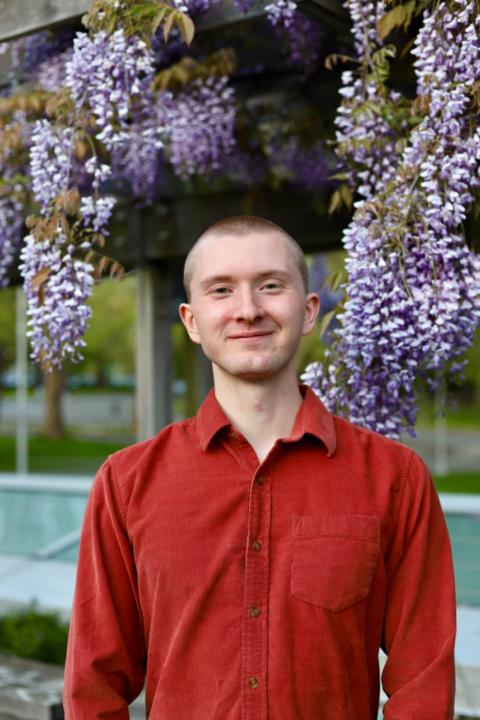
@yarrow-cox-6947
Based in Seattle. 23. Seeking truth.
Active 16h ago
Joined Sep 21, 2026
ENFJ
Powered by