Activity
Mon
Wed
Fri
Sun
Feb
Mar
Apr
May
Jun
Jul
Aug
Sep
Oct
Nov
Dec
Jan
What is this?
Less
More
Memberships
Rhythm Skool
630 members • Free
8 contributions to Rhythm Skool

Sep '25 •
I love this track!
This is from an Mbalax (Senegalese pop) complication. I can’t get enough of this! We can talk about what’s going on here sometime… https://youtu.be/J0Hb7eFeAcg?si=DYncJaXWnx1nHfC-

1 like • 19d
Wow nice one, but although get lost.........i cant get the pattern....
20d •
Very fast bikutsi
https://youtu.be/XKlDo5IDXlw?si=3tVWSQYBZAGqDx-3 First I was hearing the intro in 3/4 but it s 12/8
1 like • 20d
The bass seems to play in 4. When you feel both pulse, how you externaise time with your feet ? You are changing your steps? Thanks
1 like • 20d
I ll try, thanks
Nov '25 •
A Guide To Mastering Your Rhythm - grab your copy!
Hey everyone! If you haven't downloaded your Guide to Mastering Your Rhythm yet, now's the perfect time. This guide is the foundation of everything we do in Rhythm Skool. Inside, you'll discover: The Triangle of Inner Pulse Method - Step (grounding the pulse) - Clap (your built-in percussion) - Say (vocalising rhythmic layers) This approach comes from my time studying Sabar drumming in West Africa and 20+ years working with musicians worldwide. It's about feeling rhythm in your body, not just counting it in your head. What's inside the guide: → The complete Triangle of Inner Pulse breakdown→ Deep Groove Compass: Time, Rhythm, Feel, and Connect→ Practical exercises you can start using immediately→ My journey from The Gambia to touring with Robert Plant→ The beginner's mind approach to rhythm mastery 👉 [DOWNLOAD YOUR GUIDE HERE] How to use it: Start with the Triangle of Inner Pulse exercise on page 3. Set your metronome to 70 BPM and just try it for 5 minutes. You'll immediately feel the difference between thinking about rhythm and experiencing it in your whole body. Then: - Work through the exercises at your own pace - Bring questions to our twice-monthly Rhythm Hangouts - Share your discoveries in the community Drop a comment below after you've tried the first exercise - what did you notice? What surprised you? Let's get some discussion going! Keep Grooving, Dave
0 likes • 21d
@Dave Smith ok thanks
1 like • 20d
@Dave Smith so you don't have a way to express the 1 of each in 3? In 5 / 4 it would be the same altough?
Oct '25 •
The foundation that changes everything!
Connecting with the pulse and feeling different subdivisions isn't just about keeping time - it's the foundation that changes everything about how you experience music. When you can feel the pulse in your body - not just hear it, but truly feel it - something shifts. You stop thinking your way through rhythm and start living it. The counting falls away. The mental calculation disappears. You're simply there, grounded in the beat. This connection affects how you interact on every rhythmic and timekeeping level. You're not fighting to stay in time - you know where you are within the pulse because you can feel it internally. The subdivisions aren't something you're calculating - they're something you sense, like feeling the spaces between your heartbeats. And here's what really opens up: when your connection to pulse and subdivision is solid, you start to feel the groove from the inside out. It's not something external you're chasing or trying to copy. It's something you generate from within, something that flows through your whole being. You become more connected to what you play. Every note, every phrase sits exactly where you intend it because your internal pulse is guiding you. You're not second-guessing placement - you're making musical choices from a place of rhythmic confidence. You become more connected to what's going on around you. When other musicians shift the feel, you feel it immediately. When someone sets up a rhythmic conversation, you can respond naturally. When the collective groove deepens, you're right there contributing to it. The pulse is always there, waiting for you to drop into it. The subdivisions are already present in the space between beats. Your job isn't to create them - it's to connect with what's already alive in the music. This is the foundation. Build it strong, and everything else - timing, feel, musical connection - flows naturally from there. You're already on this path! By showing up here in Rhythm Skool, practicing consistently, taking part in the weekly workouts, engaging with the community - you're building this foundation right now. Each time you practice, each time you show up, you're deepening that connection.
1 like • 21d
How and where you feel the pulse in your body? When I step with the click I can follow. But without I m not sure that I don't t rush or drag, i don t feel any reference in my body. Thanks
1 like • 20d
You method is very powerful, to make rythm go deep in the body. I studied a lot of stuffs to improve my rythm but I didn't go that far with the feeling in my body. Thanks

20d •
Rhythm reference materials
Does anyone know of any books that specifically address rhythm concepts? I mean something like music theory for rhythm. I’d like some reference materials like that.
2 likes • 20d
There are French books from Daniel Goyone, les cahiers du rythme vol 1,2 and 3 Full of rythm concepts. And one from Todd isler, You can takadimi this. These are not drums book, but rythm concept for all
1-8 of 8
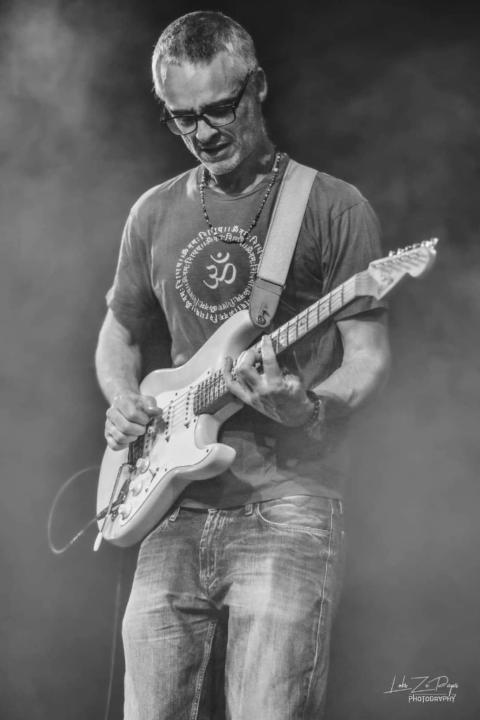
@will-rebread-4234
I m a french guitar player and singer. My name on stage is Mister Rebread
Active 2d ago
Joined Dec 20, 2025
Powered by