Activity
Mon
Wed
Fri
Sun
Aug
Sep
Oct
Nov
Dec
Jan
Feb
Mar
Apr
May
Jun
Jul
What is this?
Less
More
Memberships
GovconOS
14.1k members • Free
Sharpshooter Life Community
87 members • Free
5 contributions to Sharpshooter Life Community

23d •
Saturday Morning Coffee Hour
Wow, we had a great coffee hour this morning, waking up early, reflecting on different thoughts, looking at where we are and where we're going, discussing what we've practiced that's working, what isn't, and the lessons learned. With renewed energy, ready to get back on track, and do great things again next week. Refreshed and ready to enjoy the weekend. Thanks to those who attended. 🙌 Those who couldn't make it, hopefully your time was invested wisely. #commitment #noexcuses

1 like • 22d
Absolutely a great coffee hour, always nice to connect with forward-thinking leaders!!
24d •
This one thing made me super Successful & Happy!
*Ok, there is no one thing (you know that). I was just trying to get your attention. Our attention and time - our most valuable asset. Where are YOU investing it? "David, I've been reading your blog and posts, listening to you, and learning from many others." Ok, what about taking action? Applying what you've learned. Growing from knowledge and lessons learned. Consuming advice feels productive because it gives you the emotional reward of progress without the risk of doing anything. You don’t need more information. You need to take more action. Ironically, that’s when most learning happens anyway. #sharpshooterlife #shelfhelp *8am CST tomorrow show up!
1 like • 23d
My takeaway from today's coffee discussion is that only the application of knowledge will yield results. For every meeting, interaction, or training session, have a plan of action to implement what you learn immediately.
May 25 •
Don't Work Harder, Decide Better
We’re naturally wired to hustle and push our limits. When we aren't hitting our targets—whether in our health, our wealth, or our relationships—our default reaction is to just put our heads down and grind harder. We try to force success through sheer effort, but we get frustrated because it feels like we are just spinning our wheels and nothing is changing. The hard truth is that every meaningful outcome in your life is the culmination of a series of choices. Success or failure is rarely about the circumstances you face; it is about the clarity of your thought and the quality of your decisions. Yet, caught in the whirlwind of daily busywork, we frequently make impulsive, emotionally driven choices that pull us off target and keep us stuck. Why is it so difficult to consistently make the right choices? Decision-making is a complex battle between different systems in your brain. The human brain is biologically hardwired to conserve energy, relying heavily on mental shortcuts known as heuristics. These shortcuts create dangerous cognitive biases—such as confirmation bias (favoring information that supports what we already believe) and loss aversion (fearing loss more than valuing a gain)—that severely distort our judgment. Emotions are critical for prioritizing choices and speeding up decisions, and they can easily hijack your logic. When you are under stress or suffering from cognitive overload, your analytical prefrontal cortex is impaired, and your emotional systems completely take over. Your brain defaults to the path of least resistance, leading to impulsive, reactive decisions that simply aim to survive the immediate moment rather than advance your long-term goals. Good decision-making is a trainable cognitive skill, not just a stroke of luck or a fixed personality trait. High performers don't just work harder—they decide better. It is time to stop guessing and start building a foundation for clear thinking. Here is how to train your brain to make decisions like a Sharpshooter:

1 like • May 25
Great advice! Hard work can only take you so far.
May 18 •
Lock In: Cut the Noise & Change Your Life's Trajectory
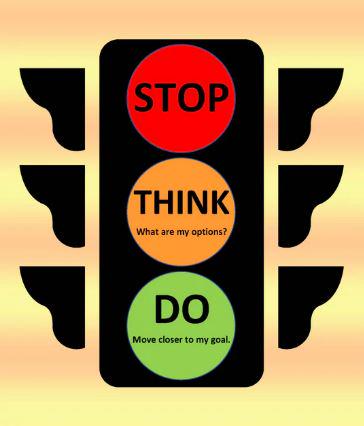
As high performers, we set massive goals and constantly want to achieve great things. We look at the calendar, get a burst of motivation, and tell ourselves that we are finally going to make this next month count. But then Monday hits. We get caught up in the "whirlwind" of daily, urgent, busywork. Our phones ping, we check social media, and we fragment our attention into smaller and smaller pieces, switching tasks dozens of times an hour. We dabble in five different projects instead of committing to one because we want immediate results, falling victim to a culture of instant gratification that makes us impatient. We end up being "half-in" on our ambitions, and the problem with being half-in is that it never gets you the results you actually want. We realize, with frustration, that we are going, but we aren't growing. Why is it so hard to just sit down, block out the world, and do the deep work required to move the needle? Your brain is an incredibly efficient machine that is hardwired to conserve energy and follow the path of least resistance. When you try to "lock in" and do hard, focused work, you are actively fighting against your brain's "inertia default"—the biological urge to resist change because staying in your comfort zone requires fewer mental calories Our modern digital environment is literally designed to hijack your dopamine reward system. When you constantly switch tasks or react to notifications, your prefrontal cortex—the area of the brain responsible for executive control, clear decision-making, and long-term planning—gets severely depleted. Breaking this cycle requires actively fighting distraction with awareness. This is a deliberate, initial burst of cognitive effort required to break the autopilot loop and force your brain to form new neural pathways. If you want to completely change your life in the next few months, you need to stop dabbling and lock in. You must transition from passive consumption to relentless execution. Here is how a Sharpshooter locks in:
1 like • May 18
Very appropriate for today!
Apr 23 •
Turn Off Autopilot: How a Sharpshooter Hacks the Subconscious
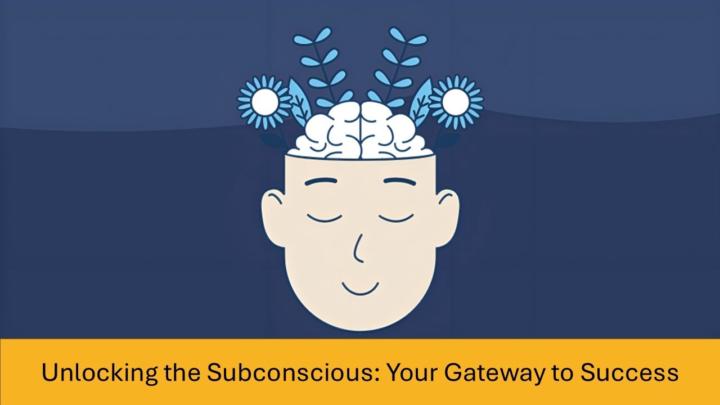
We constantly try to force change in our personal and professional lives. We want to scale our businesses, master new skills, and elevate our relationships. We rely heavily on our conscious mind and sheer willpower to push through the daily friction. But willpower is a finite resource that depletes rapidly. After a few weeks of intense effort, we find ourselves slipping right back into the exact same routines we swore we would leave behind. We get frustrated, wondering why we keep fighting ourselves and self-sabotaging our own success. The truth is that you cannot simply "think" your way to a new life if you are ignoring the invisible autopilot that is actually steering the ship. If you only address your goals at the conscious level, you will remain stuck in the weeds, battling a biological current that is much stronger than motivation. Why do we constantly fall back into our old ways despite our best conscious intentions? It comes down to understanding that your brain is an incredibly efficient machine designed primarily to run on autopilot. In fact, we only operate our lives with our conscious, creative mind about five percent of the time; the other ninety-five percent is entirely controlled by the habits and beliefs programmed into our subconscious. This subconscious system handles massive amounts of information instantly to keep your conscious mind from becoming overwhelmed. However, it also means that your behaviors, ungrounded beliefs, and emotional reactions are deeply embedded as automatic neural patterns. Your subconscious constantly predicts and filters reality based on your past experiences. You are not seeing the world objectively; you are viewing it strictly through the lens of your deeply conditioned (likely flawed) mental models. And because your brain's primary goal is survival, your subconscious stores emotional memories strongly and triggers physical stress responses before your conscious mind even realizes what is happening. That is why people frequently react emotionally to a situation long before their logic has a chance to kick in.
0 likes • Apr 24
This aligns with what I have been experiencing over the past year as I have been on my personal growth journey. This article gives great context to how our programming shapes how we experience the world and how we have the ability to change it. Thanks!
1-5 of 5

Active 5d ago
Joined Apr 22, 2026