

2d •
You’re Not a Fraud: Breaking Down Imposter Syndrome
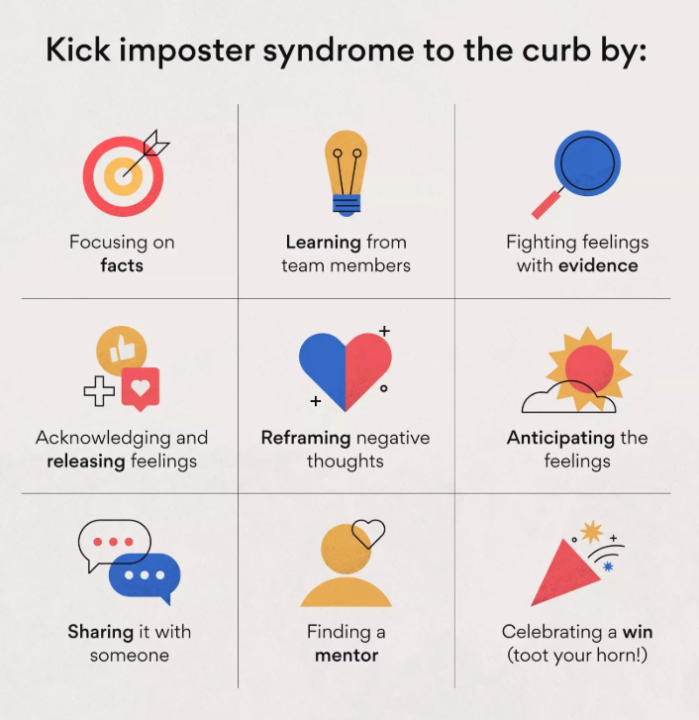
Every day, as we try to be and do better, we encounter situations where we look at others and think, "They are highly capable and successful, but that’s not me." Many people get caught in a paralyzing mental loop where they doubt their own skills, talents, and capabilities, leading to an intense fear of being exposed as a fraud despite clear, objective evidence of their competence. Imposter Syndrome can severely affect our ability to grow, learn, and do great things. We let the fear of not being smart enough or good enough dictate our trajectory. This heavy burden of "limiting beliefs" drains our vital energy and ultimately stops us from reaching our full potential. Your mind is constantly filtering your current reality through the lens of past insecurities and deeply ingrained assumptions. When you step into a new arena of success, it triggers the "ego default"—an instinctual defense mechanism designed to protect your self-worth from perceived social threats, judgment, or failure. Your brain treats the vulnerability of your new environment as a literal danger, firing up the amygdala and pushing you toward the "social default" of constantly comparing yourself to others. Your subconscious, prioritizing emotional safety over growth, runs a negative feedback loop that interprets this discomfort as proof that you are a fraud. Imposter syndrome is not a permanent identity; it’s a learned, flawed mental model that you must actively rewire. You can weaken the grip of imposter feelings by consciously adjusting your internal narrative. Here is how a Sharpshooter takes command of their mind to combat self-doubt: Interrogate Your Limiting Beliefs: You are the observer of your thoughts, not the thoughts themselves. When the inner critic tells you that you are a fraud, recognize that these are ungrounded assumptions and fabricated stories, not objective facts. Drag these hidden scripts into the light and actively replace self-destructive phrases with positive, grounded affirmations to signal to your subconscious that you are capable and deserving of your success.
9d •
Out-Think the Competition | Strategic Decisions
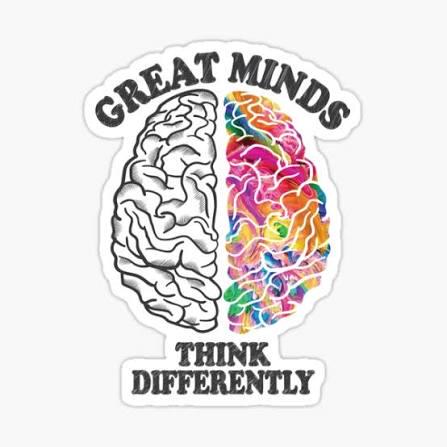
As high performers, we hustle daily, constantly trying to elevate our businesses and our lives. But when we hit a wall or a plateau, our default reaction is simply to put our heads down and grind harder. We assume success requires working longer hours, but we fail to realize that working harder on the wrong strategy simply gets you to the wrong destination faster. We operate within the confines of conventional wisdom, societal expectations, and the "busy trap," confusing sheer effort with actual strategic progress. We want to innovate, but often end up trapped in a cycle of frustration, relying on the same tired methods while hoping for a breakthrough. Why is it so difficult to break out of our conventional thinking patterns and see new solutions? Your brain is a highly efficient machine designed to conserve energy and keep you safe. It relies heavily on deeply ingrained cognitive shortcuts and a natural biological urge to follow the path of least resistance because staying in your comfort zone requires fewer mental calories. When you attempt to question your worldview, challenge your methods, or adopt a radically new strategy, it requires a massive amount of "activation energy" to compel your prefrontal cortex to take command. Furthermore, this friction triggers the "ego default," a biological defense mechanism that treats new, conflicting ideas as a literal threat to your identity and self-worth. To avoid this discomfort, your brain traps you in confirmation bias and first-order thinking, seeking the immediate dopamine hit of a quick, familiar fix rather than engaging the deep, energy-draining work of long-term strategic planning. High performers don't just work harder—they decide better. To break out of the matrix of your own mind, you must deploy strategic mental models that force you to think differently. Here is how a Sharpshooter disrupts default thinking and expands strategic vision: Trigger the Catalyst of Curiosity: You cannot innovate if you operate in a state of confident ignorance. Actively challenge your hidden beliefs, the societal norms that filter your reality, and the assumptions you make about your industry. Step into the friction by asking yourself better questions: Why is it this way? Is there a more effective way to do what I am doing now?.
16d •
Stop Looking for More: Optimize What You Have
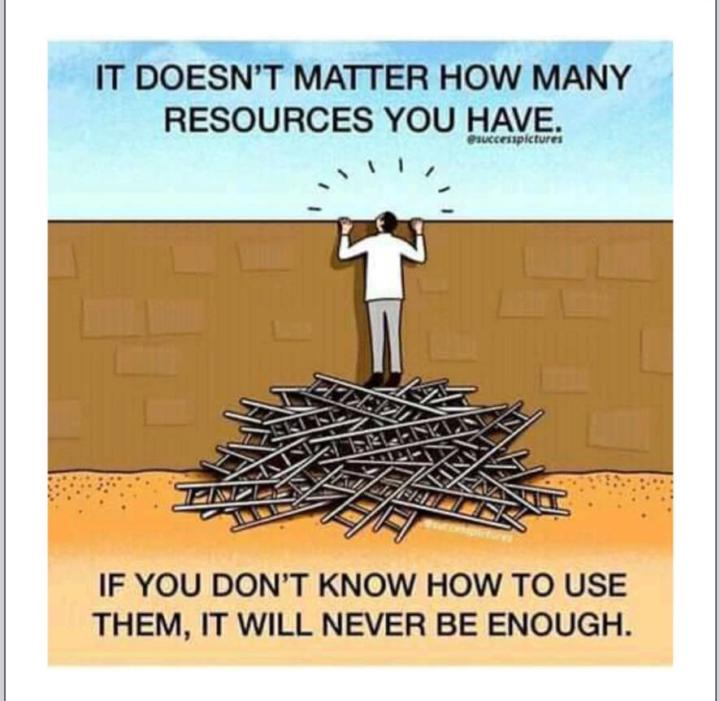
We hustle relentlessly every single day to hit our targets. We put our heads down, take massive daily action, and push ourselves to the brink, trying to achieve extraordinary results. But in this frantic pursuit, we often succumb to tunnel vision. We get so caught up in the daily grind of execution that we never pause to look around and take inventory of the tools already at our disposal. We constantly tell ourselves that we need more—more time, more capital, more natural talent—falsely believing that a lack of resources is the primary bottleneck holding us back. In reality, we are simply failing to utilize the full arsenal of assets and relationships already within our reach. Why do we relentlessly push forward alone without pausing to leverage the tools and people around us? Our brain is wired to conserve energy and avoid the vulnerability of the unknown. When you’re hyper-focused on executing daily tasks, your brain filters out peripheral information to prevent cognitive overload, causing you to literally become blind to untapped opportunities and external support. Furthermore, actively seeking out help or leaning on new relationships triggers the brain's "ego default." Your ego reacts defensively to protect your self-image, tricking you into believing that asking for support or guidance is a sign of weakness or incapability. To maintain its fragile dignity, your brain convinces you that you must figure everything out alone, trapping you in a cycle of exhausting and inefficient effort. A true Sharpshooter knows that success is not determined by the resources you have; it is determined by your resourcefulness. To enact positive change today, you must stop blindly reacting, step back, and deliberately deploy your full arsenal to hit your targets. Here is how to build a clear strategy for leveraging your assets: Take Inventory: Stop focusing on what you lack and start optimizing what you have. Take an audit of your core assets—your time, energy, skills, money, and your physical and mental state. Optimization is about making the absolute most of limited resources in a world of scarcity. Remember, it does not matter how many resources you acquire; if you do not know how to use them strategically, they will never be enough.
23d •
The Illusion of Control: When you Truly Wake Up
We hustle daily, assuming we are in complete control. But, despite our intense effort, we feel stuck in a cycle of frustration, repeating the exact same mistakes in our businesses and relationships. We wonder why we can't seem to break through being stuck. The truth is that most people live their lives on autopilot. We operate in a "Matrix" of pre-programmed societal expectations and ingrained habits, confusing mere motion with actual progress. We never truly "wake up" because we are blind to the invisible forces steering our ship, preferring to blame bad luck, circumstances, or external factors rather than looking inward to see how we are sabotaging ourselves. Why do we stay asleep at the wheel? Psychologist Carl Jung famously diagnosed this exact condition: "Until you make the unconscious conscious, it will direct your life, and you will call it fate". Your brain is a highly efficient machine designed to conserve energy by relying on deeply ingrained biological defaults, effectively running your life on autopilot up to ninety-five percent of the time. When you ignore your internal narratives and unhealed patterns, they do not simply disappear. What you resist not only persists but also grows. Your brain's Default Mode Network becomes overactive, trapping you in a cycle of rumination and ungrounded fears. It takes significant awareness and effort to break these old neural pathways; your brain naturally avoids the discomfort of self-awareness, keeping you ‘safely asleep’ in your familiar, limiting routines. You do not have a discipline problem; you have an awareness problem. To truly wake up and escape the matrix of your own mind, you must stop living by default and start living by design. Here is how a Sharpshooter takes command: Make the Unconscious Conscious: Change doesn’t start with action; it starts with seeing, because you cannot change what you do not notice. Pause in the space between stimulus and response to audit your automatic reactions. Identify the hidden scripts and ungrounded assumptions driving your choices so you can drag them into the light.
3
0

30d •
Terminal Velocity: The Hidden Engine of Compounding Success
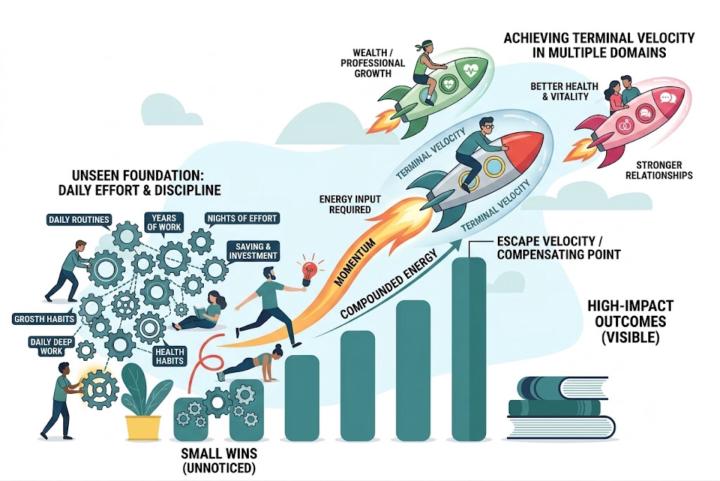
As we try to build our businesses and elevate our lives, we look at the extraordinary achievements of others and wonder why we aren't there yet. We see the final, polished results of their success, but we are blind to the years of quiet, grueling effort that built them. We falsely assume that success comes from a single, massive event or a hidden shortcut. When we set our own ambitious targets, we put in the initial work but quickly get frustrated when we do not immediately see the fruits of our labor. The early stages of building a strong foundation often go completely unnoticed, and because we lack visible, immediate wins, we lose steam and abandon our mission - right before the compounding effect takes over. Why is it so difficult to stay the course when the rewards are not immediate? The human brain evolved to heavily prioritize instant gratification over delayed rewards. When you complete a task and get an immediate, visible result, your brain releases dopamine, a neurotransmitter that gives you a surge of pleasure and motivation to repeat the behavior. However, when that immediate reward is absent, dopamine levels drop, and your motivation systems fail to engage, making the work feel unbearably tedious. Overcoming this feeling requires "activation energy"—an initial burst of cognitive and physical effort to break your old habits and set a new process in motion. Think of it like a rocket escaping Earth's gravity; it requires a colossal amount of energy and fuel just to break through the atmosphere, mirroring the psychological push needed to overcome inertia. However, once you input enough energy to reach what we’ll call "terminal velocity"—the point where you break through the "Plateau of Latent Potential"—the resistance drops, momentum takes over, and the process becomes self-sustaining. You begin to float a little, carried forward by the compounding energy of your past actions. Success is not a single, dramatic leap; it is the accumulation of small, unseen efforts repeated day in and day out. If you want to achieve this terminal velocity and escape the gravity of average, you must commit to understanding this mental framework.
4
0
1-30 of 44
powered by
skool.com/the-sharpshooterlife-community-6248
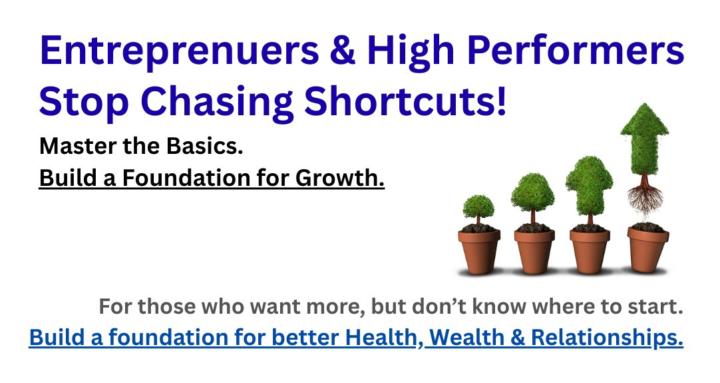
Welcome to the Sharpshooter Life Community, where we focus on establishing a strong foundation for growth -- in business and life!
Suggested communities
Powered by