Activity
Mon
Wed
Fri
Sun
Nov
Dec
Jan
Feb
Mar
Apr
May
Jun
Jul
Aug
Sep
Oct
What is this?
Less
More
Ayurveda Ambassador Network
221
Free
7 contributions to Ayurveda Ambassador Network
1 like • Apr 21
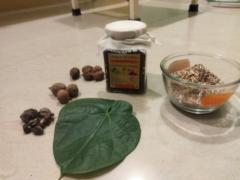
Hi thanks for showing interest ... here is the link of 1 new messagehttps://ayurvedahimachal.com/shop/
0 likes • Apr 30
@Eva W Madhavan hi ... had you checked our website ?
Apr 8 •
Ayurvedic Fumigation Standards in Modern Panchkarma Practice
In today’s time, many AYUSH hospitals and clinics are actively pursuing NABH-AYUSH accreditation as part of their growth and standardization process. While these efforts are commendable, an important question arises—why are we not fully utilizing the profound knowledge already described in our classical Ayurvedic texts? Our revered Acharyas like Charaka and Sushruta elaborated detailed protocols of Ayurvedic fumigation (Dhoopan Karma) thousands of years ago. These protocols, clearly documented in our Samhitas, provide a strong foundation for infection control and environmental purification within clinical setups. At Arogyam Panchkarma Centre, we believe that integrating these classical principles with modern technology can significantly enhance infection control standards in Panchkarma rooms and operation theatres. This approach not only strengthens Ayurvedic authenticity but also opens new pathways for research and standardization under NABH-AYUSH guidelines. Modern fumigators are innovations of engineering science—not limited to any one medical system. Therefore, the future of healthcare lies in harmonizing modern engineering with Ayurvedic medical wisdom. Below, we present a pilot model demonstrating how Ayurvedic fumigation protocols can be effectively adapted using modern fumigator machines: Use of Ayurvedic Drugs in Modern Fumigators 1. Selection of Fumigator An appropriate device such as an electric herbal fumigator or fogger with temperature control and compatibility for herbal liquids should be used. Ultrasonic foggers can also be utilized for cold mist applications. 2. Preparation of Fumigation Liquid To ensure compatibility with modern equipment, Ayurvedic formulations must be prepared in suitable liquid forms: Option A: Decoction-Based Fumigation Liquid Ingredients (per 1 litre base): - Guggulu (resin) – 20 g - Vacha – 5 g - Haridra – 10 g - Nimba – 10 g - Sarshapa – 5 g - Kustha – 5 g - Kapur – 2 g (added post-boiling) - Tagara, Shallaki, Rasna – 5 g each
0 likes • Apr 8
Please share your views too ...

Mar 22 •
The Great Convergence: Havan as a Modern Solution for Global Warming & Nano-Aerosol Medicine
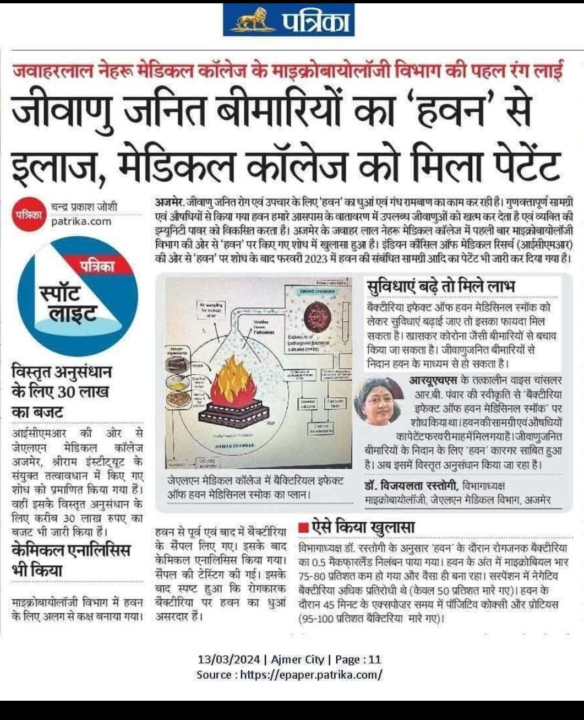
The Great Convergence: Havan as a Modern Solution for Global Warming & Nano-Aerosol Medicine As a Founder and Author, my mission has always been to decode the 'missing link' between Vedic Systems Biology and modern functional science. The recent patent granted to the Microbiology Department of JLN Medical College for the antibacterial effects of 'Havan' smoke is not just a scientific milestone it is the beginning of a Healthcare & Environmental Revolution that defines the roadmap for the next 100 years. Global Warming & The "Atmospheric Microbiome" When we discuss Global Warming, we aren't just talking about rising temperatures; we are addressing a 'Biological Shift' where heat-driven pathogenic evolution and 'Antibiotic Resistance' are becoming existential threats. Eco-friendly Biosecurity: While synthetic sanitizers and chemical purifiers often leave a toxic footprint, 'Havan' acts as a Zero-Carbon Footprint Green Technology. It reduces the microbial load in the air by up to 80%, resetting the environment without ecological conflict. The Nano-Aerosol Edge: When specific medicinal herbs interact with high-temperature fire, they undergo a transformation into Nano-particles. This is 'Information Medicine' a delivery system that re-syncs our Circadian Biology with nature, countering the disruptions caused by climate change. From Ritual to Radical Tech: This research proves that what we once called 'ancient ritual' is actually Climate-Tech and Future-Medicine disguised in tradition. Scaling the "200% Life" Vision: At Dakshinamurthy Ayurveda, we believe the greatest crisis of the next century is the intersection of human health and planetary health. Our vision isn't just to heal the individual; it’s to empower the entire ecosystem. The future of healthcare is Hybrid, where the legacy of the 'Vaidya' meets the data of the 'Scientist' to unlock the Apex Human potential. New Milestone: Launching the Latest Course Module To take this vision from theory to practice, I am releasing a specialized module from our upcoming curriculum at Dakshinamurthy Ayurveda:
0 likes • Mar 26
@Vivek Galkhe Thank you for your insightful thoughts—this aligns strongly with our vision. At Arogyam Panchkarma Centre, we have already initiated early-stage integration of Agnihotra within our preventive care framework, focusing on standardization, practical applications, and real-world observations. We see strong potential in evolving this into a structured, scalable life-care model through a balance of traditional knowledge and scientific validation. We would be glad to explore collaboration opportunities to take this forward in a meaningful way.
0 likes • Mar 30
@Vivek Galkhe yes ... indeed

Mar 10 •
Recurrent UTIs in a Senior Dog — Any Evidence-Based Ayurvedic Research?
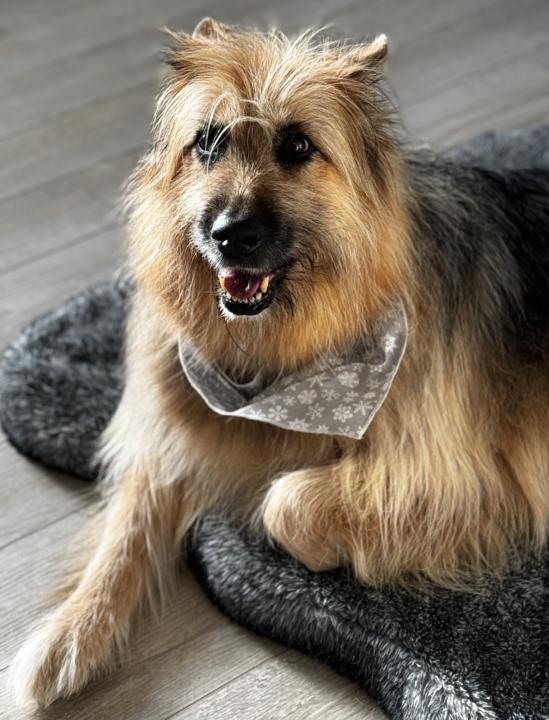
My 14-year-old German Shepherd mix, Melody, has recurrent UTIs, and recent blood work showed low white blood cells, low platelets, and abnormal cells on the smear. Because recurring infections in older dogs can be linked to declining immune function, I’ve started looking into Ayurvedic herbs that might support immunity. I’m only interested in scientifically studied, evidence-based methods. Could someone point me toward peer-reviewed studies on Ayurvedic herbs used in dogs or help me connect with veterinarians who specialize in Ayurvedic veterinary care? 🐕
0 likes • Mar 26
Hi Eva ... Did you try those herbal combinations for your pet... please share feedback
1 like • Mar 30
“Glad to hear about your pet’s recovery with Ayurvedic herbs—this truly reflects the power of natural healing and Ayurveda. We can definitely explore developing a dedicated treatment package for pet health. Let’s continue to closely monitor all recovery reports, as this will help us build strong case studies and document effective results with Ayurveda.”
Mar 21 •
Cool Map feature on Skool 🌎
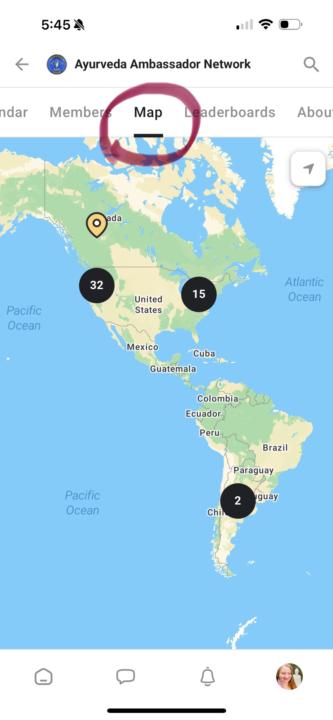
Take a moment to check out the interactive map inside Skool—it’s a powerful way to see our global Ayurveda community in action. You can zoom in, click on practitioner profiles, and connect directly for: - Collaboration - Questions & answers - Research opportunities This is exactly why this network exists. 👉 Go explore the map and tell us: who did you connect with?
0 likes • Mar 21
good
1-7 of 7
@vipul-sharma-8232
Dr. Vipul Sharma.. expert in alternative medicine and panchkarma therapies
Active 10d ago
Joined Jan 27, 2026