Activity
Mon
Wed
Fri
Sun
Jul
Aug
Sep
Oct
Nov
Dec
Jan
Feb
Mar
Apr
May
Jun
What is this?
Less
More
Memberships
Aviator Intelligence
2.8k members • Free
5 contributions to Aviator Intelligence

May 13 •
Your Logbook is a Legal Document - Treat it Like One.
Pilot logbook entry mistakes that end airline applications: The 5 critical errors, the 5 patterns, and the 5 minor ones. Pilots spend years building flight time, but very few spend the same energy making sure their logbook accurately reflects it. When you apply to a major airline, your logbook doesn’t just get glanced at. It gets audited. Line by line. Category by category. And what examiners find, or don’t find, will directly impact whether you move forward. Here’s the breakdown every pilot needs to read before they submit a single application. THE CRITICAL ERRORS: these can end your candidacy These aren’t technicalities. These are application-ending discoveries that raise immediate integrity concerns. 1. Falsified or inflated flight time. This is the cardinal sin of aviation recordkeeping. Rounding 0.8 hours to 1.0 consistently across hundreds of entries adds up fast, and examiners are trained to spot it. Logbook totals that don’t align with known aircraft performance, block times, or employer records will trigger an immediate red flag. If your cross-country time seems implausibly high for the hours you flew at a given operator, someone will notice. The word for this isn’t “rounding.” It’s falsification, and it will not only cost you the job. It can cost you your certificate. 2. Misrepresented PIC time. This is one of the most common serious errors, and it often isn’t intentional. But intent doesn’t matter in a hiring review. Logging PIC time when you were the sole manipulator of the controls but not the acting PIC, or logging PIC time as a safety pilot without clearly documenting the arrangement, creates ambiguity that reads as inflation. Know the FARs governing PIC logging. Apply them correctly. Every time. 3. SIC time logged incorrectly. Logging SIC time in aircraft that don’t require two pilots, without proper documentation of a required second-in-command, is a regulatory issue, not just a bookkeeping one. Airlines will identify this, particularly when cross-referencing your time against the aircraft types flown and the operations conducted.

1 like • May 14
Thanks Dustin for another great post! I would like to request clarification on two points: #2. "Logging PIC time when you were the sole manipulator of the controls but not the acting PIC." I believe that's allowed per the FARs - the most typical case is post-private flight training where the student logs PIC as sole manipulator while the instructor acts PIC. Also see Speranza 2009 and Herman 2009 Legal Interp. #3. "Logging SIC time in aircraft that don’t require two pilots..." it's lesser known (a lot of people give me a dirty look when I point it out), but I believe the FARs also allow SIC to be logged as a safety pilot. For example if someone with a tailwheel airplane asks me to serve as a safety pilot while I don't have a tailwheel endorsement, I cannot act PIC but can log SIC as safety pilot. See Trussell 2012, Creech 2013 legal interp. I'm not trying to debate whether these two points are correct - and I know it's not a good look to litigate my case during the interview if disagreements came up. Assuming those are gray areas, is it recommended to avoid those areas at all costs? Or is there an agree-to-disagree approach where I can say, "I'm ok with not using these entries in this application, but please don't treat me like a fraudster"?
1 like • May 14
@Dustin Benker Thanks! I can only speak from piston part 91 experience, and I understand 135 is an entirely different beast 😀
Jan 8 •
Your Aviation Career Insider - 2nd Edition
📞 THE KEYS TO NAILING THE PHONE INTERVIEW The Reality: Many airlines conduct phone screenings before inviting you to in-person interviews. These 15-30 minute calls eliminate 30-40% of applicants. WHO DOES PHONE SCREENINGS: Always: - Regional airlines - Cargo carriers (FedEx, UPS) - Corporate flight departments - Some international carriers Sometimes: - Major airlines (for non-traditional candidates) - When application raises questions - High-volume hiring periods Never: - Strong flow candidates - Internal recommendations with clean records - When you're specifically recruited WHAT THEY'RE EVALUATING: ✅ Communication Skills (40%) - Clear, concise responses - Professional phone manner - Appropriate tone and pace - No filler words ✅ Interest and Preparation (30%) - Knowledge of their company - Genuine enthusiasm - Thoughtful questions - Career clarity ✅ Red Flags (20%) - Unprofessional background noise - Poor attitude or negativity - Badmouthing current or former employers - Inconsistencies with application ✅ Basic Qualifications (10%) - Verify hours claimed - Confirm availability - Check citizenship/work authorization - Medical status THE PHONE SCREENING PROCESS: When They'll Call: - Sometimes with little or no advance notice - Business hours (9 AM - 5 PM their timezone) - Could be any day within 2 weeks of application - Sometimes from restricted/unknown number Who's Calling: - HR recruiter (most common) - Pilot recruiter - Chief pilot office - Staffing coordinator Duration: - 15-30 minutes typically - Longer if issues need clarification - Shorter if obvious rejection THE PREPARATION PROTOCOL: From the moment you submit your application: 📱 Phone Readiness: - Answer ALL unknown numbers professionally - Voicemail must be professional - Phone charged and working - Good signal strength at home/work - Check your email daily for additional information, don’t forget your spam folder
2 likes • Jan 8
Thank you this is super helpful!
Dec '25 •
Training failures
When an airline inquires about training failures, it’s reasonable to assume that they’re referring to checkride failures, as well as 141 stage checks. However, what about Part 61 school stage checks? These aren’t considered official stage checks from the FAA’s perspective; they’re simply the school’s internal procedures. Should I bring these up during the interview as well?
1 like • Dec '25
Thanks Ernie!
Dec '25 •
Incidents/Accidents
When an airline inquires about any incidents or accidents, do they specifically mean NTSB-reportable ones (and those that appear on the PRD) or are they also interested in including minor fender-bender incidents? For instance, if I accidentally scratched a wingtip on a post, I’m concerned that some job descriptions require no incidents within the past five years, which could potentially disqualify me.
0
0
Nov '25 •
Hello from Seattle!
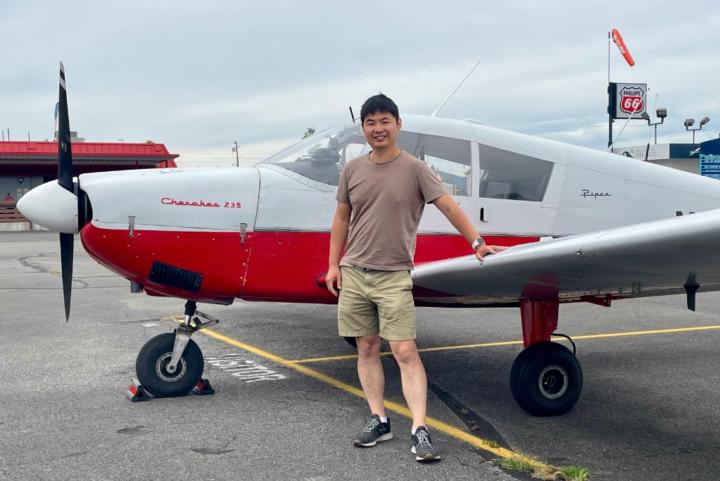
Hello everyone, I'm Todd. I'm recently certified as a CFI and I'm looking for an instructing job in the Seattle area, as well as preparing to apply for the Horizon Air Pilot Development Program in January. I've joined the Masterclass Digital Course and I'm excited to join this community!
1-5 of 5