Activity
Mon
Wed
Fri
Sun
Jul
Aug
Sep
Oct
Nov
Dec
Jan
Feb
Mar
Apr
May
What is this?
Less
More
Owned by Lauren
A space for Christian wives, fiancées, and girlfriends to get clear answers when they don’t know what to do in their relationship
Memberships
🏁 UNDETERRED 🏁
341 members • Free
The Mompreneur Club 🌸
918 members • $15/month
Food, Faith, Fellowship🦋
82 members • Free
SkoolHers
545 members • $9/month
For the Rest of Us
47 members • Free
136 contributions to Food, Faith, Fellowship🦋

🔥
8d •
Your belly is trying to tell you something. Are you listening?
Hey, 🌸 I want to talk to you about something your doctor may have never explained in a way that actually made sense. And I'm going to keep it plain and simple, the way you'd explain it to someone you love. Because this is too important to hide behind big medical words. 🦋 You know how your body has different kinds of fat? Some fat lives just under your skin and you can pinch it. That's called subcutaneous fat. It jiggles. It's annoying. But honestly? It's mostly harmless. 🌸 Then there's another kind of fat. The kind you can't see or pinch. It wraps itself around your organs, your liver, your stomach, your intestines, like a tight fist around your insides. That fat has a name: visceral fat. And it is the one we need to talk about. Here's what visceral fat does that the other kind doesn't. It doesn't just sit there. It talks. It sends little chemical signals through your whole body, signals that cause inflammation, confuse your hormones, and make it harder for your body to manage sugar. Think of it like a toddler throwing a tantrum in the middle of your living room. Loud. Disruptive. Affecting everyone around it. 🦋 And here is the part that surprised even me when I was studying this: Your BMI will not catch it. BMI, that number your doctor calculates from your height and weight, was never designed to measure where your fat lives. It just measures how much of it you have overall. So a woman can have a "normal" BMI and still have dangerous levels of visceral fat wrapped around her organs. And another woman can have a "high" BMI but very little of the dangerous kind. Research published in journals like The Lancet and JAMA has confirmed this over and over: waist size, specifically the fat around your belly, is a stronger predictor of type 2 diabetes, heart disease, and metabolic syndrome than BMI alone. 🌺 Let me say that again plainly. Your belly measurement tells us more about your health risk than the number on the scale. For women, a waist measurement above 35 inches is considered a red flag. Not because of how it looks, but because of what it signals about what's happening inside your body. This is not meant to scare you. I promise.


0 likes • 7d
❤️🔥❤️🔥❤️🔥 this is so good
🔥
17d •
Consistency in your goals!! 🦋
What is one small step your are taking to keep the momentum towards your weight or health goals?? Small consistent actions towards your goal are more sustainable and successful than huge and inconsistent actions!!! Tell in the comments one this your are working on making consistent!!!! Check mine…..

0 likes • 17d
Cutting back on sugars! Doing my best to stick with natural fruits for my sweets
🔥
21d •
It’s finally here and I love it for you🦋🥰
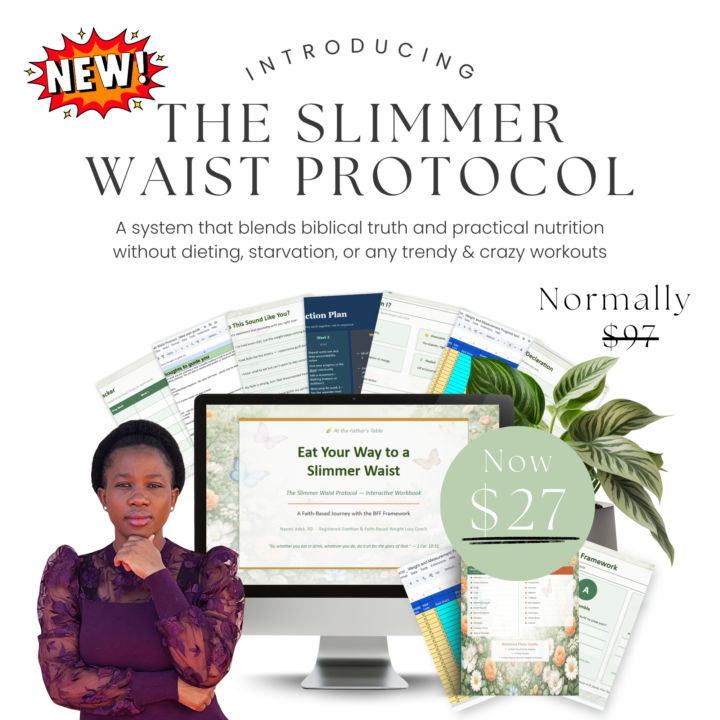
If you've lost 10 pounds and gained back 15, this is for you. That cycle isn't a willpower problem. It's a strategy problem. Your meals are built wrong, your mindset is built on shame, and the plan you're following was made for someone whose life looks nothing like yours. I built the Slimmer Waist Protocol to fix all three. Faith-based. No gym, no starvation, no trendy elimination diets. Just a workbook, a meal plan, and a framework that actually works in real life with real kids and real schedules. Mercy used it. 35 pounds down in 9 months. Pain gone. Cravings quiet. Clothes at the tailor. Normally $97. Right now $27. 100% money-back guarantee — if it doesn't work, you don't pay. Comment "ME" below and I'll send you the link👇🏽
1 like • 20d
Girl! this is 🔥
🔥
22d •
A new Devotional Loading- Coming soon!!
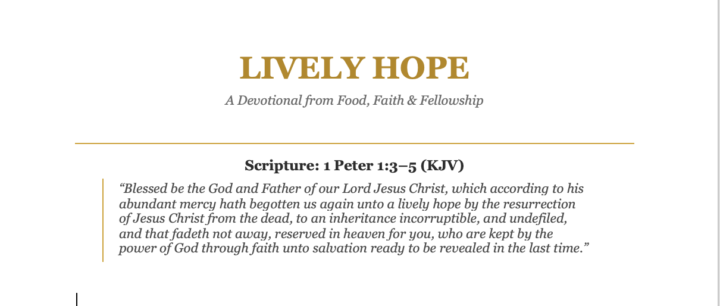
Lively Hope is the name of the devotional am creating to go along with a new offer I have coming up. I was so encouraged when going through this scripture in 1st Peter 1 that I was led to do a devotional from it! What's hope to you?
1 like • 22d
Ohh this is exciting!
0 likes • 22d
Oohh very nice!
1-10 of 136

@thelaurengreene
Helping Christian women have better marriages & relationships ❤️
Active 1h ago
Joined Jun 8, 2025
Powered by