Activity
Mon
Wed
Fri
Sun
Feb
Mar
Apr
May
Jun
Jul
Aug
Sep
Oct
Nov
Dec
Jan
What is this?
Less
More
Owned by Terrell
The #1 community for coaches ready to build a real coaching business with consistent income, not another get-rich-quick scheme.
Memberships
Synthesizer
33.6k members • Free
Magnetic Memberships
3.6k members • Free
Selling Online / Prime Mover
34.9k members • Free
35 contributions to Selling Online / Prime Mover

6d •
I Bought the Program. I Just Didn’t Know Where to Start
I remember logging in and feeling stuck almost immediately. Not because the content was bad, but because I couldn’t tell what mattered first. There were trainings everywhere. Bonuses, replays, extra modules. It looked generous. It felt confusing. I wasn’t sure what to watch next or what would actually move the needle. So I hesitated. That hesitation turned into delay. Delay turned into disengagement. It became clear that the issue wasn’t the offer. It wasn’t the value. It was the lack of a system for delivery. Everything was available at once, but nothing guided me from purchase to progress. There was no clear path telling me what to do now versus later. From a buyer’s perspective, that creates friction. Too many choices make it easier to do nothing. The best programs I’ve been through don’t work this way. If you look at how Russell Brunson organizes his courses inside the classroom, it’s simple. Everything is broken into parts, and each video has a clear outcome before you move on. You’re never guessing what comes next. The structure does the thinking for you. When delivery is designed this way, the system carries the experience. The content lands because the path is clear. Most selling problems don’t start at the checkout. They start after the sale, when the system isn’t there to support momentum. If someone bought your offer today, would they know exactly what to do first?

16d •
Delivery Limits Revenue
My courses didn’t struggle selling online because of content. They struggled because of delivery. Selling digital programs used to feel heavier than it should have. I would launch a course that sold, but didn’t feel solid behind the scenes. Slides were reused. Branding felt rushed. Support showed up after problems appeared. The whole thing felt fragile, like it would break the moment volume increased. The problem wasn’t the course itself. It was delivery. Delivery took so much time that there was no room to think strategically. Updates were delayed. Videos were recorded quickly and left unpolished. The program felt like stacking bricks without a foundation. What I didn’t see at first was that effort was masking a systems gap. Once I created margin using ads, everything changed. That margin let me hire videographers and editors so the content matched the price point. I brought in experts so the program wasn’t dependent on me alone. I paid for the right environment to record in. Studio time became part of the plan instead of a nice-to-have. Before that, growth felt like pushing a cart uphill by myself. Support systems were in place before clients entered. Delivery slowed down. Quality went up. The program finally scaled without adding pressure. Not because I worked more, but because the system was doing more of the work. So here’s the question worth sitting with. Is your program capped because of demand, or because delivery still depends on you?
2
0

22d •
Your event will always reflect the strength of the system behind it
I run a live event every March called the Playbook to Coaching and Speaking (PCS) Bootcamp. It’s one of the highlights of my year. And every year, it shows me the same truth. When I don’t run enough ads, I sell less. When I sell less, I hire less support. And when I hire less support, the event feels heavier than it should. Planning gets rushed. The small details start to slip. Transitions take longer. Certain parts of the experience get cut because there aren’t enough hands to help. Even bringing in vendors or sponsors becomes harder without someone dedicated to it. None of this happens because the event is bad. It happens because I’m trying to carry more than any one person should. Anyone who’s run a live event knows this feeling. You can see the full version of what it could be. But without the right structure around you, the event shrinks to whatever you can hold on your own. The fix for me has been straightforward… Run more ads. Make more sales. Hire the help I actually need. Every time I do that, the whole event changes. The room feels more alive. The experience feels smoother. And I’m no longer scrambling behind the scenes. It’s a reminder that execution usually breaks at the system level, not the vision level. If your next event had to run at its highest level without you holding every piece together, where would the cracks show up first?
3
0

23d •
If Your Speaking Gigs Are Random, Your Clients Will Be Too
Edward was a powerful coach. Booked stages. Changed rooms. Got results. But his calendar didn’t reflect that. One week, he was flying out. The next, refreshing his inbox and hoping someone circled back. He wasn’t lazy. He was just stuck in the cycle most speakers fall into... Get booked → get busy → stop marketing → pipeline dries up → start over. That’s not a system. That’s stress. A feast and famine situation that season speakers understand,. We helped him break it. One simple ad campaign, no hype, no 27-step funnel. Just a system that got him in front of the right people every single week. High school and college coaches started getting on his phone with bookings consistently. No more waiting. No more “who saw my last post.” He finally had a real pipeline of leads. Predictable. If you’re still relying on referrals and momentum bursts, it’s time to look at what’s really missing. 👉 What would your life look like if leads came to you every week without extra hustle?

1 like • 23d
@Marek Rabcan Bingo, it's why I love ads. I stopped chasing the next opportunity and started operating from intention instead of urgency.
27d •
I didn’t believe it would work without me… until it did.
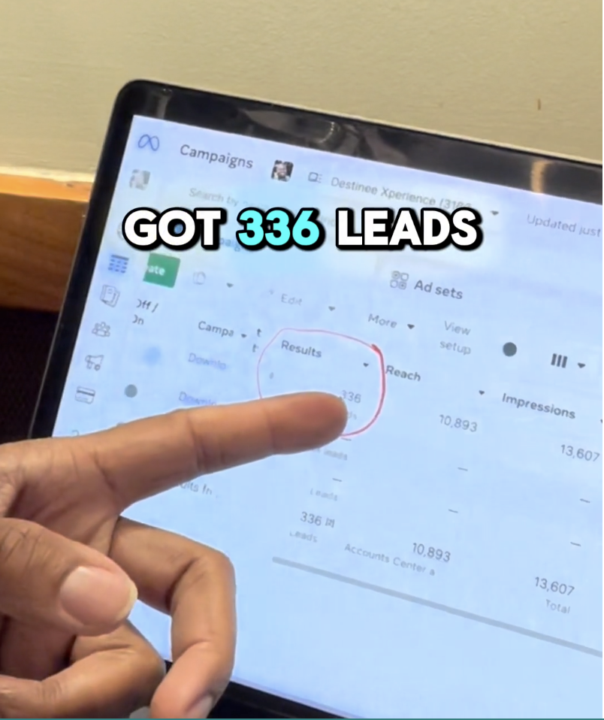
Destinee was everywhere. Posting. Commenting. Networking. Doing everything she thought she was supposed to. And still… it felt like she was dragging the whole business behind her. Every lead was earned by her time. Every sale required her energy. She WAS the funnel. Then we set up a simple lead system. One offer. One campaign. (No DMs. No travel. No chasing) Two weeks later, 336 leads came in 😊 And here’s the part that caught her off guard: She was on vacation when it happened. No laptop. No content. No urgency. Just her system doing what her hustle used to do. When she came home, her calendar was full. But for the first time… she wasn’t. That’s what scaling really is. Not doing more. Needing less of you. 👉 What part of your business still can’t function unless you’re in it?
0 likes • 23d
@Gabriela Victory anytime. Scaling is really about doing less because the system does more for you.
1-10 of 35
@terrell-jones
I build and manage the complete client acquisition system for established coaches who want to scale without adding more work to their plate 💻
Active 14m ago
Joined Apr 28, 2025
New York City
Powered by