Activity
Mon
Wed
Fri
Sun
Aug
Sep
Oct
Nov
Dec
Jan
Feb
Mar
Apr
May
Jun
What is this?
Less
More
Memberships
CCC SKOOL - Free Community
465 members • Free
Executive Repositioning System
22 members • Free
UAbility®
338 members • Free
40 contributions to CCC SKOOL - Free Community

Mar 28 •
Your calmness is is making you invisible at work because of this BIG reason! ⚠️
Your emotional control is costing you visibility. You never complain. You never react. You never escalate. And that’s exactly why no one knows what you’re handling. You stay calm. You manage pressure. You keep things moving. But here’s the problem: What isn’t visible doesn’t get valued. In most workplaces, silence gets interpreted as: “Everything is fine.” Which means: • No support • No recognition • No context for your effort Important shift: Controlled doesn’t mean invisible. You don’t need to be dramatic. But you do need to signal pressure strategically. Instead of staying silent, say: “We’re on track, but timelines are tight. Flagging early.” That’s not complaining. That’s leadership. Because leaders don’t just manage pressure. They make the right pressure visible. And that’s what builds trust, support, and growth. What leadership doesn’t see, they can’t reward. If you want your work to translate into growth, BOOK A CALL WITH AMIT and fix your visibility 👇 https://calendly.com/amitleadership/call #corporate #career
0
0

Mar 20 •
The ₹25L mistake loyal employees make every year
It doesn’t look like a mistake. It looks like stability. You stay in the same company. You deliver consistently. You wait for the next appraisal cycle. And every year you tell yourself: “Next year will be better.” But here’s what quietly happens in the market. Your salary grows at 8–10% internally. The market adjusts roles at 25–40%. So if you’re earning ₹40 LPA, the market might already be paying ₹60–65 LPA for someone with your experience. That ₹20–25L gap is what I call the Loyalty Tax. Not because loyalty is wrong. But because loyalty without leverage becomes expensive. Over time it adds up: ₹25L a year ₹1 crore in four years And the hardest part? The most sincere, hardworking employees are the ones who pay this tax the longest. Companies optimize for budgets. You must optimize for market value. This doesn’t mean you should leave immediately. But it does mean you should ask yourself one honest question: Do you know what the market would pay you today, or are you guessing? Most professionals realize this gap years too late. If you don’t want that to be you, book a call with Amit and course-correct now. BOOK A CALL WITH AMIT 👇 https://calendly.com/amitleadership/call #career #corporate #job
0
0

Mar 13 •
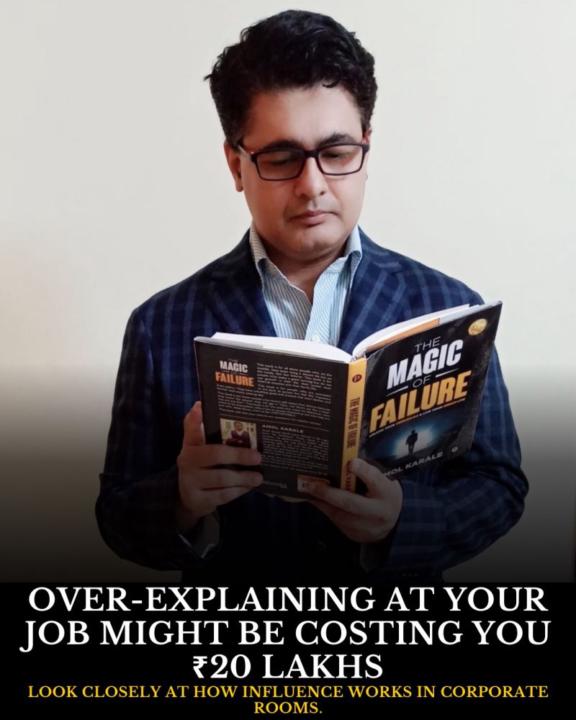
Over-explaining at your job might be costing you ₹20 Lakhs
Sounds dramatic. But look closely at how influence works in corporate rooms. The more you justify, the less authority you project. Many mid-managers do this without realizing it. They explain every detail. They defend every decision. They add more slides. More context. More reasoning. And slowly, their message loses power. Here’s an interesting observation from leadership meetings: Executives speak 30–40% less in high-level discussions. Not because they know less. Because they know what matters. They say: “This will reduce cost by 12%.” “We should prioritise option B.” “The risk here is timeline.” Short. Clear. Directional. Meanwhile, mid-managers say: “Let me give some background…” “Just to clarify the full picture…” “I’ll walk you through the details…” And suddenly a 20-second point becomes a 5-minute explanation. In leadership rooms, brevity signals confidence. Over-explaining signals uncertainty. That perception quietly affects: • Promotions • Pay growth • Leadership trust Sometimes the difference between ₹40 LPA and ₹60 LPA isn’t intelligence. It’s communication authority. Next time you speak in a meeting, try this rule: Say it once. Say it clearly. Then stop. Let the room ask for details. Promotions often go to the person who communicates with clarity, not the person who explains the most. If you want to master that shift. BOOK A CALL WITH AMIT 👇 https://calendly.com/amitleadership/call
0
0
Mar 10 •
4 subtle behaviors that quietly kill team confidence ⚠️
Nobody intends to break their team’s confidence. But it doesn’t happen overnight. Here are 4 behaviors I’ve seen (and sometimes been guilty of too): 1. Correcting people publicly What feels like “quick feedback” to you feels like embarrassment to them. Correct privately. Praise publicly. Always. 2. Micromanaging in the name of “support” If you hired someone for their skill, trust them enough to use it. Hovering doesn’t help, it signals you don’t believe in them. 3. Cancelling 1:1s because you’re “too busy” It may feel like a small thing, but to them it says: “My priorities matter more than yours.” And confidence quietly fades there. 4. Ignoring small wins Recognition isn’t about ego. It’s about energy. People repeat what you reward, and forget what you don’t. Leaders rarely destroy confidence with one big mistake. They lose it through little moments of neglect. If you want a confident, proactive team — make them feel safe, seen, and trusted. That’s where real confidence starts. Which one do you think hurts team morale the most? Most leadership blind spots are invisible to the person who has them. If you want help identifying yours, Talk about it with Amit 👇 https://calendly.com/amitleadership/call
0
0
Mar 7 •
If your boss only remembers you when things go wrong, you're already positioned wrong.
Be honest. When your name comes up in senior meetings, is it because: • Something broke • A client escalated • A deadline slipped • A fire needed putting out If yes, you’re not seen as a leader. You’re seen as insurance. And insurance doesn’t get promoted. It gets used. Here’s the positioning problem: Fixers are remembered in crisis. Leaders are remembered in planning. If you only show up when things go wrong, you’re operating at the bottom of the value chain. Because at higher levels, visibility comes from: • Setting direction • Highlighting risks before they explode • Framing decisions • Influencing trade-offs Not from cleaning up messes. Reliability builds trust. But influence builds elevation. If you want to change how you’re seen: Start sharing your thinking, not just your fixes. Start reporting impact, not just resolution. Start participating before the crisis, not after it. The person who prevents the problem always outranks the one who solves it. So ask yourself If you’re ready for your name to show up in the right emails, promotion lists, leadership discussions. Book a clarity call with Amit and build visibility the right way. 👉 https://calendly.com/amitleadership/call
0
0
1-10 of 40

Active 1d ago
Joined Aug 1, 2025