Activity
Mon
Wed
Fri
Sun
Aug
Sep
Oct
Nov
Dec
Jan
Feb
Mar
Apr
May
Jun
What is this?
Less
More
Memberships
AI Essentials
9.6k members • Free
AI Automation First Client
1.8k members • Free
AI Automation Skool
2.4k members • Free
AI Automation Society
416.9k members • Free
10 contributions to AI Automation Society

🔥
5d •
Why Claude Code is Currently the King of Dev Tools (and What to Use Right Away) 🚀
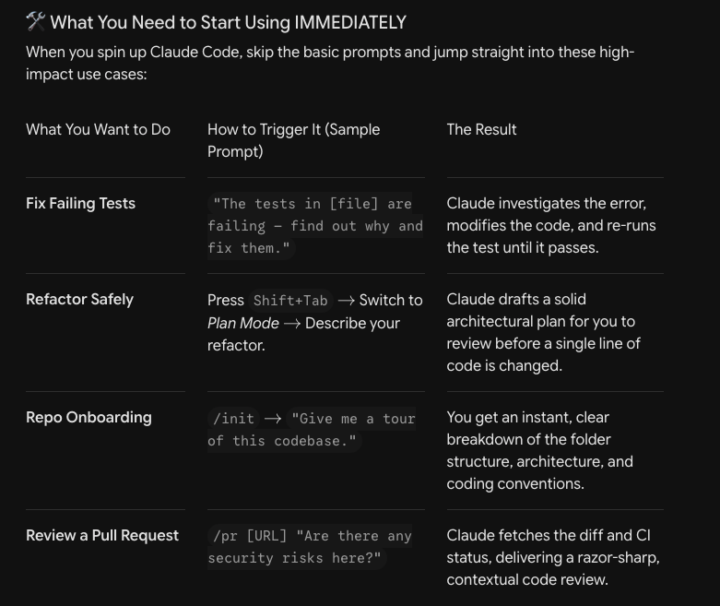
The days of copying and pasting simple code snippets from a chatbot are officially over. With Claude Code, Anthropic has set a massive new benchmark for agentic development. Tech giants like Stripe are already rolling it out to thousands of engineers, and the results are mind-blowing (think major codebase migrations slashed from 10 weeks to just 4 days). But what exactly makes it the best tool on the market right now, and how can you leverage it today? 🌟 Why Claude Code is a Game-Changer Instead of acting as a passive assistant, Claude Code operates as a fully autonomous software engineer living right inside your terminal. - Deep Codebase Context: Powered by a massive 1-million-token context window, Claude doesn't just look at isolated files; it understands your entire repository, including its architecture, documentation, and commit history. - Autonomous Execution (with Safety Rails): It doesn't just write code—it runs tests, executes CLI commands, and debugs API errors on its own. You decide the boundaries, choosing between fully automated mode or step-by-step approval. - Custom "Skills": You can package recurring workflows (like automated security reviews or performance audits) into reusable Skills (/name). - Seamless Browser Integration: Thanks to its companion Chrome extension, Claude can read console errors, inspect network requests, and analyze the DOM to fix front-end issues on the fly. 🛠️ What You Need to Start Using IMMEDIATELY When you spin up Claude Code, skip the basic prompts and jump straight into these high-impact use cases: see picture 💡 Pro-Tip: Create a CLAUDE.md file in the root of your project (keep it under 200 lines). Document your tech stack, framework versions, and project-specific coding standards. Claude Code treats this as its source of truth, tailoring every output to match your exact workflow. 🔮 The Shift: From Writing Code to Orchestrating It The landscape is changing fast. AI agents are taking over the bulk of routine programming. As a developer, your role is shifting from typing syntax to focusing on architecture, product vision, and system orchestration.

0 likes • 5d
@Frank van Bokhorst agree
0 likes • 5d
@Frank van Bokhorst i will make sure not to do that mistake thanks for suggestion
5d •
#AIS_Challenge day 4
My first automation on Trigger.dev 🎊 Every morning at 8 AM IST, it automatically fetches financial news from 7 RSS feeds (ET Markets, Google News — India/US/Asia/Europe), filters the last 24 hours of articles, summarizes them into a structured 5-section brief, then emails you a formatted HTML report — saving you 30+ minutes of daily news scanning. The 5 sections delivered to your inbox: - Global Markets (US/Europe/Asia impact on India) - India Market Drivers (RBI, Nifty/Sensex, earnings) - FII/FPI Activity (foreign investor flows) - Overall Outlook (Bullish/Bearish/Neutral verdict) - Key Risks to Watch (3 bullet points)

0 likes • 5d
@Nomonde Sikhakhane I'm pretty new to that! Feel free to drop me a DM with some details, I'd love to read up on it.
5d •
#AIS_Challenge day 5
Hey everyone! For our landing page task, I actually ended up building the first cool thing that caught my eye instead. 😅 I’d love to get your feedback on it! Check it out here: https://lumina-lighting-nu.vercel.app
5d •
Day 3 #AIS Challenge
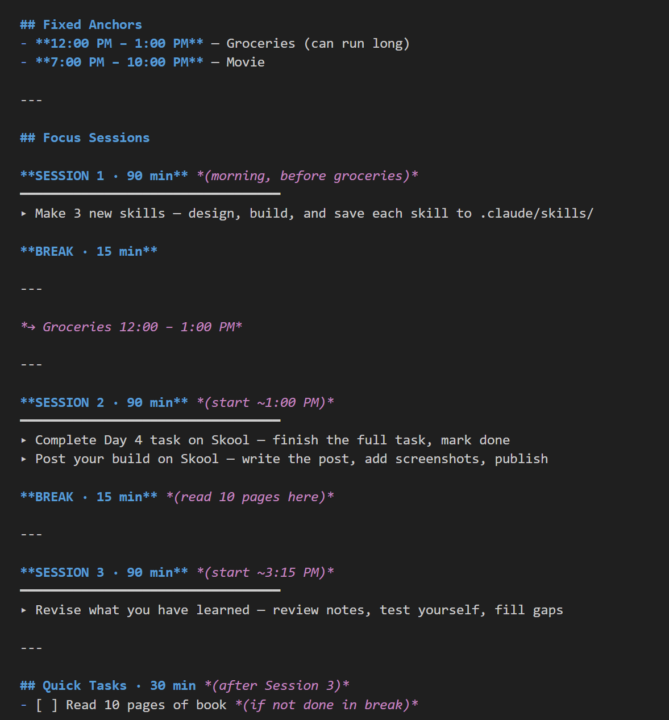
I am very bad at time management, so I thought a day planner could help me. it really helped😅
1-10 of 10

@tanmay-jain-1479
hello every one lets create something great together
Active 5h ago
Joined Jun 6, 2026
Powered by