Activity
Mon
Wed
Fri
Sun
Sep
Oct
Nov
Dec
Jan
Feb
Mar
Apr
May
Jun
Jul
Aug
What is this?
Less
More
Memberships
The Independent Authors Guild
403 members • Free
13 contributions to The Independent Authors Guild

5d •
Review My Revised Book Description
I'd love it if you could take a look at the book description for my memoir and let me know what you think.

2 likes • 4d
I'm not offended. Not even a little bit.

4d •
It’s Authors Helping Authors: Publishing Edition!
I'll go first... Today is our chance to share something we’ve learned from the publishing process that might make another author’s journey a little easier. It can be something that worked beautifully, something you wish you had done differently, a resource you found helpful, or something you’re still figuring out. Editing, proofreading, book covers, formatting, ISBNs, copyright, KDP, IngramSpark, ebooks, printing, distribution, launch preparation, hiring publishing professionals—it’s all fair game. Tell me in the comments: What is one thing you’ve learned about publishing that could help another author? You don’t need to be an expert. Sometimes the most useful information is simply: “Here’s what happened when I tried this.” Let’s help each other publish smarter!

4 likes • 4d
I don't know whether or not this is advice exactly, But I published several books on Amazon before doing a launch. It felt like an important step to take, even if everything wasn't perfect yet. I wanted my books to have a home and be out in the world. I learned a lot through my mistakes, and I certainly won't make the same ones again. I'm now going back, book by book, getting then as professional as possible, before launching them one by one. With digital publishing, mistakes aren't fatal. Almost anything can be fixed or changed.
6d •
Book Cover Course: Modules 3 and 4 Are Available!
I want you to know what I know. I do not want you choosing images, colors, or fonts because they are pretty, because they are trendy, or because they happen to appeal to you personally. I want you to understand what those choices are communicating to readers—and why some covers connect almost instantly while others disappear. In Module 3, we are working with imagery, color, and emotion. You will identify the dominant emotional experience your cover should create, choose a clear focal point, work with symbolism, build an intentional color palette, create contrast, and develop a complete mood direction for your cover. Then, in Module 4, we move into typography and the thumbnail test. You will learn how typography communicates genre, tone, professionalism, and trust before the reader has even consciously processed the words. You will also test whether your title actually works at the size readers are most likely to see it—tiny, crowded, and competing for attention. Both modules include full workbooks, because I do not want you simply watching these lessons and thinking, “That makes sense.” I want you to apply them. These two modules work together, so complete Module 3 before moving into Module 4. Take your time. Do the exercises. You are not decorating a rectangle. You are learning how to communicate with readers before they have read a single word.
1 like • 6d
I'm excited to see it.

Jul 12 •
Plot Development Method
For the fiction writers here, how do you develop your plot? Off-the-cuff (i.e. spontaneously), systematically, or a hybrid method? Note, there was a post here about this subject but I can't seem to locate it.
1 like • 9d
I think if people practiced craft until they really understood it down to their bones, they wouldn't have to produce "vomit" drafts. When you learn to play the piano, you don't start by butchering sonatas. You practice your scales and start with something manageable like Für Elise. And if you want to learn Jiu-Jitsu, you don't just read about how to do it. You practice each move until it becomes automatic. A first draft can still be exploratory without being shapeless. The better you know your craft, the less repair work you may have to do afterward.

11d •
writing slump
my greetings to all dear writers here, i have two simple questions to ask but might be a bit tricky to answer, if you are writing right now, what fuels your fire to keep writing? and what do you usually do when you hit a writing slump? thank you 😊
2 likes • 9d
One of the things I started doing for first drafts was to write the first chapter and the last chapter first. I've never been able to write a proper outline, but this tells me where I'm going and helps me to get there. I always have the option to change direction, but so far that dim light at the end of the tunnel has gotten me to the right place. This also works for short stories. For me anyway.
1-10 of 13
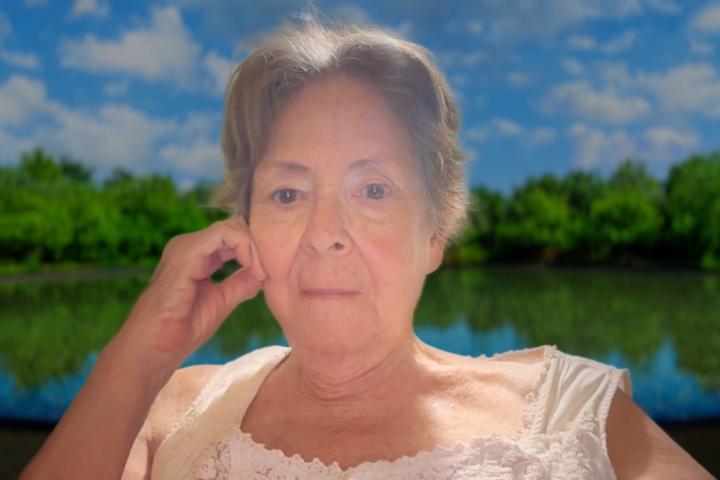
@susan-asher-1772
I have five books sitting on Amazon, waiting for me to launch—three novels, a memoir, and a hybrid book of paired short stories and poems.
Online now
Joined Jul 11, 2026
INFJ
Oaxaca, Mexico