Activity
Mon
Wed
Fri
Sun
Dec
Jan
Feb
Mar
Apr
May
Jun
Jul
Aug
Sep
Oct
Nov
What is this?
Less
More
Owned by Stephen B.
A curated menu of courses, content, and tools for creators and solopreneurs; explore, choose what fits, and move forward with clarity.
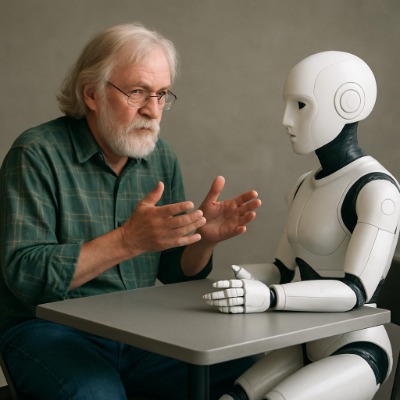
Stephen B. Henry’s "Your Pathway To Growth" community is a calmer, safer place for learning A.I. through natural conversation and guidance.
Moments with May
17
Free
AI Shortcuts to Work Smarter
164
Free
Adventures With Barb
24
Free
Skoolers
148.2k
Free
Tools For Motivation Community
2.8k
Free
IN SESSION
13
Free
Phoenix Rising
24
Free
The Promo Lounge
565
4.9
Free
LlynFay Inc. Marketplace
628
5.0
Free
13 contributions to Second Act Income Collective

Oct 20 •
The Classroom
Confession: I love free things almost as much as I love finding a parking spot right by the front door. So I tucked a whole shelf of free resources into our Classroom for you: my AI Prompts Pack, The Content Engine, and my guide to opening your YouTube channel. Pop into the Classroom and grab whatever catches your eye. And while you are here, please talk to us! Post a question, share a win, or tell us what has you stuck. Nobody here expects you to have it all figured out, least of all me. The best conversations in this community start with someone brave enough to say “I have no idea how this works.” Paula- Sassy-82


1 like • 30d
@Paula Harrington Love the picture!
Aug 28 •
🎬 The Conversational Age #10
Living in the Conversational Age Every age leaves its mark on humanity.The Agricultural Age taught us to cultivate the land. The Industrial Age transformed the way we worked. The Information Age connected us to knowledge on a scale never before imagined. Now we find ourselves entering something different. Not an age defined primarily by machines. Not an age defined by information. An age increasingly defined by conversation. That may sound like an unusual claim. After all, conversation is one of humanity's oldest abilities. Long before there were books, there were stories. Long before there were universities, there were teachers speaking with students. Long before there were search engines, there were questions shared around family tables, workshops, marketplaces, and campfires. Conversation has always been how human beings explored ideas together. What has changed is not the conversation itself. It is who, or perhaps more accurately, what can now participate in it. For the first time in history, ordinary people can sit down with an intelligent system capable of discussing ideas, organizing information, exploring possibilities, and refining thoughts through an ongoing dialogue. That is extraordinary. Yet the technology itself is only half the story. The other half is us. Throughout this series we have explored a simple idea. The future does not belong to those who memorize the most impressive prompts. It belongs to those who learn to think more clearly through conversation. Conversation encourages curiosity. Context builds understanding. Continuity preserves momentum. Collaboration expands perspective. Judgment provides wisdom. Together, they create something greater than information alone. They create understanding. Perhaps that is the true purpose of the Conversational Age. Not producing more answers. Producing better thinkers. Some people worry that artificial intelligence will eventually make human beings less important. I see a different possibility. The more capable our tools become, the more valuable distinctly human qualities become. Kindness. Integrity. Imagination. Discernment. Humility. Compassion. Purpose. These qualities cannot be automated. They cannot be downloaded. They cannot be generated from statistical patterns.
1
0

Aug 26 •
🎬 The Conversational Age #9
The Rise of Personal A.I. For most of the history of computing, every interaction began with a blank screen. You opened a document. You created a spreadsheet. You started a new email. Each task stood largely on its own. The computer performed the work you requested, but it knew almost nothing about you beyond the file you happened to be editing. Artificial intelligence is changing that model. Increasingly, our interactions are becoming continuous rather than isolated. Yesterday's conversation informs today's discussion. Last month's project helps shape next month's ideas. Instead of beginning at the starting line every time, we continue building upon work that has already been done. That may prove to be one of the most significant changes in the history of personal computing. For the first time, many people will have an assistant that grows more useful through familiarity. Think about the people with whom you work most effectively. Perhaps it is a trusted colleague. A long-time business partner. An experienced editor. A skilled assistant. A close friend. Over time, those relationships become more productive because less time is spent explaining the basics. They already understand your goals. They know your preferences. They recognize your style. They remember previous discussions. Every new conversation begins with a shared foundation. Artificial intelligence is beginning to work in much the same way. Not because it possesses human understanding. It does not. But because it can accumulate context. It can remember projects. It can recognize recurring themes. It can adapt to the way you prefer to communicate. Each conversation adds another piece to an increasingly useful picture. That continuity changes the nature of the relationship. Instead of asking, "Can you write this article?" You may find yourself saying, "Continue the series we began last week." Instead of explaining your audience again, you simply say, "Keep the same conversational style." Instead of rebuilding an idea from the beginning, you ask, "Take this one step further."
1
0

Aug 25 •
🎬 The Conversational Age #8
Human Judgment in an Artificial World Every significant technological advance has raised the same question. "If the machine can do this, what is left for people to do?" The Industrial Revolution asked it when machines began performing physical labor more efficiently than human hands. The computer age asked it when software automated calculations that once occupied entire departments. Today, artificial intelligence has revived the question once again. If a machine can write... If it can analyze... If it can summarize... If it can generate ideas... Where does that leave us? It is a reasonable question. It is also the wrong one. The better question is this. What can only people do? That answer begins with judgment. Artificial intelligence can process enormous amounts of information. It can recognize patterns across thousands of documents. It can organize complex material in moments. It can compare alternatives, summarize research, and generate possibilities with astonishing speed. Those are extraordinary capabilities. But capability is not the same as judgment. Judgment asks different questions.Should this idea be pursued? Is this the right decision for these people? What are the long-term consequences? What values should guide this choice? No amount of information can answer those questions completely. They require experience. They require perspective. They require wisdom. Throughout history, knowledge and wisdom have often been confused. Knowledge gathers facts. Wisdom decides what to do with them. Artificial intelligence dramatically increases access to knowledge. That does not automatically produce wisdom. Consider two people standing before the same map. Both possess identical information. One chooses a safe route. The other wanders into danger. The difference was never the map. It was the judgment applied while reading it. Artificial intelligence is much the same. It can provide remarkable maps. People still choose the destination. This distinction becomes increasingly important because A.I. often presents information with confidence. Confidence, however, is not certainty.
1
0

Aug 22 •
🎬 The Conversational Age #7
The New Literacy Every generation inherits a different definition of what it means to be educated. There was a time when simply being able to read set a person apart. Later, writing became an essential skill for business, government, and scholarship. Arithmetic opened the door to commerce, engineering, and science. As the twentieth century progressed, understanding how to use computers became increasingly important. Then came the Internet, where success depended not only upon accessing information but also upon learning how to find it. Each of these developments expanded what society considered basic literacy. Today, another change is quietly unfolding. For the first time in history, millions of people are learning to interact with knowledge through conversation rather than through commands, menus, or search boxes. That is a new literacy. When most people hear the word "literacy," they immediately think of reading and writing. Those skills remain indispensable. Without them, much of modern life becomes extraordinarily difficult. Yet literacy has always been about more than recognizing words on a page. It is about participating fully in the world around us. Reading allows us to absorb ideas. Writing allows us to express them. Conversation allows us to refine them. Artificial intelligence is making that final step more important than ever before. For decades, our relationship with technology was largely instructional. We told computers exactly what to do. Every click had a purpose. Every command produced a predictable result. If we gave poor instructions, the machine failed. That model shaped the way we thought about technology. Conversational A.I. changes the relationship. Instead of navigating software, we engage in dialogue. Instead of memorizing commands, we explain our intentions. Instead of searching for isolated answers, we explore possibilities. The interface has become language itself. That is a profound development. Children growing up today may never know a world in which typing precise keywords into a search engine was considered an advanced skill. Instead, they will expect technology to understand questions, follow conversations, remember context, and help develop ideas. Their literacy will include something previous generations never imagined. The ability to think effectively through conversation with intelligent systems.
1
0

1-10 of 13
@stephen-b-henry-9359
WordPress Wizard & Coach's Coach: instructor, guide, mentor on your journey of success. The time to hire your guide: before you get lost in the woods!
Active 27d ago
Joined Jul 26, 2026