Activity
Mon
Wed
Fri
Sun
Nov
Dec
Jan
Feb
Mar
Apr
May
Jun
Jul
Aug
Sep
What is this?
Less
More
Biohacking Peptide Playground
8.9k
Free
Castore: Built to Adapt
1.2k
5.0
Free
Project Biohacked - Peptides
14.9k
5.0
Free
Pep Talk - For Better Health
3.2k
Free
Hacksmith’s Peptalk Community
3k
5.0
$10/m
Exploring Peptides Community
22.8k
5.0
Free
Exploring Peptides MEMBERSHIP
811
5.0
$15/m
6 contributions to Castore: Built to Adapt

May 15 •
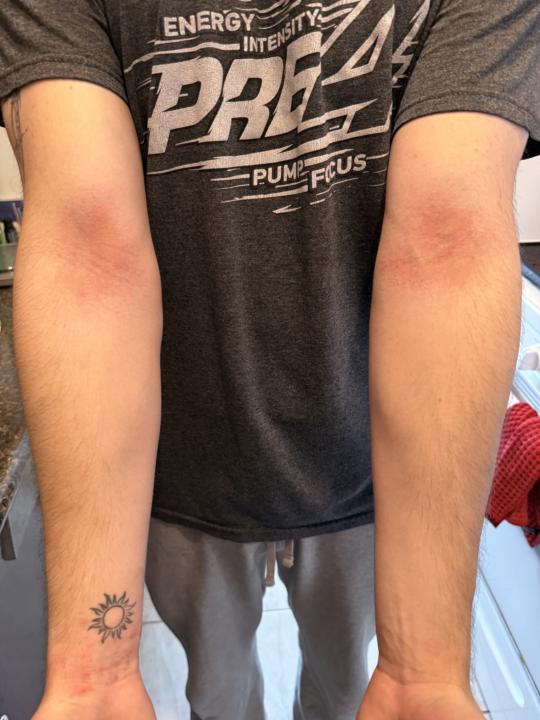
Eczema
Looking for some guidance- my 20 year old son has been battling eczema for the last couple of years. After a strict diet change (gf no dairy) some gut rebuilding and 1 cycle of GHK KPv - big improvement (almost fully cleared up). Took a 2 week break then restarted and it is now 10x worse. He trains 4x a week but his job (server) can be long hours and the sweat makes things worse.

2 likes • 22d
@Mallory Joenas I’ve learned lots so far. But originally it was a way to get tirz I could afford.i now use several peps for me and my dogs and cats.
2 likes • 6d
@Selinay Buite initially this was a way to learn and be able to get tirz at a price that was sustainable long term. But learning about other peptides, and being able to experiment, I’ve now got my favorites. I’m not enticed by a lot of the shiny new peps available, but definitely depend on a handful besides tirz, such as oxytocin, KPV and GHK-CU.

May 21 •
Your Dog’s Joint Pain Might Not Be a “Joint Problem” at All
There’s a really interesting shift happening in veterinary medicine right now and most pet owners probably haven’t noticed it yet. For years, canine osteoarthritis care was largely framed around symptom suppression. Dog slows down. Dog limps. Dog struggles getting onto the couch or into the car. Maybe there’s stiffness after rest. The solution pathway usually looked pretty predictable. Anti-inflammatory medications. Weight loss recommendations. Joint supplements. Maybe laser therapy or rehab if someone was lucky enough to have access to a good clinic. Now there’s this growing tension emerging in the field between symptom management and regenerative signaling.That distinction matters. Biology does not really think in terms of pain versus no pain. Biology thinks in terms of stress, tissue integrity, signaling environment, energy availability, immune coordination, and mechanical loading. Pain is just one output of a much larger conversation. And once you start viewing osteoarthritis through that lens, a lot of things begin to make more sense. Take a dog with chronic joint degeneration. Most people imagine the cartilage as something that simply “wore out” like old tires. That analogy is incomplete. Tissues are alive. Cartilage is metabolically active. The synovial lining is active. Bone underneath the joint is active. Immune cells are active. Nerves are active. Mitochondria inside all of those tissues are constantly sensing stress and responding to the environment around them. The joint is less like a dead hinge and more like a neighborhood under chronic construction.Now think about what happens when the construction crew never gets coordinated instructions. Inflammation rises, but repair signaling is weak. Mechanical loading becomes abnormal because the dog moves differently to avoid discomfort. Muscle mass starts dropping because movement decreases. Mitochondrial energy production inside local tissues becomes less efficient. Oxidative stress rises. Synovial fluid quality changes. The immune system starts maintaining a low-grade inflammatory environment instead of resolving it.
1 like • Aug 26
@Anaa Jones was a custom cabinetmaker, now retired.
1 like • Aug 27
@Anaa Jones since retiring, I’ve gotten into working out, fermenting foods and making sourdough bread. So keeping very busy.
Dec '25 •
I just want to take a moment to say thank you to this community
Creating this space has genuinely been a dream come true. Being able to have thoughtful conversations, challenge ideas, learn out loud, and walk alongside people as they navigate their health has been incredibly meaningful to me. I don’t take it lightly that you choose to spend your time here, ask questions, give feedback, and share your experiences. That trust matters. What excites me most isn’t just protocols or tools it’s the mindset I see here. People being proactive instead of reactive. People choosing to learn, to stay curious, and to take ownership of their health. That kind of curiosity is powerful, and honestly, it makes this work fun. Health should feel empowering, not overwhelming, and learning should feel like an invitation, not a burden. I’m deeply grateful for the support, the conversations, the respectful disagreements, and the encouragement. This community pushes me to think more clearly, teach better, and keep refining my own understanding. I’m committed to continuing to learn, to get better, and to show up fully as part of this process alongside you, not above it. Looking ahead, I’m really excited about what’s coming next year. I’ll be expanding ways to work together more closely beyond one-off consults, for those who want deeper guidance and continuity. That said, this space will always be rooted in generosity, shared learning, and mutual respect. If you’re enjoying the conversations here, know that I care just as much about this community as I do about any one-on-one work. Thank you for being here, for being curious, and for being part of something that feels genuinely special. I’m grateful for every one of you, and I’m looking forward to continuing this journey together.
3 likes • Dec '25
Thank you for sharing.
Oct '25 •
Part 2 — Repairing the Lipid Language: Protocol Design for Autoimmune and Neurological Recovery
True healing happens when inflammation completes its full life cycle initiation, resolution, and regeneration. Part 1 explained the molecular language that allows this to happen: plasmalogens providing structural resilience and SPMs sending the biochemical “stand down” signal. Part 2 translates that science into practice how to rebuild this communication system through nutrition, supplementation, and targeted protocols that restore the body’s ability to self-regulate. Re-establishing the Resolution Loop In chronic disease, the inflammatory cycle stalls between the attack and repair phases. The body keeps releasing cytokines like TNF-alpha and IL-6, but never transitions to the clean-up molecules such as resolvins or maresins. The therapeutic goal is not to shut off inflammation but to reopen the loop so that the same immune cells that fought can now rebuild. That means supplying the missing raw materials, reactivating the enzymes that make SPMs, and rebuilding the membranes that store them. Step 1: Rebuild the Substrate Plasmalogen Restoration The first step is to fix the infrastructure. Without plasmalogens, cell membranes lose flexibility, mitochondrial function suffers, and omega-3 reserves for SPM production vanish. The quickest way to rebuild this pool is through precursors like Prodrome Neuro and Prodrome Glia, which contain ether-linked lipid backbones that bypass the damaged peroxisomal step. Taken daily, they replenish both phosphatidylcholine- and phosphatidylethanolamine-based plasmalogens. In practice, most people use six capsules of each per day for a repletion phase lasting three to six months, followed by a maintenance dose of two to four daily. The improvement is gradual but measurable patients often report clearer cognition, calmer mood, and reduced oxidative stress within eight weeks as their membranes regain elasticity. Step 2: Supply the Builders Cofactors for Peroxisomes Even when precursors are provided, the enzymes that finish plasmalogen synthesis need help. B-vitamins act as catalysts; magnesium stabilizes ATP; zinc and iron activate the transferases that move fatty chains; and CoQ10 supports the redox cycling inside the peroxisome. A simple daily stack vitamin B3 (as niacinamide 250 mg), vitamin B5 (as pantothenate 500 mg), magnesium glycinate (200–400 mg), zinc (15–30 mg), and CoQ10 (100 mg) creates the metabolic environment for these pathways to work. This foundational nutrition turns the “factory lights” back on so that plasmalogens can be built efficiently rather than burned.
2 likes • Oct '25
Thank you
Sep '25 •
The Master Switches of Human Performance: How mTOR, AMPK, and Sirtuins Orchestrate Strength, Longevity, and Metabolic Flexibility
Every athlete, coach, and biohacker eventually runs into the same frustration: why does progress sometimes explode forward and other times stall no matter how hard you train or how clean you eat? The answer is not just “train harder” or “add more supplements.” The truth is that your body runs on a set of master switches that decide whether energy goes into building, burning, or repairing. These switches are called mTOR, AMPK, and sirtuins. They are the hidden dials that determine muscle growth, fat loss, recovery, and even how long and well you live. Think of your body like a hybrid supercar. mTOR is the turbocharger, pumping out raw power when you slam on the gas. AMPK is the hybrid battery system, kicking in when fuel is low and efficiency is everything. Sirtuins are the mechanics and quality inspectors, making sure the system does not overheat and burn itself out. When you know how to control these systems, you stop guessing. You can decide when to push growth, when to trigger fat burning, and when to repair and restore. This article will walk you through how these pathways work, how they interact, and how you can actually use this science in your training, nutrition, and recovery. Whether you are a strength coach, a cellular medicine professional, or a biohacker experimenting with protocols, this will give you an immediately actionable framework. The Three Pillars of Metabolic Control mTOR – The Builder mTOR stands for mechanistic target of rapamycin, and it is the master controller of growth. If you imagine a construction site, mTOR is the foreman shouting orders to workers. When protein, carbs, and growth signals like insulin and IGF-1 are present, the foreman calls in the crews to build new skyscrapers—your muscles. This is why post-workout meals rich in protein and carbs stimulate recovery and hypertrophy. But there is a problem. If the foreman never rests and keeps trying to build nonstop, the job site gets messy. Too much mTOR signaling without breaks leads to insulin resistance, cellular junk buildup, and accelerated aging. In real life, this looks like someone who bulks hard with constant high-calorie intake and plenty of lifting but ends up inflamed, sluggish, and metabolically unhealthy. So mTOR is powerful, but it has to be pulsed, not left on all the time.
1 like • Sep '25
Thank you! This makes so much sense, but I’ve never looked at it in these terms. This is also a better explanation of my lumen device, which I quit using out of frustration.
1-6 of 6

@simone-young-5381
I’m a mid 60’s woman, very active, love my giant dogs, adult daughter and grandson. I’m exploring the world of peptides. Love tirz and oxytocin.
Active 8h ago
Joined Aug 28, 2025
Santa Cruz CA 95062
Powered by