Activity
Mon
Wed
Fri
Sun
Aug
Sep
Oct
Nov
Dec
Jan
Feb
Mar
Apr
May
Jun
Jul
What is this?
Less
More
Memberships
TÂCHES TEACHES
646 members • Free
8 contributions to TÂCHES TEACHES

Sep '24 •
How to do self-made mastering to give a song to friends?
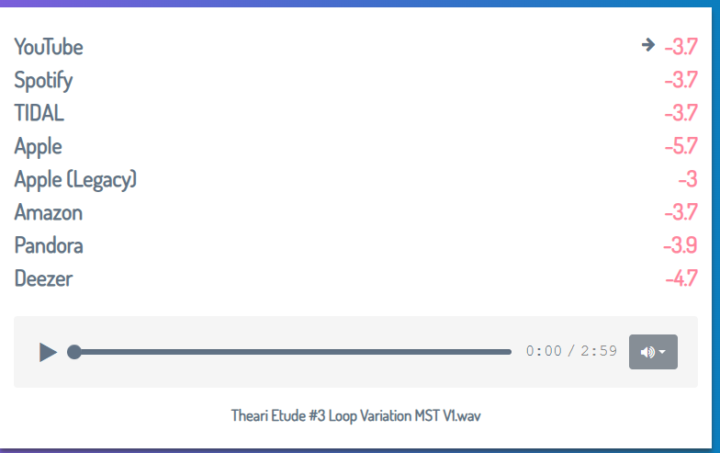
Hi @General Midi @Filippo Cimatti @Andy Immerman @Christoph Eike, some mates here talked to @General Midi about taking the black magic out of the mastering process. Let´s say I want to play a track to friends or upload to soundcloud as a "demo version". So I´m not talking about a decent release on all platforms. In the latter case personally I would try to consult a person who does this every day. But if I want to do it on my own for the purposes mentioned above. I also really want to do this handmade hopefully without third party plugins (I´m on Live 12) to get the basic idea of it. In a course by John Tejada I learned if your an amateur in this topic like me: Don´t overthink it. He pointed out some other details but if I had to strip it down to make it uploadable to soundcloud or play it on a DJ set, really fast and rough amateur style: It would go like this: 1. Take the loudest part of the arrangement. 2. Take a limiter with a ceiling of -0,3 dB and an RMS meter and adjust the loudness so you get around -6 dB RMS. 3. Check back your exported wav.-file e.g. at https://www.loudnesspenalty.com/ 4. Repeat step 2 and 3 until you get max. -1dB loudness penalty. I know there can be a whole lot of more to mastering but if you had to strip it really down the tiniest necessity would that be it? Unfortunately I´m still a bit irritated though: I checked back two of my files at https://www.loudnesspenalty.com/ that I gave to a mastering engineer a while ago. He returned two versions: One for soundcloud and another one for all of the rest. I´m a bit irritated, because I got more than -1 dB loudness penalty though it has been mastered by a pro (see two attachments here).

2 likes • Sep '24
Step 1: give your ears a rest. Mastering can be seen as the final touch, like a lead editor’s marks before a book is published. If you’re mastering your own works, you’ll need fresh ears to identify what you’ve missed. You can also look at a frequency spectrum analyzer to double check the balance. Sept 2. See what’s needed in the macro picture. Too bass heavy? Mids get lost? Could use more stereo imaging? Here you want to balance, eq, saturate, compress, whatever you feel will elevate the track. Step 3. Levels. Usually mastering engineers will work in Lufs, not rms, and online lately streaming services will tell you -14 lufs, but that’s not really accurate. Use reference tracks here. My opinion though, once you get to -6 lufs you’re potatoeing your dynamics. Theres a balance between loudness and dynamics that you want to maintain. Look at your loudest and your quietest parts. You will want a true peak and final gain at -.1 to-.3 is fine. Really what you will want for mastering is final big picture touches and perceived volume cohesiveness with other tracks of your genre.
1 like • Sep '24
@Aretius Klosa your master limiter should have a gain reader, you can set a “true peak” at -.1 db for example, the audio will not go over that number, which would potentially cause distortion

Sep '24 •
MEET YOUR TEAMMATES: CIRCLE OF SOUND #1 🎶
[IMPORTANT: THE GAMES BEGIN ON TUESDAY 17. PLEASE TRY TO ATTEND THE GROUP CALL LISTED ON THE CALENDAR AS WE WILL BE EXPLAINING IN MORE DETAIL THE RULES] I'm happy to announce the teams for the first edition of the CIRLE OF SOUND community music production game suggested by @Aretius Klosa. The point of this game is to make a bunch of music as a community through an unusual collaboration procedure. The production process will be split into 5 stages; 1. Creating a soundpack (select no less than 10 sounds and no more than 30 sounds. These can be one shots, loops, musical loops, held synth note... etc. 2. Using the soundpack to come up with a 32 bar idea. Only use sounds you have received. Feel free to chop/reverse/pitch or whatever you need to do but only use the sound pack to create the idea. 3. Creating a full track arrangment from the 32 bar idea 4. Mixing the arranged song 5. Mastering the mixdown Every member of every group will do every stage at the same time. Every 2 weeks, you will export the audio stems of what you have created and pass it to the person below you on the list at the bottom of this post. IMPORTANT: EVERY STEP WILL REQUIRE YOU TO RENDER WHAT YOU HAVE TO AUDIO STEMS. THIS ENSURES CROSS DAW COMPATIBILITY. This cycle will progress for 10 weeks. Every 2 weeks everyone moves onto the next production stage using what they have been sent. So for example this means that during weeks 1 + 2, everyone will be tasked with creating a soundpack. In weeks 3 + 4, everyone will now be tasked with creating a 32 bar idea made with the soundpack passed to them by the team mate above them on the below list. In weeks 5 + 6, everyone will create an arrangement with the 32 bar idea they received from the team mate above them on the list... And so on. By the end of the 10-weeks, every member will have completed every one of the 5 stages and each group will have 3 finished songs. We will be holding a group Zoom call every 2 weeks so you can meet with your team mates in small breakout rooms and discuss how the process is going.
1 like • Sep '24
@Lex Christopherson hayo team who’s starting first
Sep '24 •
HOW MUCH $$$ WOULD YOU NEED TO MAKE PER MONTH...
TO DO MUSIC FULL TIME? If a genie appeared before you and said "Mortal - I will magically grant you a consistently profitable career in music for the rest of your life but you will never be able to earn MORE than X amount of $ per month", what would that number be? I know a lot of people say it ain't about the money but you've still gotta fund your life after all. So what'll it be? [It seems it's a range from $5K-$10K]

1 like • Sep '24
Does this monthly salary account for inflation?

Aug '24 •
Artist Name Origin?
If your artist name isn't what you go by day to day, how did it come about, was there a reason for it, and/or have you had a previous name and changed it? I used to go by DJ Bae which makes me laugh because it started as kind of a joke and then people would just call me that instead of Sarah. Even today, some OG people will call me that. However, I had to change it because it sounds like I spin hip hop which was confusing. My current name Gaile is my middle name.
0 likes • Sep '24
Au Shante - a play on my name and the French word enchante, meaning delighted. Au chant also means to the song. FYI I am not French, hence the irregular spelling of my name lol
Sep '24 •
My first finished track
https://soundcloud.com/au-shante/morning-do?si=c0b7b219589841119de05ccad4343db6&utm_source=clipboard&utm_medium=text&utm_campaign=social_sharing Started it out as a gift for a friend, but decided I liked it and took it to my own direction. From this, I learned to not get in my own head thinking it has to be perfect right away and just do it like when you do your scales on piano- then the music will come. A singer grabbed this and it's waiting for release!
0 likes • Sep '24
@Lex Christopherson thank you! 😊
0 likes • Sep '24
@Rob Pullan I appreciate that!
1-8 of 8

Active 595d ago
Joined Aug 29, 2024
Powered by