Activity
Mon
Wed
Fri
Sun
Jun
Jul
Aug
Sep
Oct
Nov
Dec
Jan
Feb
Mar
Apr
What is this?
Less
More
Owned by Shane
For people who want to grow mushrooms for fun, for their families, and for their communities.
Memberships
AI Automation Society
347k members • Free
GOOSIFY 🍎🐛🦋🌈⭐️🩷
12.7k members • Free
Synthesizer: Free Skool Growth
41.2k members • Free
Skoolers
193.2k members • Free
Cultivated Cooks
310 members • Free
🇨🇦 Skool IRL: Toronto
248 members • Free
Vertical + Urban Farm Academy
204 members • Free
The Wool & Fibre Network
518 members • Free
Living Soil Community
1.3k members • Free
2 contributions to Living Soil Community

Mar 11 •
What type of gardener are you?
We all have a style and if you are like me, you are a mix of a few style but which one fits you the most?
Poll
19 members have voted
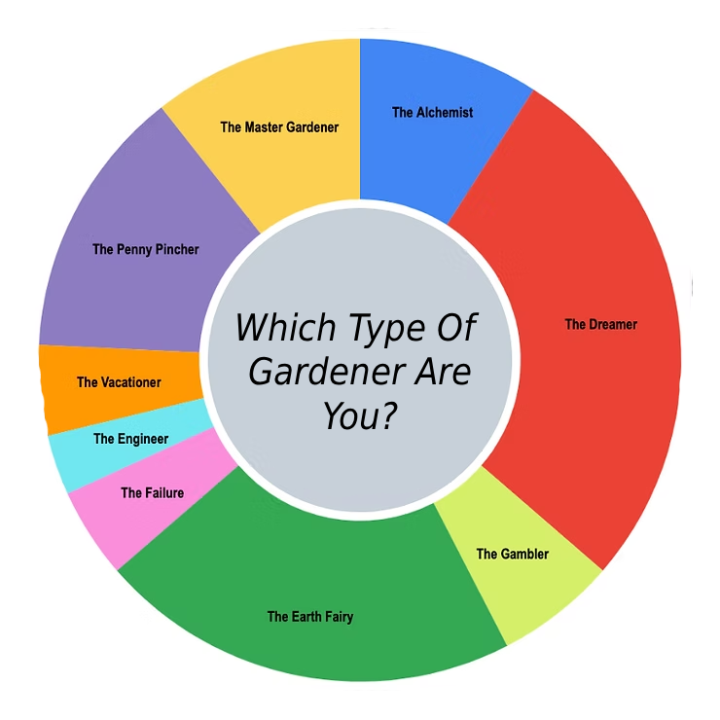

9 likes • Mar 11
Part Alchemist, part Chaotic Squirrel

Oct '25 •
Certain Mushrooms are Beneficial for Plants, afterall
...So, watched one of the IG videos about indoor gardening, and realized that certain mushrooms are actually beneficial for plants... ...Especially, those ones that grows on soil. They are saprophytic, meaning they digest dead organic material in the soil, breaking up complex materials into simple compounds... ...Such as cow manure, that I used to make compost. The thing is mushroom growth indicates that the soil is over-watered, or the environment is having high humidity. So, that was my learning. But yeah, certain brown mushrooms 🍄🟫 aren't bad, but beneficial. What do you guys think? Would love to know your thoughts on it.
6 likes • Oct '25
Mushrooms are just the fruit of the mycelium, so by the time you see mushrooms growing, the mycelium has been in the organic matter for some time, interacting with he soil biology. I generally think mushrooms are an excellent indicator of soil health and balance. They drop spores, which bugs eat. Bugs poop and fertilize the soil, birds eat the bugs and poop too. They're also breaking down the larger, complex molecules like cellulose and lignin for the smaller critters to eat. Some fungi, however, are definitely parasitic to the plants we want to grow. Powdery mildew is not fun to see. It's a fungus, but does not produce mushrooms. Trichoderma mold, the green stuff you see on bread if you leave it out too long, is absolutely fantastic in as a compost accelerator. It doesn't produce mushrooms, but it is a fungus. Then we get into some *really* cool fungi (called mycorrhizal fungi) that weave, wrap around and embed themselves into roots of plants. The extend the reach and capability of the plants by orders of magnitude, trading water and mineral for some sweet, sweet sugars the plant produces. Some produce mushrooms like truffles, chanterelles, porcini (boletes), and matsutake. Others don't. One of those mycorrhizal fungi is called glomus. We LOVE glomus. Not only does it secrete helpful proteins directly into plant roots, it also sweats out a special protein that "gloms" particles together which helps make soil feel and act like soil. So yeah, mushrooms are mysterious, but they make up such a small percentage of what's going on. By the time you see a mushroom, the mycelium has been having a party with the plants and soil biology for a while ;) I'm certainly pro-mushrooms in all of the soil. Even parasitic fungi, as frustrating as they are sometimes, gives us insights into the complexity of our gardens and how we can relate to them.
1-2 of 2
@shane-odonnell-1851
I teach mycology and help people grow mushrooms
Active 5h ago
Joined Oct 6, 2025
Manitoulin Island, Canada